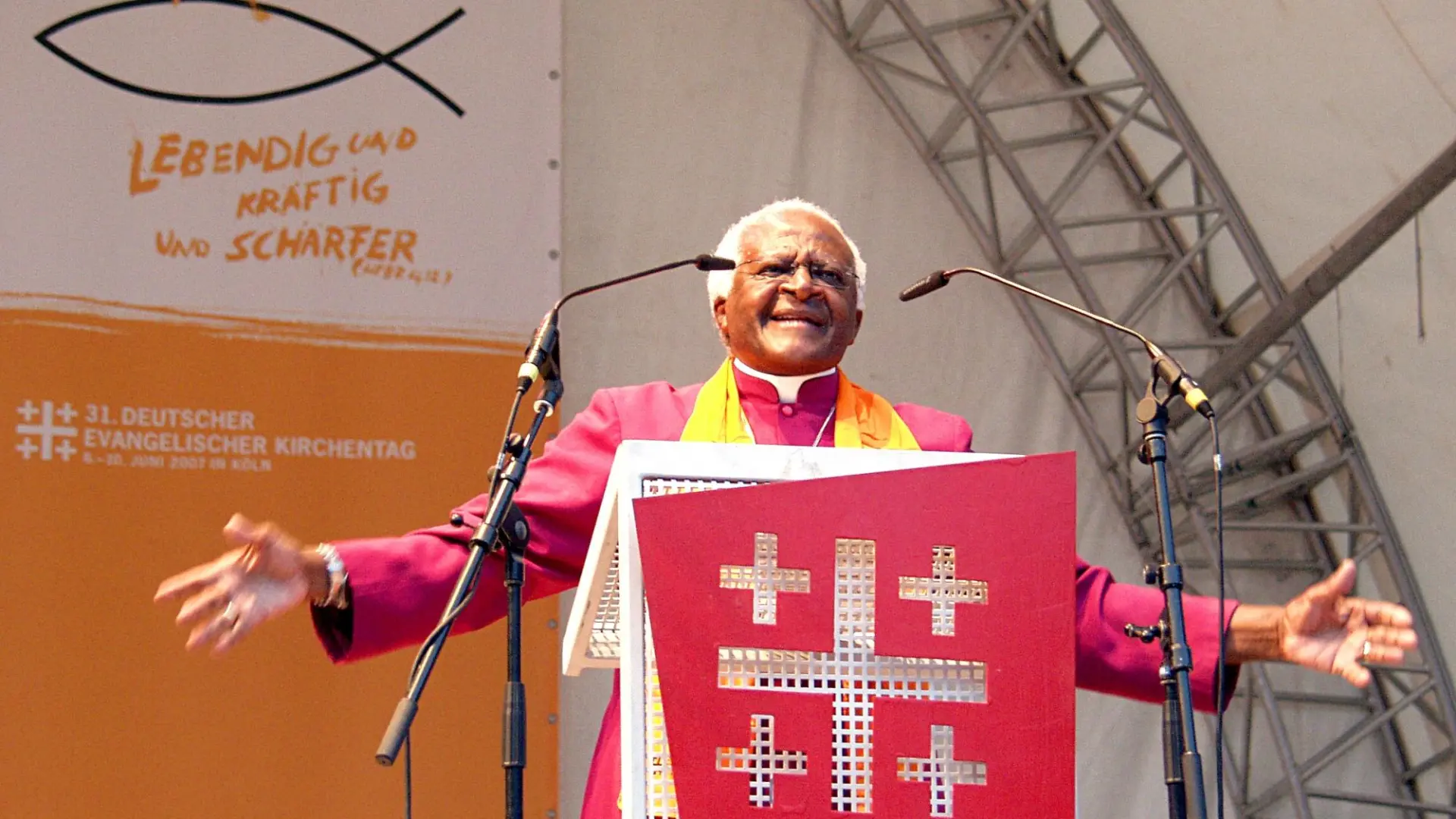
South Africa’s Truth and Reconciliation Commission gave the world a model and gave South Africans something more ambiguous. It documented horror with extraordinary courage and then left the question of what follows documentation largely unanswered. Three decades after apartheid’s formal end, the TRC’s unfinished architecture remains visible in the country’s most persistent inequalities.
Established in 1995 under the Promotion of National Unity and Reconciliation Act, the TRC was designed to confront the systematic human rights violations of the apartheid era, to establish a historical record, to restore dignity to victims, and to offer perpetrators a conditional path to amnesty through full disclosure. Archbishop Desmond Tutu’s chairmanship gave the commission moral authority beyond its legal mandate. Its hearings, broadcast live to the nation, made the apartheid state’s violence undeniable and its perpetrators visible in ways that prosecution could not have achieved at comparable scale.
The political settlement that made the transition possible required an immunity framework, and the TRC’s amnesty process provided it. Trading accountability for disclosure became the commission’s operating principle. What it established was truth, at significant personal cost to those who testified. Its power to recommend reparations did not give it control over their implementation or over the wider economy. The cost of that immunity became the question later decades have had to live with.
The reparations gap
The TRC’s final report recommended a reparations programme for victims who testified, recognising that truth-telling without material support left survivors bearing the psychological cost of disclosure without economic assistance. The government substantially reduced the recommended reparations in implementation. Victims who had been promised meaningful redress received payments that, however symbolically important, did not address the structural dimensions of their dispossession. The corporations and institutions that had benefited from apartheid, mines, financial houses and agricultural conglomerates, were not required to contribute to reparations.
This gap between documenting truth and delivering redress has been at the centre of South African political contestation ever since. The EFF’s demands for land expropriation without compensation, the resurgence of debates about nationalisation, and the Fees Must Fall movement’s challenge to the cost of higher education can all be read as continuing responses to the TRC’s incomplete project. They are demands that the reckoning move beyond verbal acknowledgement into material consequence.
Truth was documented with extraordinary courage. What follows documentation, the structural transformation of the systems truth-telling revealed, remains the unfinished work.
What the TRC model exported and what it kept
The South African TRC became the global template for transitional justice. Later commissions in countries including Sierra Leone, Liberia and Kenya drew on the wider practice of truth-seeking, but differed in their mandates and treatment of amnesty. Rwanda’s gacaca proceedings were a different form of transitional justice. The model’s exportability rested on its procedural design, a structured process for national truth-telling that did not require the convictions and trials many transitional contexts could not sustain.
What was not easily exported was the condition that made the South African TRC both possible and limited. It belonged to a political transition that traded punishment for stability, producing a settlement in which the economic structure of apartheid was largely preserved even as its political superstructure was dismantled. Countries that adapted the model operated under different political conditions and economic legacies, and their outcomes, both better and worse, reflected those differences rather than the model’s inherent quality.
The reckoning is unfinished three decades on
South Africa today has among the highest Gini coefficients in the world, and racial correlation with economic position remains strong despite thirty years of democratic governance and transformation policies. The TRC documented why this correlation exists. It could not, by its design or its mandate, require its reversal. That work belongs to democratic politics, to economic policy and to a social reckoning South Africa is still conducting.
Reconciliation without justice risks becoming a transaction that benefits the powerful and asks the dispossessed to absorb the cost of peace. The TRC was not the failure of Desmond Tutu, who died in December 2021. It was the best available process within the constraints of its political moment, and its limitation remains South Africa’s inheritance: a substantial public record alongside an incomplete process of redress. The next phase of the reckoning will be shaped by how honestly South Africans, and the international community that held up the TRC as a model, confront that gap.



