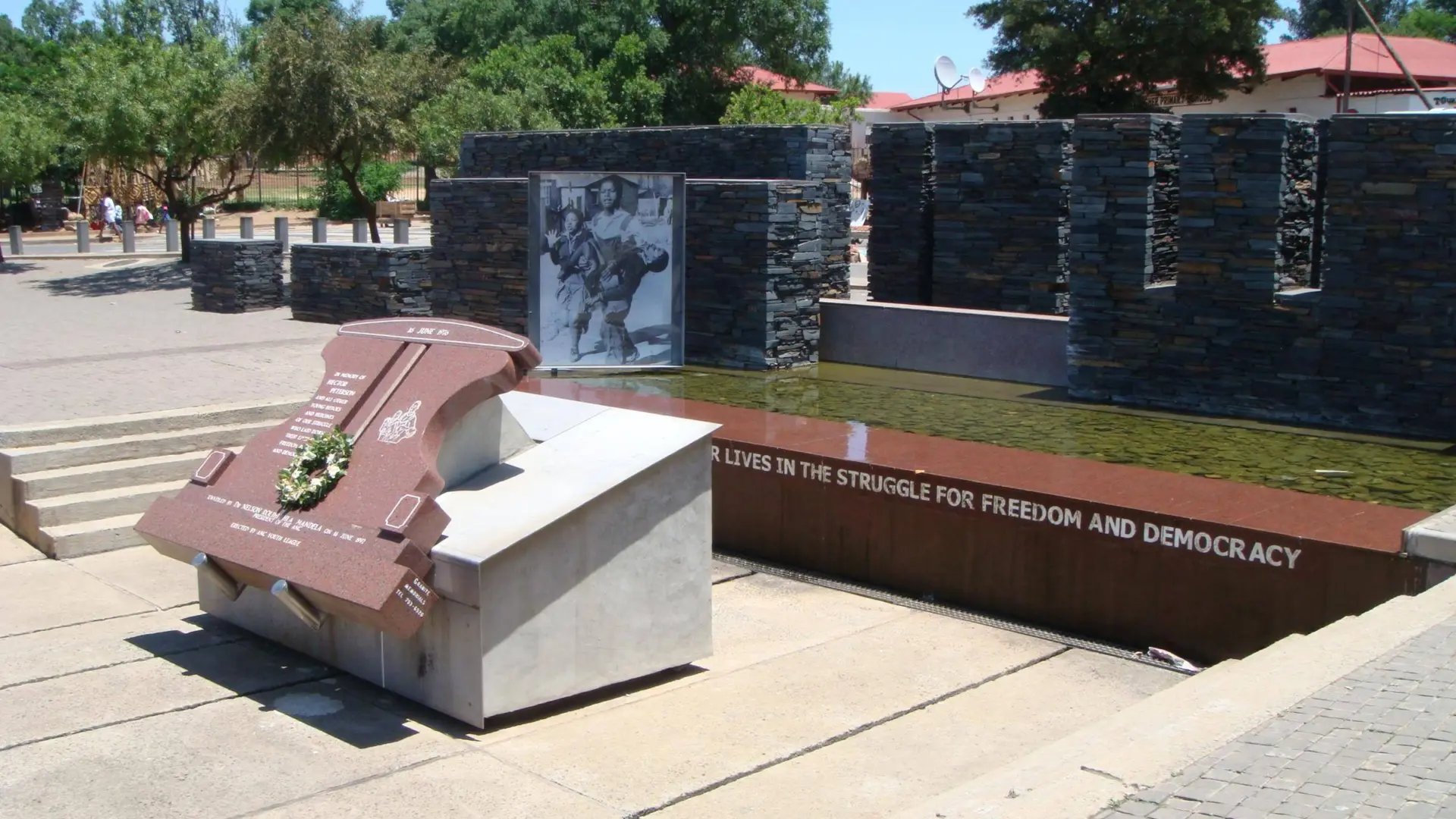
The students who marched in Soweto in June 1976 opposed the imposition of Afrikaans as a teaching language under apartheid. The apartheid state had decreed that black pupils be taught mathematics and social studies in Afrikaans, the language of the people governing them, and the decree was correctly read as an instrument for deciding which minds would be equipped to compete and which would be held back at the threshold. The bullets that met the march made the stakes literal. Half a century later, the gate is still there. It is just harder to see.
South Africa today recognises twelve official languages, having added South African Sign Language to the eleven enshrined at the end of apartheid. The constitutional settlement treats this plurality as a closed achievement, a repudiation of the Afrikaans imposition that Soweto answered. But language policy did not stop being a question of power when it stopped being a question of Afrikaans. The medium in which a child learns still determines how much of the school day is comprehension and how much is translation, and that difference compounds across twelve years into the difference between a young person who can enter the formal economy and one who cannot.
Whoever controls the language of schooling controls the gate to the labour market. In 1976 that control was wielded by a state that wanted black South Africans subordinate. Today it is wielded by inertia, by uneven teacher capacity and by a quiet consensus that English is the language of opportunity. The gate it guards runs along the same lines of class and race the uprising was fighting. The question is whether South Africa has internalised the lesson of Soweto or merely built it a monument.
Language policy after Soweto
The South African policy position is, on its face, sound. The weight of educational evidence holds that children learn foundational concepts best in a language they already speak, and that early mother-tongue instruction builds the cognitive ground on which a second language is later acquired. The country has pursued mother-tongue-based bilingual approaches and, in recent years, moved to extend mother-tongue instruction beyond the early grades where it has historically stopped, addressing the abrupt transition to English that has long handicapped pupils around Grade 4. On paper, the policy honours both the principle of Soweto and the science of learning.
The resources implementation requires
Implementation is the harder test. A policy of instruction in an African language requires textbooks, assessments and trained teachers in that language, at scale, in every district. Where those inputs exist, the reform is real and the gains are visible. Where they are thin, the policy becomes a paper entitlement that schools cannot deliver, and the default reasserts itself. Pupils face an early shift into English that many are not ready for, taught by teachers who may not be fully equipped to bridge it. The result is a system that proclaims twelve languages and, in practice, still funnels the decisive years of learning through a language most children do not speak at home.
Whoever controls the language of schooling controls the gate to the labour market.
Language and the labour market
South Africa carries one of the highest youth unemployment rates in the world. That exclusion is not distributed at random. It tracks the quality of schooling received, which tracks the resources of the school attended, which tracks the linguistic and class geography inherited from apartheid. A child who spent twelve years partly comprehending and partly translating arrives at the labour market with a thinner command of the literacy and numeracy that employers screen for. The language of schooling is therefore not a cultural footnote to the unemployment crisis. It is one of its upstream mechanisms.
English functions as the currency of the formal economy, of higher education and of the professions, and no language reform changes that overnight. This is the trap. A purist insistence on mother-tongue instruction that leaves pupils without strong English equips them for belonging but not for the market. An early collapse into English that outruns their readiness equips them for neither. The reform that honours Soweto is the harder middle. It means deep foundational learning in a home language, resourced properly, with a planned and supported bridge into a genuinely strong second language. That is an expensive, teacher-intensive, decade-long programme, and it is the approach that connects linguistic recognition with educational and economic opportunity.
What equal access requires
There is a temptation to treat the language question as resolved by recognition, to count the official tongues and call the matter settled. Recognition is necessary and it is not sufficient. A language that appears in the constitution but not in the textbook, in the anthem but not in the matriculation exam, has been honoured rather than empowered. Belonging that does not open the gate to work is belonging on the lower side of the gate. Soweto’s marchers understood that the language of instruction was a question of life chances, not heritage, and the policy that answers them must be judged by life chances, not by the length of the recognised list.
The lesson reaches beyond South Africa, because the dilemma is continental. Across Africa, education systems inherited from colonial administrations still teach in former colonial languages that most pupils do not speak at home, and the cost is measured in comprehension lost and opportunity foreclosed. South Africa, with its constitutional plurality and its open debate about the medium of instruction, is the continent’s most advanced laboratory for a question every multilingual African state faces. Should children be taught in the language that holds their world or the language that holds the market, and how can that false choice be refused? South Africa has the policy and the science. Whether it has the teachers, the textbooks and the will to resource the harder middle is the test of whether 1976 changed the system or only earned a holiday. The monument is built. The gate is still standing.



