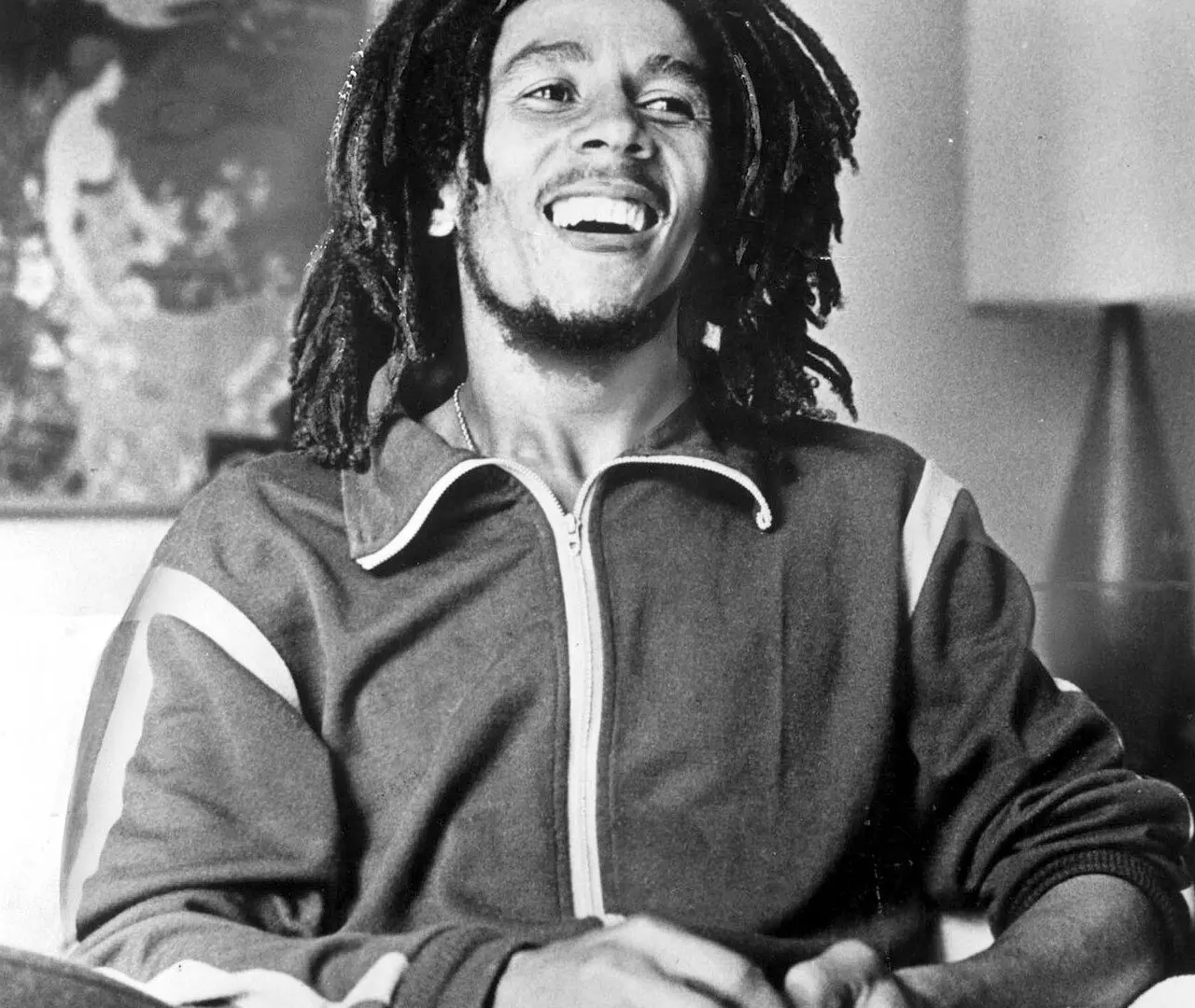
Bob Marley’s connection to Africa is routinely filed under cultural resonance: the reggae icon who sang of liberation, whose dreadlocks and Rastafarian faith gave him an African aesthetic that travelled well. That account is accurate as far as it goes and inadequate as an explanation. Marley’s Pan-Africanism was a political framework, argued through music over a decade, that set out a specific position on power, legitimacy and the relationship between the African diaspora and the continent from which it had been severed. The songs were the delivery mechanism. The argument was structural.
He was born on 6 February 1945 in rural Jamaica, the son of a white British colonial officer and a Jamaican woman of African descent. He made Africa central to his artistic and philosophical identity in the 1960s and 1970s, when Pan-Africanism was no longer only an intellectual movement of the diaspora but the framework within which newly independent states were defining their sovereignty. His Rastafarian faith, which venerates Emperor Haile Selassie I of Ethiopia, gave that identity a spiritual anchor. The result was music that was emotionally accessible and politically precise, carrying a Pan-African argument to audiences in Jamaica, West Africa, East Africa and eventually every part of the world where people understood what it meant to be positioned outside power.
Music as political action
The song Zimbabwe was not metaphorical. Marley performed it at Zimbabwe’s independence celebrations on 18 April 1980, before a crowd that included Prime Minister Robert Mugabe and thousands of Zimbabweans who had spent years fighting for the moment the song described. The performance was an act of political solidarity with a liberation movement whose outcome Marley had declared before it was certain.
At the One Love Peace Concert in Kingston in 1978, Marley brought the rival political leaders Michael Manley and Edward Seaga on stage and clasped their hands over his head, using cultural authority for political de-escalation. War, which drew its lyrics directly from a 1963 speech by Haile Selassie to the United Nations General Assembly, set a document of African political philosophy to music for a global audience that would never encounter the original. This was Marley’s Pan-Africanism in its most precise form. He used the reach that culture provides to carry an argument that politics could not place in the same rooms.
Marley died in May 1981, aged 36. His political significance rests in part on how his music connected liberation struggles with audiences across the diaspora.
An unfinished argument
The legacy questions are not sentimental. Songs recorded four and five decades ago still appear at demonstrations in West Africa, in South African community organising and in Caribbean political campaigns, because the argument they carry has not been resolved by the passage of time. Pan-African unity remains aspirational rather than structural. The conditions his songs described, from colonially inherited arrangements of resource capture to class structures that independence did not dismantle, have changed in form more than in character. Marley’s political relevance is not nostalgia. It is a measure of how far his argument is still waiting for its conclusion.
Culture as a means of communication
What makes the argument worth taking seriously as politics, and not merely as biography, is the distribution mechanism he understood. A Selassie speech to the United Nations reaches the diplomats in the room. The same words, set to music as War, reach a labourer in Lagos, a student in Kingston and a miner on the Zambian Copperbelt who will never read a communiqué. Marley grasped that culture is not a softer substitute for political power but a different delivery system for the same argument, one that crosses borders and outlives governments. The argument travelled because the song carried it, and it endures because the conditions it described (extraction renamed as partnership, independence without economic sovereignty) were never resolved. Marley did not write nostalgia. He wrote a brief that the continent has yet to close.



