Opens in a new tab

Topic

African Union and Pan-Africanism

AU institutions, Pan-Africanism, continental diplomacy

Ballot box of the type used in Ethiopian elections, a cloth bag suspended from ropes on a frame

News · Analysis

Electoral administration adds pressure to Ethiopia’s contested peace

The Pretoria agreement stopped the Tigray war by deferring who governs contested territory, and electoral administration in districts such as Alamata in Raya is now shaping that answer while renewed fighting in western Tigray raises the risk of escalation.

By Adedoyin Shittu · · 3 min read

Latest in African Union and Pan-Africanism

Facade of the New York Stock Exchange on Wall Street with large columns and a US flag

Economics

Who assesses Africa’s sovereign credit risk?

Moody's, S&P Global and Fitch set the price of African sovereign borrowing from New York and London, and African finance ministers argue their models overweight political risk and regional contagion, a cost a 2023 UNDP-commissioned study put at billions of dollars.

Adedoyin Shittu ·

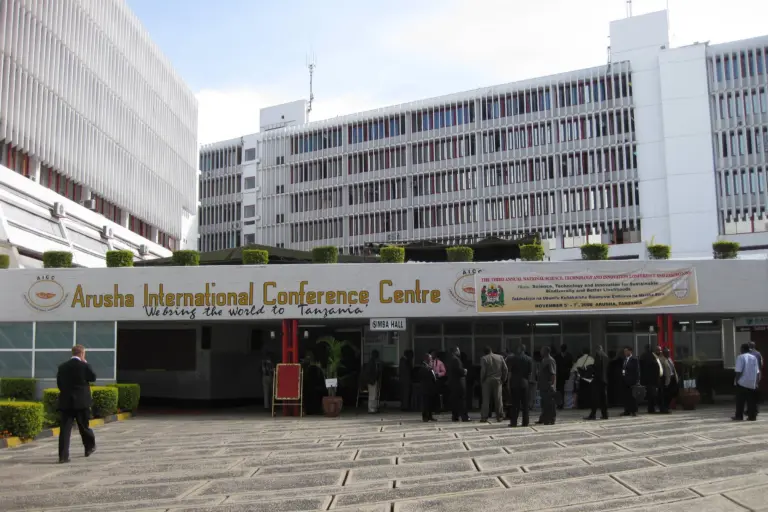
The Arusha International Conference Centre in Tanzania, with delegates gathered at the entrance.

News · Insight

African Court withdrawals restrict direct access to justice

Rwanda, Tanzania, Côte d'Ivoire and Benin each withdrew direct citizen access to the African Court on Human and Peoples' Rights after cases went against them, showing that a court built to bypass government goodwill still depends on the revocable consent of its defendants.

McDike Dimpka ·

A technician crouches at an open server rack with a laptop on the floor beside him.

Technology

Africa’s AI strategy needs computing capacity and enforceable contracts

The African Union's Continental AI Strategy is undermined by the continent's small share of global compute. Sovereignty will be decided in the contracts African states sign with hyperscalers on data residency, lawful access and local capacity, and coordination can turn pooled demand into negotiating power.

Victoria Akindele ·

A concourse at Addis Ababa Bole International Airport.

World · Insight

Africa’s free movement protocol still faces a ratification gap

The African Union's 2018 free movement protocol remains short of the fifteen ratifications it needs to enter into force, held back by migration, visa revenue and security anxieties. ECOWAS has run a functional free movement regime since 1979, showing integration advancing faster at regional level.

Adedoyin Shittu ·

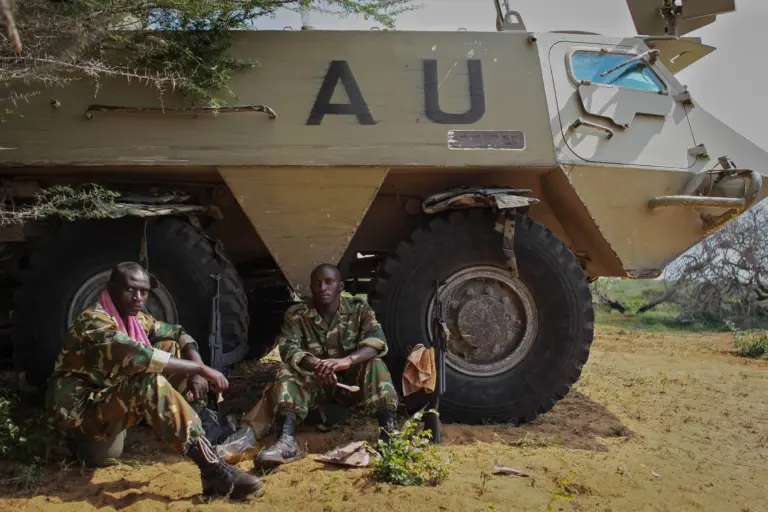
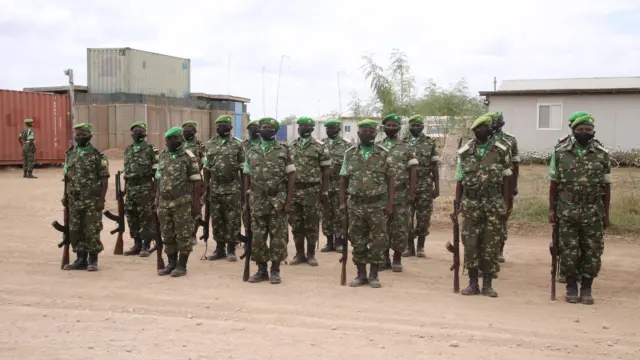
African Union soldiers rest in the shade of a sand-coloured armoured vehicle marked AU during an operation in Somalia.

World

Africa supplies peacekeepers but lacks a permanent Security Council seat

African states supply a large share of UN peacekeepers yet hold no permanent Security Council seat or veto, despite the 2005 Ezulwini Consensus. Reform stalls because a veto would give Africa real leverage, and African governments have never treated troop contributions as a bargaining instrument.

Ebenezer Makinde ·

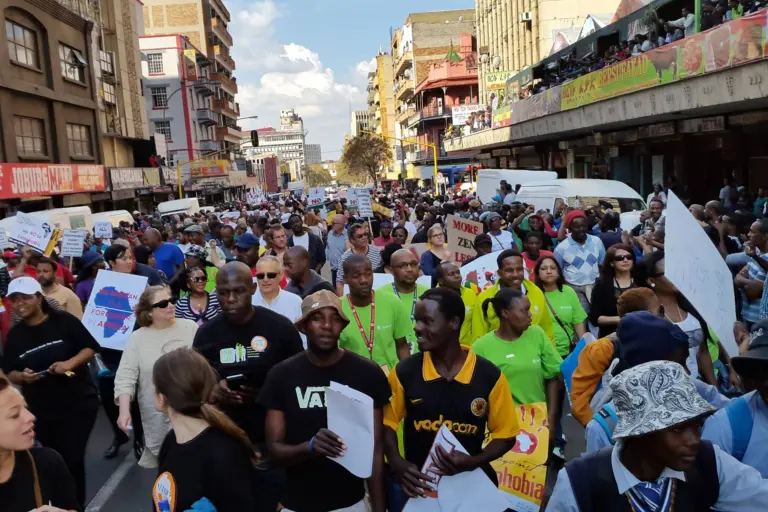
Thousands march through central Johannesburg against xenophobic violence, carrying placards reading "No African is a foreigner in Africa".

News

Violence against migrants tests South Africa’s regional relationships

Violence against foreign nationals in South Africa became a continental diplomatic issue as Ghana, Nigeria, Kenya, Malawi, Lesotho and Zimbabwe responded. South African business draws value from regional integration while migrants face attack on the street, exposing how far pan-African solidarity lags behind its rhetoric.

Aderonke Ajibade ·

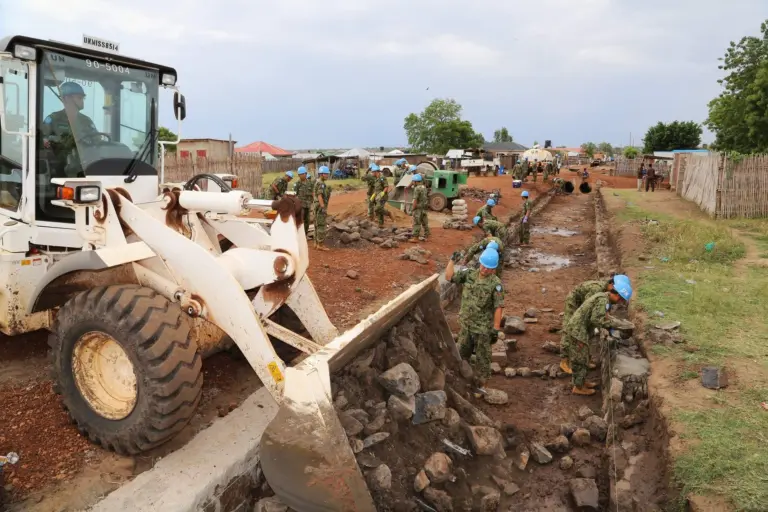
Blue-helmeted Japanese UN peacekeepers repair a roadside drain beside a white UN wheel loader in Juba, South Sudan.

News · Insight

South Sudan’s unfinished independence tests peacekeeping diplomacy

South Sudan's 2018 peace agreement has unravelled, with only about 7 per cent of a promised 83,000 unified forces deployed and Riek Machar detained in March 2025. Neither the African Union nor UNMISS has protected civilians, while oil-funded patronage turns the settlement into a contest over revenue.

Jamel Lahiani ·

Earlier in African Union and Pan-Africanism

Africa’s AI policies need public benefit, local capacity and accountable data use

African AI policy should be judged by public benefit, not by speed of adoption or domestic ownership alone. Turning the African Union's July 2024 Continental Artificial Intelligence Strategy into workable national rules requires validated applications, accountable data use, reliable infrastructure and local research capacity.

Victoria Akindele

Africa’s strategic resources require more coordinated bargaining

Africa sits beside contested Red Sea routes, holds critical mineral reserves and draws competition from the UAE, Saudi Arabia, Russia and China, yet bargains weakly. With 54 UN votes, what it lacks is coordination built on diversified economies, regional trade and accountable institutions.

Victoria Akindele

Bob Marley’s Pan-Africanism used music as political expression

Bob Marley's Pan-Africanism was a coherent political argument delivered through music, from performing Zimbabwe at the country's independence celebrations in 1980 to setting Haile Selassie's 1963 UN speech to song in War. The conditions his songs described remain unresolved, which is why they still surface at protests.

Joseph Isaac

Global shocks expose fractures in African institutions

Global shocks since 2022 have exposed fractures in African institutions, from Sahel coups and the Sudan war to great-power competition. ECOWAS and the African Union lack the enforcement credibility to set terms with external powers, and closing that gap needs deeper political integration.

Victoria Akindele

Rafah and South Africa’s legal challenge test African diplomacy

South Africa's genocide case at the International Court of Justice, filed in December 2023, turned African solidarity on Gaza into legal action. The Rafah operation exposed the African Union's declaratory approach and a double standard in international law that will shape African positions in multilateral debates.

Alao Abiodun

The African Union’s authority depends on its members’ commitments

The African Union's failure to reverse coups in Guinea, Mali, Burkina Faso, Niger and Gabon reflects its design rather than weak leadership. Members will not build enforcement that could be turned on them, and reliance on external funding and unpaid contributions further limits its authority.

Alao Abiodun

Libya confronts the institutional legacy of Gaddafi’s rule

Gaddafi's personal rule left Libya without institutions able to manage the transition after 2011. His fall removed a financier of the African Union, opened weapons depots whose arms reached Mali, Niger and Sudan, and exposed how little the AU could do to shape his country's fate.

Joseph Isaac

What the 2025 AU Commission election tests about continental power

The 2025 African Union Commission election tests whether member states want an executive engine or a protocol office. Dependence on external funding, uneven application of the 0.2 per cent import levy and limited leverage over suspended military-led states show how little authority the Commission exercises.

Victoria Akindele

Trump’s return calls for an African strategy beyond reaction

Trump's first term showed that a reactive African response to Washington costs more than American neglect itself. With AGOA's renewal and US aid such as PEPFAR uncertain, Africa needs collective bargaining through the African Union and stronger domestic revenue rather than strategies tied to US electoral cycles.

Jamel Lahiani