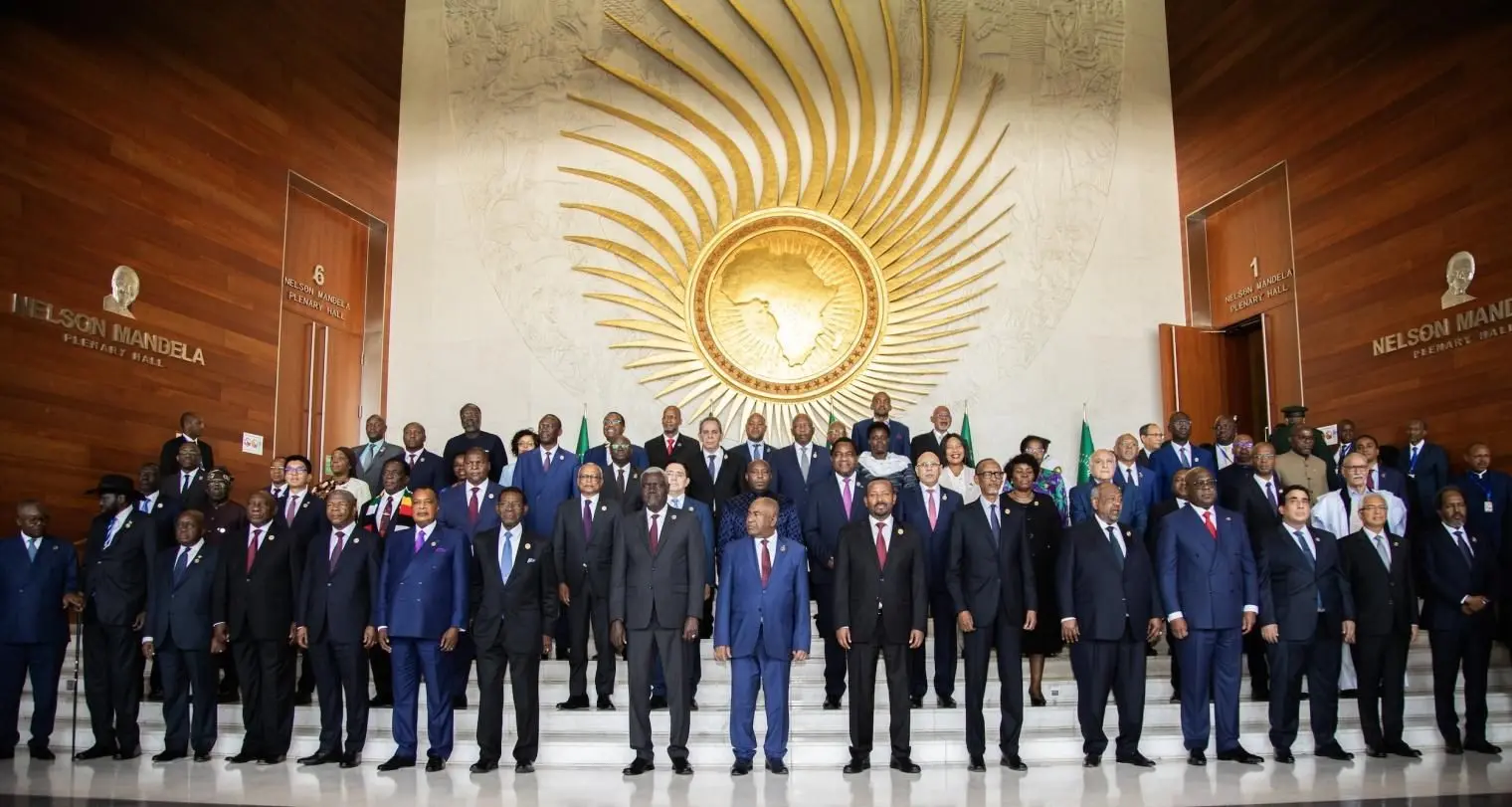
Ahead of the 2025 African Union Commission election, the choice of chairperson tests how much authority member states are willing to give their continental institution.
Member states will decide who leads the AUC, the body charged with executing the African Union’s agenda, managing its relationships with external powers and turning continental ambition into policy. The stakes go beyond any individual candidacy. The election exposes a question the AU has deferred for too long. Does the Commission exercise genuine executive authority, or does it serve as a protocol office for decisions already made elsewhere?
Competition for African partnerships makes that question pressing. China is deepening infrastructure commitments, Russia is consolidating security arrangements across the Sahel, and the United States is repositioning through Prosper Africa and changes to AGOA. The chairperson’s authority to shape the terms of engagement matters accordingly. The institutional architecture exists. The question is whether the leadership to use it will follow.
The engine room’s track record
The AUC replaced the Organisation of African Unity’s General Secretariat, an upgrade designed to give continental governance a genuine executive function. Two decades on, that ambition remains incompletely realised. The Commission has produced landmark frameworks, including Agenda 2063, the institutional groundwork for the Continental Free Trade Area and the African Peace and Security Architecture. But implementation gaps persist, and the distance between frameworks and outcomes is where the institution’s credibility is most tested.
Funding dependency remains the most corrosive problem. The AUC still relies on external partners, the European Union, the United States and the United Nations system, for a significant share of its programme budget. Dependence on external financing can constrain the Commission’s ability to carry out its priorities. The next chairperson inherits this condition regardless of their rhetoric.
Dependence on external financing can constrain the Commission’s ability to carry out its priorities.
The chairperson race as continental signal
The contest is never purely meritocratic. Regional rotation conventions and the negotiating weight of large member states shape the outcome, as they shape appointments in every major multilateral institution. What distinguishes the 2025 election is the convergence of pressures: the post-coup reconfiguration of West and Central Africa, fractures in the AU’s approach to the Sahel, and the question of whether the continental body can hold together member states with increasingly divergent geopolitical alignments.
These are not abstract questions. The suspension of Mali, Guinea, Burkina Faso and Niger from AU bodies tested the institution’s enforcement credibility and exposed its limited leverage over governments willing to absorb the diplomatic cost. The next chairperson must determine whether the AU’s framework on unconstitutional changes of government is enforceable doctrine or aspirational language.
What effective chairpersonship requires
An effective chairperson needs more than diplomatic fluency and technocratic competence, though both are necessary. The office requires the political courage to use the authority the Constitutive Act grants, authority that successive incumbents have often deferred to the Assembly of Heads of State rather than exercise directly. The Commission can initiate policy, propose budget frameworks and represent the continental body in international negotiations. Those powers have been inconsistently exercised, and in their underuse the AUC has ceded ground it formally holds.
The financing question needs a structural answer. The 0.2 per cent levy on eligible imports, established to reduce reliance on external donors, has not been consistently applied across member states. Without a sustainable budget funded by members, the Commission’s operational independence remains conditional. A chairperson unwilling to confront that dependency will reproduce the institution’s current limits regardless of personal qualities.
The stakes beyond the ballot
The election arrives as the consequences of institutional underperformance are most visible. The AfCFTA is in its implementation phase and needs the AUC to help coordinate regulatory harmonisation among states with divergent interests. The African Peace and Security Architecture faces credibility tests across several active conflicts. Climate finance negotiations demand a consolidated African position that can withstand pressure from major emitters.
The Commission cannot deliver on any of these agendas through frameworks alone. It needs a chairperson who treats the office as an executive function rather than a ceremonial platform: one willing to use the institution’s mandate as designed, to fight for a sustainable financing base, and to hold the continental body’s positions consistently enough that external partners read them as strategic commitments rather than negotiating formalities. The question the 2025 election must answer is whether the institution is ready for that.



