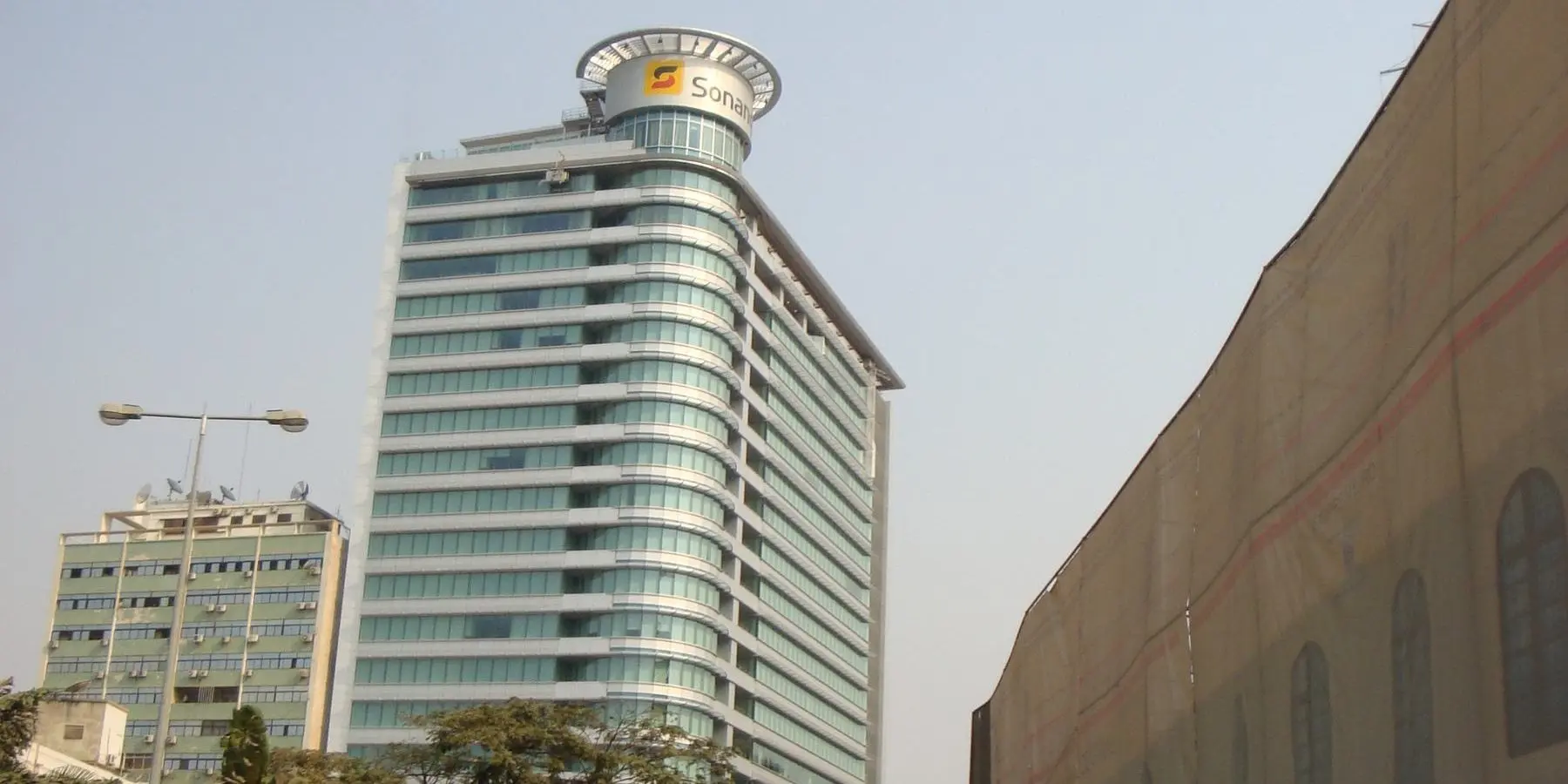
Within a year of José Eduardo dos Santos leaving the presidency of Angola in September 2017, much of what his daughter Isabel had been given by decree had been taken back. His successor, João Lourenço, dismissed her as chair of the state oil company Sonangol in November 2017. By July 2018 he had also annulled four contracts awarded to her companies within two years, worth more than US $22 billion between them, Maka Angola reported on 23 July 2018.
Isabel dos Santos, whom Forbes had listed as Africa’s first female billionaire, has long said her success came from hard work and business acumen rather than family connections. The author argues that the speed of her losses points the other way: a business empire that rested on presidential decisions could be undone by the next president. She denies wrongdoing, and none of the allegations below has been tested at a criminal trial.
Contracts awarded by decree
Maka Angola, the anti-corruption site run by the journalist Rafael Marques de Morais, set out the four contracts in July 2018. All four were awarded within two years, near the end of José Eduardo dos Santos’s 38 years of oil-funded rule. The largest was the Luanda Metropolitan Master Plan, a US $15 billion scheme to remake the capital. Her father put her in charge of it in 2015, and her company Urbinvest held the monopoly on the project.
The same year, under Presidential Order 58/15, a consortium of her company Niara Holding and China Gezhouba Group Corporation was awarded the Caculo Cabaça dam and hydropower station on the Kwanza River for US $4.5 billion, with financing from the Industrial and Commercial Bank of China (ICBC) to be repaid in Angolan oil. A year later a further order added US $500 million, taking the contract to US $5 billion, and her share of the joint venture fell from half to 40 per cent.
Maka Angola also questioned the need for the dam. It was to stand 19 kilometres from the newly built Laúca plant, which had cost more than US $4 billion, and would be the fourth such plant on a stretch of the Kwanza of about 130 kilometres.
The third contract was a coastal road of about 7 kilometres from central Luanda to the Corimba neighbourhood, with 400 hectares to be reclaimed from the sea and 700 hectares described as “of high density mixed-use residential and commercial development”. Urbinvest again held the monopoly, on a contract worth more than US $700 million to be financed by ICBC and China Exim Bank.
The port and the government’s rebuttal
The fourth contract was signed in the final weeks of the old presidency. Presidential Decree 207/17 gave Atlantic Ventures, a company Maka Angola linked to Isabel dos Santos, the right to build a new port and to manage it exclusively for 30 years, extendable by 15. According to Maka Angola, the state gave a sovereign guarantee for US $1.5 billion of financing to a company registered only the month before, and the port authority, Porto de Luanda, was told to buy 40 per cent of it for an undisclosed sum.
When the concession was revoked, Isabel dos Santos threatened to sue the state for breach of contract, Maka Angola reported. Atlantic Ventures argued that no public tender had been required: “The law applicable for this project is the Law on the Port Concessions and it was correctly applied by the former government in this case. The Law on Public Contracts – which could have demanded the holding of a public tender – does not apply to contracts for Port Concessions, as the current government underscores now.”
The Ministry of Transport replied on 20 June 2018. According to Maka Angola’s account of its statement, the ministry said José Eduardo dos Santos had awarded the contract without a tender and “without observing any formalisms”. It rejected the company’s claim that “Atlantic Ventures was set up as a partnership including national and international investors who are leaders in the port industry”, and said the investment would in fact come from the state.
The ministry also described who owned the company. It said one individual held 99 per cent of the shares and four others the remaining 1 per cent, that none of them had experience of a project on this scale, and that neither Isabel dos Santos nor any foreign investor was among the shareholders. The legal analyst Rui Verde, quoted by Maka Angola, concluded that the company’s argument did not hold: “There is no legal norm that makes an exception of public tender for a port concession contract. Thus, it must be subjected to the normal procedures for administrative contracts. That is the Law on Public Contracts (Law 9/16) [of 2016].”
Sonangol, diamonds and Unitel
Her father had made her chair of Sonangol by presidential decree in June 2016, which put her at the centre of the oil sector. Her companies also held the exclusive right to sell Angola’s diamonds abroad, in partnership with the state, Maka Angola reported; Angola, it noted, is the world’s fifth largest diamond producer. After her dismissal from Sonangol the government ended the diamond venture, saying, in Maka Angola’s summary, that the partnership had brought losses to the state and gains to her. She threatened to sue the state diamond company, Sodiam.
The asset that mattered most was the mobile operator Unitel. Sonangol and Isabel dos Santos each held 25 per cent of it, and Maka Angola said it had found no record that she paid for her shares. Unitel in turn held 51 per cent of Banco de Fomento Angola (BFA), one of the country’s main private banks, where she was vice-president of the board. PT Ventures, which held another 25 per cent of Unitel and had been taken over by the Brazilian operator Oi, had brought a US $3.5 billion claim before the International Court of Arbitration in Paris, aimed mainly at her, to recover US $600 million in unpaid dues and over her management of the company’s revenues.
Maka Angola’s reading of Unitel’s accounts alleged that the company had served her interests. Between 2012 and 2013, it reported, Unitel lent US $465 million to Unitel International Holdings, a company she wholly owned, without the shareholders’ consent, over ten years at 1 per cent interest, and she signed for both lender and borrower. Another of her companies, Tokeyna, then bought Unitel’s credit, and Maka Angola calculated that Unitel lost US $315 million. In 2014, it reported, she gave up a US $322 million dividend, which became a loan to Unitel at 12 per cent and earned her US $35 million a year later. In 2017 she drew US $458 million in dividends and debts, US $265 million of it for that year. These are Maka Angola’s figures. Her company later denied the looting allegations and said all decisions were made in “the best interests of Unitel”, ICIJ reported in 2020.
Prosecutors’ first questions
The criminal inquiry began inside Sonangol. In February 2018 its new chairman, Carlos Saturnino, said an internal audit had found suspicious transactions overseen by her, including a US $38 million payment to a Dubai-based company that she approved after her dismissal, Reuters reported. She denied wrongdoing and accused him of trying “to rewrite history”. Prosecutors opened an investigation in March.
On 17 July 2018, the state news agency Angop reported, a summons was issued for her to appear before prosecutors the next day to answer questions about her time at Sonangol. She did not appear. Her spokeswoman said she had not received any summons and had learned of it from the media.
What the losses meant
In the author’s view, the Angolan contracts were the base on which the rest of her business stood. Much of her international investment was in Portugal, and Maka Angola argued in July 2018 that those holdings depended on income from Angola and would be hard to sustain without it. Her public threats to sue the state, the author argues, strengthened Lourenço’s hand rather than her own.
The author’s conclusion, which echoes Maka Angola’s own closing judgement, is that Isabel dos Santos had the means to do lasting good for Angola and still be very rich, and chose instead to build a private fortune on business with the state. Whether any of that business was unlawful is for the courts, which, as the update below records, have not yet decided it. The European advisers and banks that later reporting linked to her fortune are examined in Isabel dos Santos and the international networks behind Angola’s wealth disputes.



