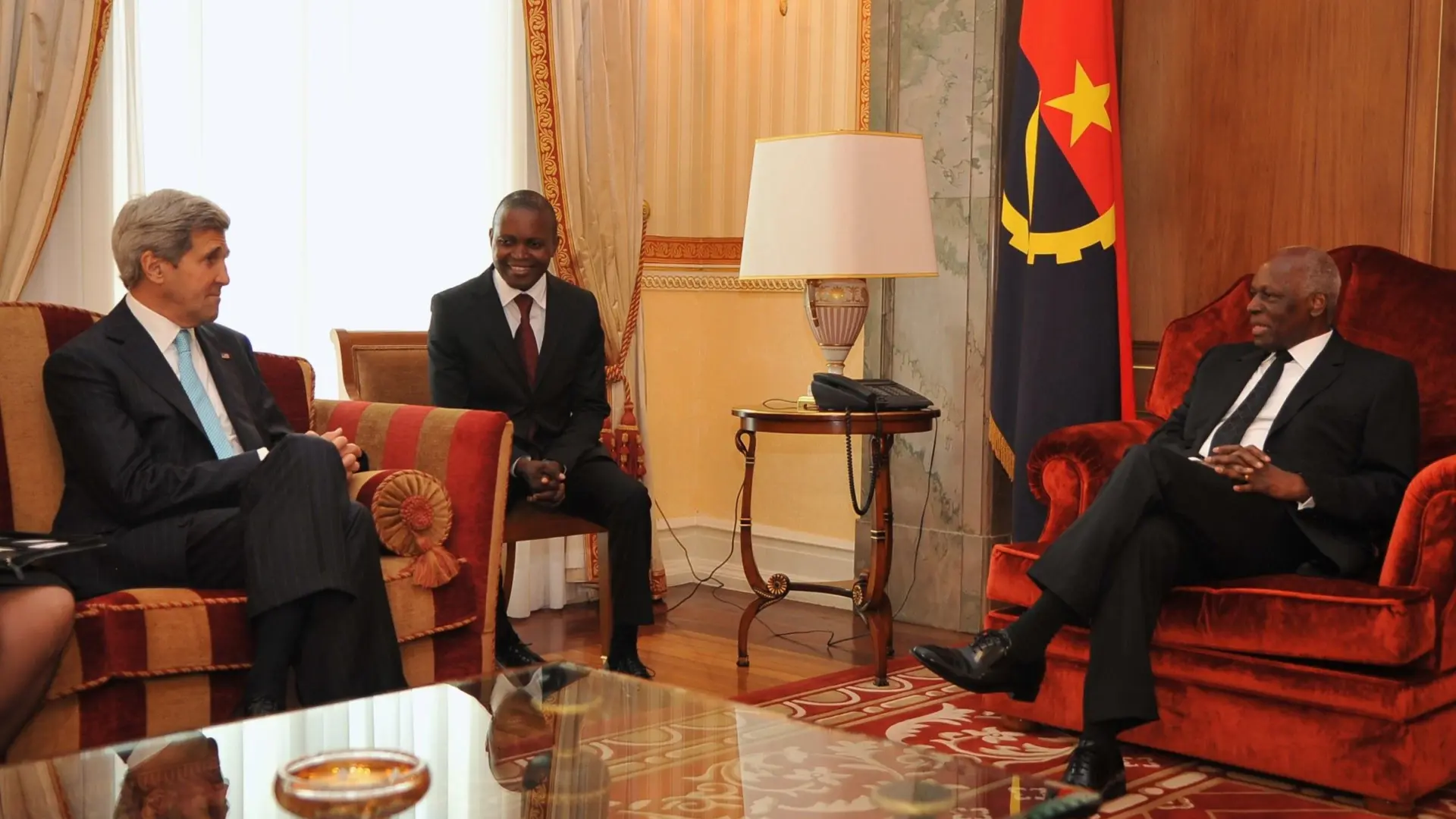
Isabel dos Santos built one of Africa’s largest private fortunes while her father, José Eduardo dos Santos, was president of Angola, and the inquiries into that fortune now run through courts and regulators in Luanda, Lisbon, London and Amsterdam. Five years after the Luanda Leaks, she has not been convicted of any crime. What the proceedings have exposed is less a verdict on one person than a map of the international infrastructure that elite wealth relies on: auditors, law firms, banks and holding companies far from Angola.
What Isabel dos Santos held
At its peak, according to the International Consortium of Investigative Journalists (ICIJ) and company filings, dos Santos held an indirect 25 per cent stake in Unitel, Angola’s largest mobile operator, through Vidatel, a company registered in the British Virgin Islands. Unitel in turn owned 51.9 per cent of Banco de Fomento Angola, one of the country’s largest commercial lenders. She held 42.5 per cent of Banco BIC in Angola and of EuroBic in Portugal, controlled the Candando hypermarket chain, and held 70 per cent of ZAP, the dominant pay-television and broadband provider. In January 2013 Forbes named her Africa’s first female billionaire. These were major assets in an economy whose formal shape was set by decisions taken in the presidential palace.
What the Luanda Leaks reported, and her response
ICIJ’s Luanda Leaks investigation, published on 19 January 2020, reported that state contracts, insider relationships and offshore structures helped build her business empire. It reported that companies linked to her and her late husband, Sindika Dokolo, secured public works contracts, telecoms licences, diamond-marketing rights and state-backed loans during her father’s 38-year presidency. In a written response to ICIJ before publication, her lawyers, Carter-Ruck, said she denied all wrongdoing, including any allegations of looting, fraud and contract overcharging. She later called the investigation an “orchestrated and well-coordinated political attack”, The Guardian reported. Those are reported allegations, not court findings.
The legal record has grown since, and its status needs stating precisely. On 23 December 2019 the Luanda Provincial Court froze her Angolan bank accounts and company stakes, including in Unitel, BFA and ZAP, over alleged state losses of more than $1.14 billion. In February and March 2020, acting on Angolan requests for legal assistance, Portugal’s Central Court of Criminal Investigation froze her Portuguese accounts and ordered the preventive seizure of her shares and property there, including stakes in EuroBic, NOS and Efacec. Those measures remain precautionary. In November 2022 Interpol issued a Red Notice at Angola’s request, which she has contested from Dubai. In January 2024 Angola’s Prosecutor-General charged her and several associates with crimes, including embezzlement, fraud, money laundering and influence peddling, over $219 million in alleged losses during her chairmanship of the state oil company Sonangol in 2016 and 2017.
Two significant rulings came in civil courts. On 15 June 2023 the Enterprise Chamber of the Amsterdam Court of Appeal, in a corporate inquiry, found that mismanagement had allowed €52.6 million of Sonangol’s money to be diverted through Esperaza Holding into Exem Energy, a Dutch company co-owned by dos Santos and her husband. It was a civil inquiry, not a criminal trial. In London, the High Court granted Unitel a worldwide freezing order of £580 million against her in December 2023 over unpaid loans made in 2012 and 2013 to her Dutch vehicle, Unitel International Holdings. On 30 September 2024 the Court of Appeal dismissed her appeal. A freezing order preserves assets until Unitel’s claim is tried; it is not a finding of liability. The United States barred her from entry in December 2021, and Britain placed her under anti-corruption sanctions in 2024. She has not stood trial in a criminal court.
Public image and the reading of Lourenço’s campaign
The public image built around her mattered. Africa’s first female billionaire. The continent’s most powerful businesswoman. A symbol of what African enterprise could achieve. These framings supported the claim that spectacular individual wealth in a resource-dependent state reflected market success rather than, as ICIJ’s reporting alleged, privileged access to the state. The distinction determines whether accountability is possible at all.
When President João Lourenço moved against the dos Santos business network after taking office in September 2017, many read the action as political rather than judicial: a new leader dismantling a predecessor’s networks, not a state pursuing alleged corruption. That reading is not wrong, but it is incomplete. Lourenço had served as defence minister and as vice-president of the ruling MPLA under José Eduardo dos Santos. His campaign showed that a successor from inside the same ruling party could dismantle his predecessor’s patronage network once state power shifted, and could turn legal instruments against people who had once been beyond their reach.
The advisers, banks and jurisdictions
The international side of the case carries the structural point. ICIJ reported that European accounting firms, law firms and financial institutions handled the assets, and raised questions about how their origins were checked. Its reporting named PwC and KPMG among the auditors and advisers, Portuguese law firms among those that set up companies and drafted contracts, and European banks among those that processed transfers or extended credit. PwC said in January 2020 that it had ended its work for entities controlled by dos Santos and opened an internal investigation. KPMG said it had followed professional standards. The Portuguese law firms said they had complied with the rules in force at the time.
Regulators followed the reporting. Banco de Portugal opened supervisory inspections of anti-money-laundering controls at Portuguese lenders that served her network, and EuroBic ended its commercial relationship with her. In February 2022 the European Banking Authority concluded its own Luanda Leaks investigation, pointing to gaps in anti-money-laundering supervision. The City of London, Dutch holding companies and Portuguese banks all appear in this record. The structures that held the fortune were built largely outside Africa, in jurisdictions whose regulators and professional firms now face questions about due diligence.
Elite capture does not survive without that infrastructure. The money needs somewhere to be held, grown and returned on demand. Some financial centres have tightened their rules under pressure from journalists, civil society and legislators. Britain’s Economic Crime and Corporate Transparency Act 2023 gave Companies House powers to verify the identity of directors and people with significant control, and to query or remove false filings. The European Union’s 2024 anti-money-laundering package created a single rulebook, extended due-diligence duties to more non-financial gatekeepers, tightened checks on beneficial ownership and established a new authority, AMLA, in Frankfurt. The pressure on dos Santos is therefore not only an Angolan story. It tests the system of cross-border elite capital that made state capture workable for decades.
Representation and accountability
For African women the case carries a particular weight. Her story was presented as evidence of female advancement. Representation within an extractive system is not the same as its transformation.
Imperfect accountability as precedent
Angola’s pursuit of accountability is imperfect, politically shaped and unevenly applied, as such processes tend to be almost everywhere. Imperfect accountability is still not the same as none. The precedent matters more than the outcome of any single case. Proximity to presidential power did not confer permanent protection. Complex offshore corporate chains can be mapped across borders when leaked records, bank filings and mutual legal assistance align. The public image of Africa’s richest can be examined rather than simply celebrated.
Whether or not Angola’s prosecution reaches a verdict, freezing orders in Luanda, Lisbon and London, and tighter ownership rules in Britain and the European Union, show that offshore layers no longer guarantee protection once political cover recedes. Whether Angola’s effort becomes a regional template or stays a local exception will depend on whether African civil society, investigative journalists and regional bodies treat state capture as a structural problem rather than a string of individual scandals. For financial centres the test comes earlier in the chain: whether gatekeepers scrutinise politically exposed capital before it enters the system, rather than years after a leaked archive forces the question. That history runs back to José Eduardo dos Santos and Angola’s oil-funded rule, and it fits a wider pattern in which African countries are not winning the fight against corruption.



