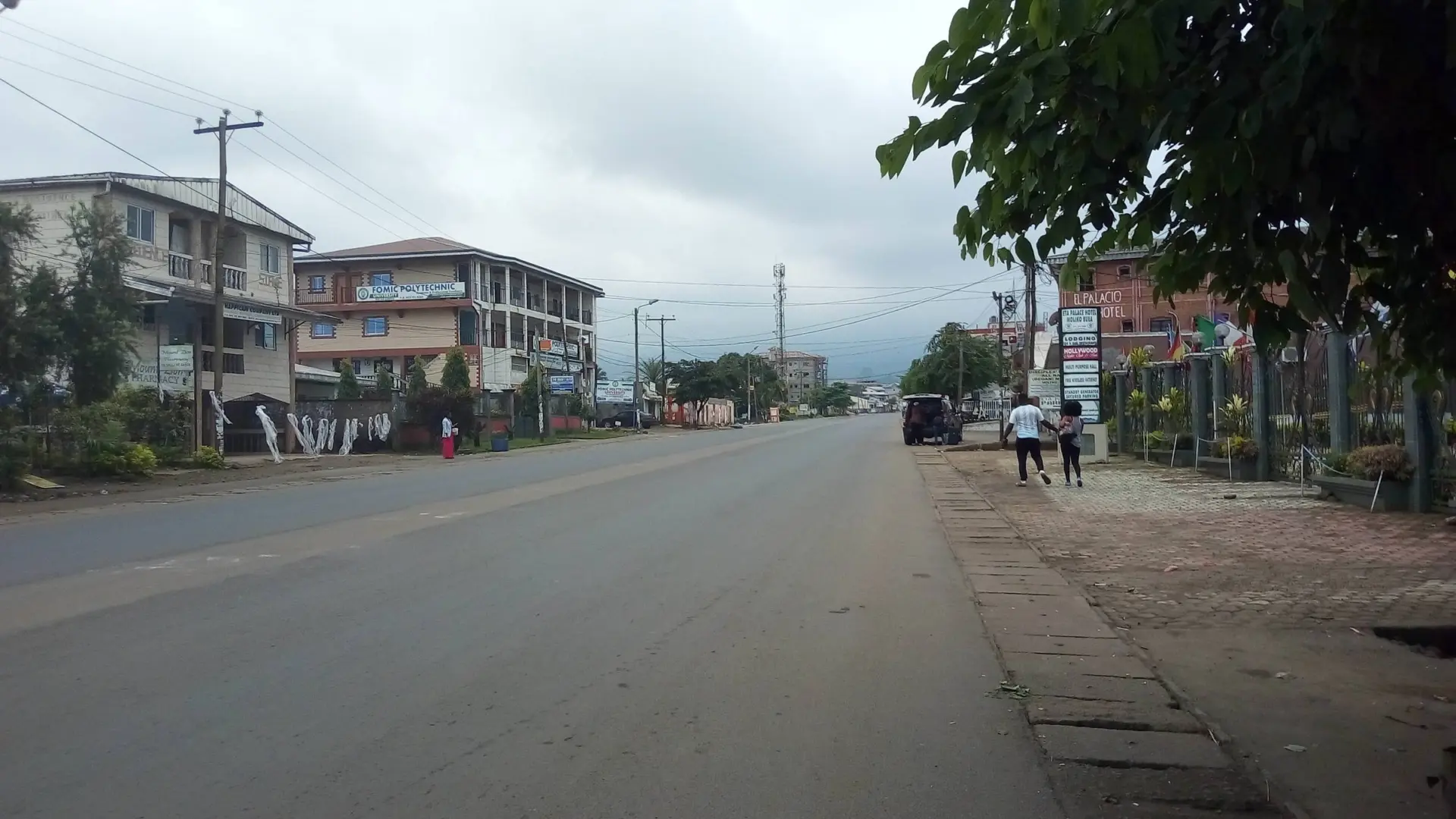
President Paul Biya’s national dialogue on the conflict in Cameroon’s two English-speaking regions is due to open in Yaoundé on Monday 30 September 2019 and to run until 4 October. The people whose agreement any settlement needs will not be in the room. Separatist leaders abroad have refused to come, the best known separatist leader inside Cameroon is serving a life sentence, and the federal option that many English-speaking Cameroonians support has little space on the agenda.
A dialogue held on those terms looks set to fail before it starts. The argument of this analysis is that Cameroon needs a real and inclusive national dialogue in which no subject is off limits, federalism included, and that it needs one as the alternative to secession, which this author does not support.
What three years of conflict have cost
Biya announced the dialogue in a public address on 10 September 2019. The government says it has invited more than 1,000 people, among them lawmakers, clergy, teachers and civil society activists, Voice of America reported.
The International Crisis Group’s statement of 26 September 2019 sets out the cost of the conflict so far. Crisis Group estimates that the violence has claimed around 3,000 lives, displaced half a million people within Cameroon and driven another 40,000 to Nigeria. It says 700,000 children have been deprived of schooling in their home areas and that one in three people in the Anglophone regions needs humanitarian aid. Africa 360° has examined elsewhere how armed conflict and failures of governance produce refugees across the continent.
The economy has suffered as well. According to Crisis Group, the Cameroon Development Corporation and PAMOL, two of the country’s biggest agricultural companies, both owned by the state, have lost up to 80 per cent of their capacity. In September 2018, it adds, companies working in the Anglophone regions reported losses estimated at half a billion dollars since the crisis began.
The security forces are overstretched, Crisis Group says, with separatists to fight in the west and the Islamist militant group Boko Haram in the north. In May 2019 it reported that Cameroon also faced violence in the Adamawa region.
How a strike by teachers and lawyers became a war
Cameroon’s population of 24 million is mostly French-speaking, and English speakers make up about a fifth of it. They live mainly in the Northwest and Southwest regions, which Britain administered after the First World War while France administered the rest. British Cameroon joined French Cameroon, which was already independent, in 1961. The union was a federation, and each part kept the courts and schools it had inherited from its colonial power.
That arrangement lasted 11 years. In 1972 Ahmadou Ahidjo, the country’s first president, scrapped the federation through a referendum and introduced a unitary national government run from Yaoundé. Anglophone grievances date from that decision, and it is why so many English speakers still ask for a return to federalism and some for outright secession. Africa 360° has examined the same contest between inherited borders and self-determination in the question of Somaliland’s recognition.
The present crisis began in late 2016 as a protest by lawyers and teachers in the two regions against the use of French in their common law courts and English-model schools, and against the posting of Francophone magistrates and teachers to the area. English speakers have long complained of being marginalised by a French-speaking ruling class.
The state answered with force. Human Rights Watch, in a report of July 2018 on abuses by both sides, said government forces had used live ammunition against largely peaceful demonstrators, tortured and mistreated suspected separatists and detainees, and burned homes in several villages. The government also cut off the internet in the two regions for more than three months, restoring it in April 2017, and Crisis Group records that the leaders of the federalist movement were imprisoned in January 2017.
Some separatists then took up arms. Numerous armed groups have emerged, the Ambazonia Defence Forces among them, calling for the independence of the two regions under the name Ambazonia. The same Human Rights Watch report found that armed separatists had extorted, kidnapped and killed civilians and prevented children from going to school. In March 2019 the organisation said government forces had killed scores of civilians and torched hundreds of homes over the previous six months, while armed separatists had assaulted and kidnapped dozens of people. Both sides, in short, stand accused of abusing the civilians they claim to protect.
On 20 August 2019 a military court in Yaoundé sentenced Sisiku Julius Ayuk Tabe, head of the self-declared Ambazonia Interim Government, and nine other leaders to life imprisonment on charges including terrorism, rebellion and secession. The ten lodged an appeal on 26 August, and Human Rights Watch said the trial raised serious concerns about due process. Crisis Group says separatists responded to the sentences by stepping up their attacks. In early September they imposed a “lockdown”, a general strike that has again stopped the school year from starting. Nearly all schools in the area, Crisis Group adds, have been closed for most of the last three years as separatists have enforced a school boycott, sometimes violently.
Within the government, meanwhile, changing the form of the state remains taboo, as Crisis Group put it in May 2019. Biya’s government has rejected both a return to federalism and any separation, according to an AFP report carried by Al Jazeera on 30 September 2019.
Who will be at the table and who will not
The dialogue is to be held at the Palais des Congrès in Yaoundé. Biya has entrusted it to the prime minister, Joseph Dion Ngute, an Anglophone, who has consulted a wide range of Cameroonians. Crisis Group notes that most of them are not Anglophone, and that Biya’s speech of 10 September referred to the “supposed marginalisation” of Anglophones.
A survey carried out by religious leaders ahead of the dialogue shows how far opinion in the two regions has moved. Cardinal Christian Tumi, the emeritus Archbishop of Douala, told journalists after presenting the results to the prime minister on 18 September that more than 1,000 Anglophones had answered the questionnaire. It offered federation or decentralisation as the choices, he said, and respondents wrote in separation themselves.
“In our questionnaire to Anglophones, we tried to influence the Anglophone opinion, but we did not succeed; therefore, it shows how deep the problem is… When we said, ‘what form of government do you think can solve this problem? Federation or decentralization…’ I think just about 4 or 5 people reacted out of a thousand. 69 percent said absolute separation,” Tumi said, as Crux reported. “We drew the conclusion … that 69 percent of our respondents are convinced that if we want to love each other; that is to say, if the Anglophones and Francophones want to live as brothers and sisters, absolute separation…that is to say, secession, is important.”
Those who speak for that opinion are staying away. One activist, Mark Bareta, was the separatist most open to talks, according to George Ewane, the dialogue’s spokesperson. In a letter to the prime minister, published by the Cameroonian outlet Mimi Mefo Info, he wrote that “I cannot in all good faith honour your invitation” and that “the presence of third party enforcers/mediators is of prime necessity for justice to be respected and seen to be done”. On Friday 27 September he announced that he was pulling out, saying that “the only way to have real negotiations is to hold them on neutral territory”, an AFP report carried by Al Jazeera on 30 September 2019 recorded.
Eric Tataw, who lives in the United States, has also turned down his invitation. He told Voice of America that he will not attend because he and other separatists in the diaspora are wanted in Cameroon on charges of secession and terrorism. Cameroon should free the detained leaders to show that it is ready for dialogue, he argues. “I have told them categorically clear that let them release all detainees, and then start discussing with them and then from there we will know if the president of Cameroon is serious to have dialogue or not,” he said.
None of the separatist leaders in the United States and Europe whom VOA contacted said they would attend. Some separatists have said on social media that the talks should be held in Switzerland or Ivory Coast, under the supervision of powers such as the United States, Germany and Britain and in the presence of the United Nations. According to Crisis Group, the main separatist leaders abroad restated on 22 September that they were willing to talk to the government but rejected the planned dialogue as “purely internal”. Their conditions are international mediation, a venue outside Cameroon and an agenda on the terms of separation.
The government has refused the first of those conditions. Ewane told VOA that Biya had ruled out inviting a foreign mediator, and that some of the nations offering to mediate had not stopped Cameroonians in the diaspora from financing violence at home. “International mediation is not necessary,” he said. Crisis Group observes that the government has not called a ceasefire or offered separatists safe passage to attend, and has made no move to release Anglophone prisoners.
Ayuk Tabe has rejected the offer of dialogue too, the news agency AFP reported on 25 September, adding that in public he has called for secession to be negotiated through talks. Some moderate Anglophone leaders, AFP said, citing press reports, would like a presidency that rotates between the two language groups, combined with a federation of eight states. After his re-election in 2018, however, Biya ruled out any move towards federalism, according to the same report.
Federalists who are willing to attend may find they have little time to speak. Tumi’s Anglophone General Conference, which brings together Catholic, Protestant and Muslim leaders, will take part, but Crisis Group warns that the prime minister’s preliminary agenda leaves its leaders little room to present their views.
A dialogue with no taboos
English-speaking Cameroonians in the Northwest and Southwest say that the state has treated them as second-class citizens, in the courts, in the schools and in the distribution of power and wealth. The government mishandled a peaceful protest in 2016, and civilians have since been killed by forces on both sides.
A dialogue that excludes the people who are fighting, and that will not discuss the form of the state, cannot repair that. In this author’s judgement Cameroon is drifting towards two separate, hostile and unequal societies, one French-speaking and one English-speaking. More than ever, it needs a real and inclusive national dialogue in which no subject is off limits.
Dialogue, yes. Separation and secession, no.



