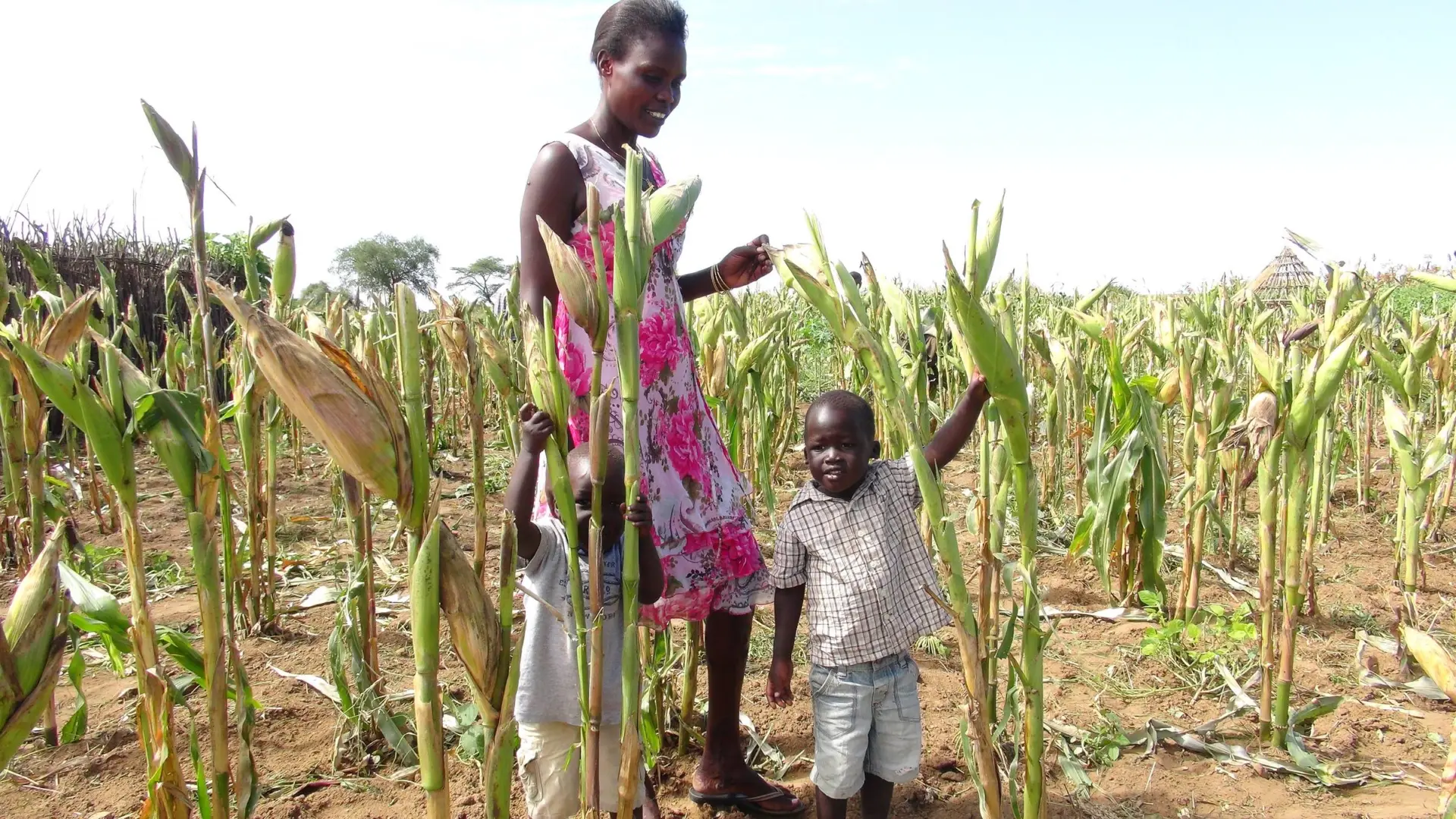
Climate change is turning the variability that African smallholder farming systems were built to absorb into irregularity they cannot sustain. Traditional open-field farming, calibrated against generations of accumulated knowledge about local rainfall patterns, pest cycles and planting windows, is being unmade incrementally, season by season, until families face not a bad year but a structural renegotiation with land that no longer behaves as inherited knowledge says it should.
The response is not a matter of teaching farmers new techniques. Rebuilding Africa’s food systems for resilience is a problem of capital, seed systems, extension services and infrastructure, and it is also a question of sovereignty, because a continent that cannot feed itself negotiates everything else from weakness.
Pressure on farming systems
In Southern Africa, Zimbabwe’s farming communities illustrate the problem with the specificity that statistics obscure. Shifting rainfall patterns and heat-fuelled pest outbreaks hammered crop yields in the Mutoko district during 2025’s growing season, in a region whose agricultural output has historically been reliable enough to support both subsistence and surplus sale. Drought in one planting window followed by flash flooding in the next turned timing decisions that are normally complex into gambles with survival stakes.
In Eswatini, the climate stress was acute enough to drive emergency infrastructure responses: greenhouse shelters and shade nets deployed to create controlled growing conditions for crops that could no longer be reliably grown in the open. Smallholder farmers moving their cultivation under cover is not a technological triumph. It is adaptation under pressure.
The Sahel’s agricultural crisis has a longer documented history. Across the arid belt from Senegal to Sudan, reduced and erratic rainfall, expanding desert margins and rising growing-season temperatures have compressed the viable farming zone while reducing reliable grazing land. That compression places herders and farmers in closer competition over the same land. Climate stress is one driver of the resulting conflicts, alongside politics and land tenure, and it falls on communities whose governments lack the fiscal capacity to manage displacement, food insecurity and intercommunal tension at once.
Investing in adaptation
Climate-smart agriculture (the convergence of drought-tolerant crop varieties, precision irrigation, improved soil management, and early warning systems that allow farmers to adjust planting decisions in response to seasonal forecasts) is the most operationally viable pathway through which African food systems can be rebuilt for resilience. But the transition from traditional to climate-smart farming is not a knowledge transfer problem. It is a capital problem, a seed system problem, an extension service problem and an infrastructure problem simultaneously. Drought-tolerant cassava and sorghum varieties exist. Getting them into the hands of smallholder farmers in remote districts, backed by the agronomic support to use them effectively, requires the same institutional infrastructure (roads, credit systems, market access, government extension networks) whose absence is itself a product of the underdevelopment that climate change is now compounding.
Africa’s food security will be determined in the granular decisions governments make about agricultural research budgets, irrigation investment, rural credit systems, and the political will to maintain food system support when debt service, currency depreciation and competing social spending push agriculture down the priority ranking.
Food and sovereignty
There is a sovereignty argument here that the food-aid framing obscures, and it is the one African governments should be making loudest. Africa’s agricultural sector is not a welfare problem to be managed with food aid and emergency distribution. It is the productive base of the continent’s sovereignty, and climate change is attacking that base directly. A continent that cannot feed itself negotiates from weakness. Its climate-finance demands are heard as appeals rather than terms. Its trade positions bend under the threat of an import bill it cannot pay. Food import dependency is not merely an economic vulnerability. It is a standing transfer of leverage to whoever sells the grain. To rebuild the smallholder system for a changed climate is therefore not rural welfare. It is one of the most basic acts of statecraft a government can perform, because greater food-system resilience reduces exposure to external supply shocks.



