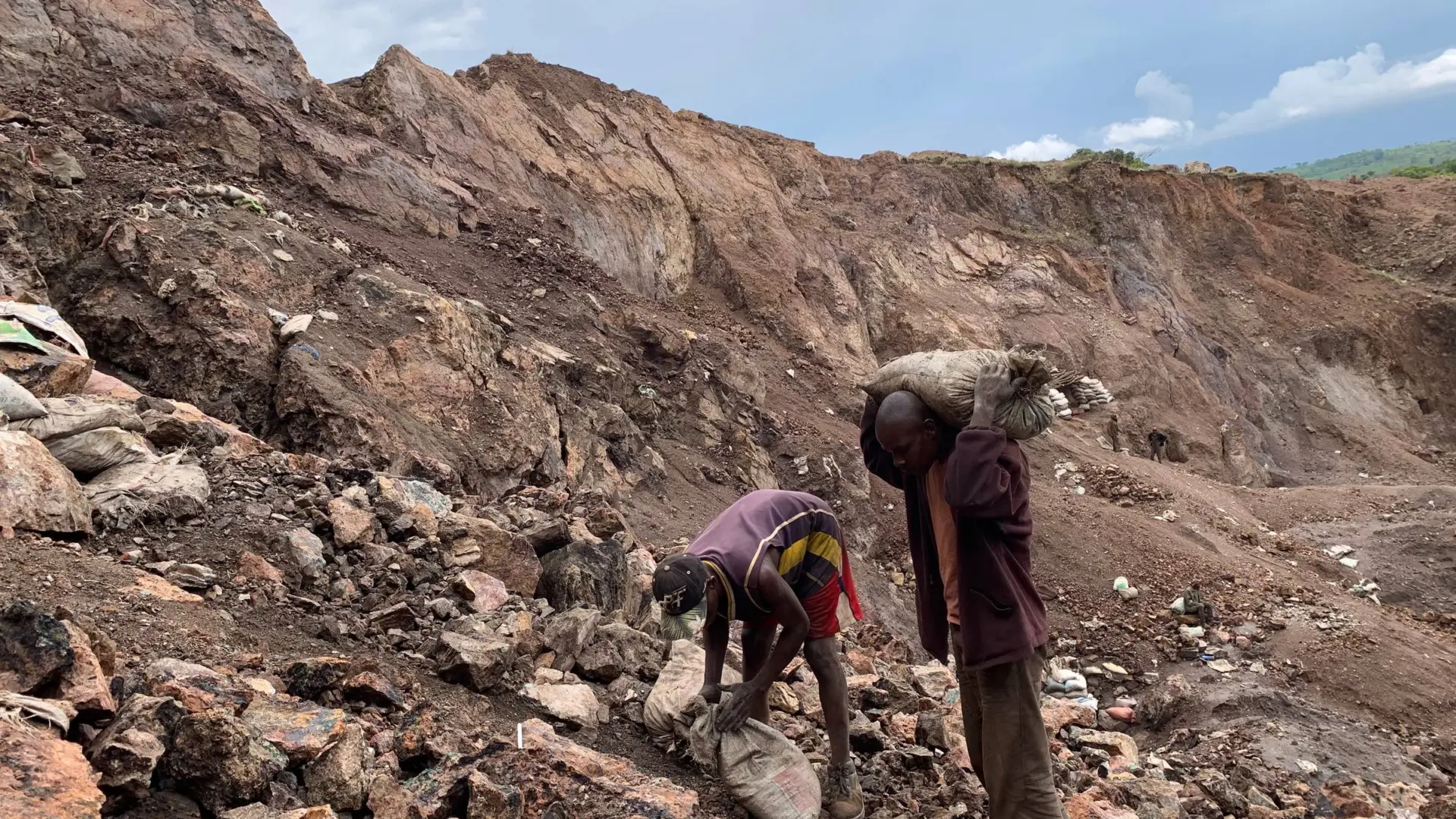
Africa sits at the extractive end of mineral value chains whose most profitable segments are located in China, Germany and the United States. Ore and concentrate leave the continent. The processing happens elsewhere, and so does the margin. This is not a historical accident. It is the current design of the global mineral economy, and African governments have helped sustain it through the mining agreements they sign and the policies they leave unchanged.
That makes the processing gap partly a policy outcome, and policy can change it. Indonesia’s nickel ore export ban shows that political will matters. But export restrictions alone will not do the work. African beneficiation also needs reliable power, infrastructure, affordable capital and mining agreements with royalties that reflect what the minerals are worth.
Where the value goes
Tungsten is not the headline mineral. That status belongs to cobalt, lithium and coltan, the inputs for battery technology and the energy transition. But tungsten is instructive precisely because it is unremarkable. It appears on the EU’s critical raw materials list, reflecting its industrial importance. It is extracted, exported as ore or concentrate, and processed into industrial value by countries with the refining infrastructure, the capital and the trade architecture to capture that value. Ore and finished tungsten carbide sell at different prices, although any estimate of the processing margin must account for grade, recovery, conversion costs and product specifications. Rwanda and Burundi are among the world’s top tungsten producers. Neither has a domestic tungsten processing industry of consequence, and neither captures more than a fraction of the value embedded in what it produces.
The pattern is wider than tungsten. Africa is a leading supplier of cobalt, platinum group metals, manganese, chromite and phosphate rock. In each case the manufacturing value (battery cells, catalytic converters, steel alloys, fertiliser compounds) is captured largely outside the continent. The DRC is a major cobalt producer, though its share of mine production must not be confused with its share of global reserves. Phosphate deposits in Morocco and Western Sahara underpin global fertiliser supply chains. South Africa’s platinum group metal deposits are important for hydrogen fuel cell technology. Rwanda’s 3TG minerals (tin, tantalum, tungsten and gold) flow through certification schemes designed to prevent conflict financing but not to create Rwandan processing capacity.
The obstacles are real
The counter-arguments are real but not decisive. Processing requires infrastructure (reliable power, water, roads, port capacity) that many African mining regions lack. It requires technical capacity that takes time and institutional investment to build. It requires access to capital, which is more expensive and more conditional for African governments and firms than for their counterparts in Asia or the Gulf. And it requires the political continuity and regulatory predictability that make long-term industrial investment rational. All of these are genuine obstacles. None of them is permanent.
Indonesia, which in 2020 banned exports of unprocessed nickel ore to force investment in domestic smelting capacity, demonstrated that political will to move the value chain upstream is a critical variable. The obstacles to African beneficiation are real. Accepting them as permanent is a political decision, not an inevitability.
Interests that keep extraction in place
The economic logic of beneficiation is strong. The political economy of extraction is entrenched. Mining companies operating under low-royalty agreements signed in conditions of fiscal pressure have little incentive to advocate policies that would require them to invest in local processing. The arrangement persists because it was built by decisions, and decisions can be reversed.
The unglamorous work
Africa will not capture this value through declarations at mining summits or through export bans announced without the infrastructure to enforce them credibly. It will do so through the patient, unglamorous work of building processing capacity, negotiating mining agreements with royalty structures that reflect actual mineral value rather than commodity floor prices, investing in technical and vocational training for industrial workers, and building the continental trade architecture that makes intra-African mineral trade economically rational. Regional trade rules can support the cross-border supply chains this requires. The processing gap is a policy condition presented as a natural one. The moment governments start treating it as a choice is the moment the arithmetic begins to change.



