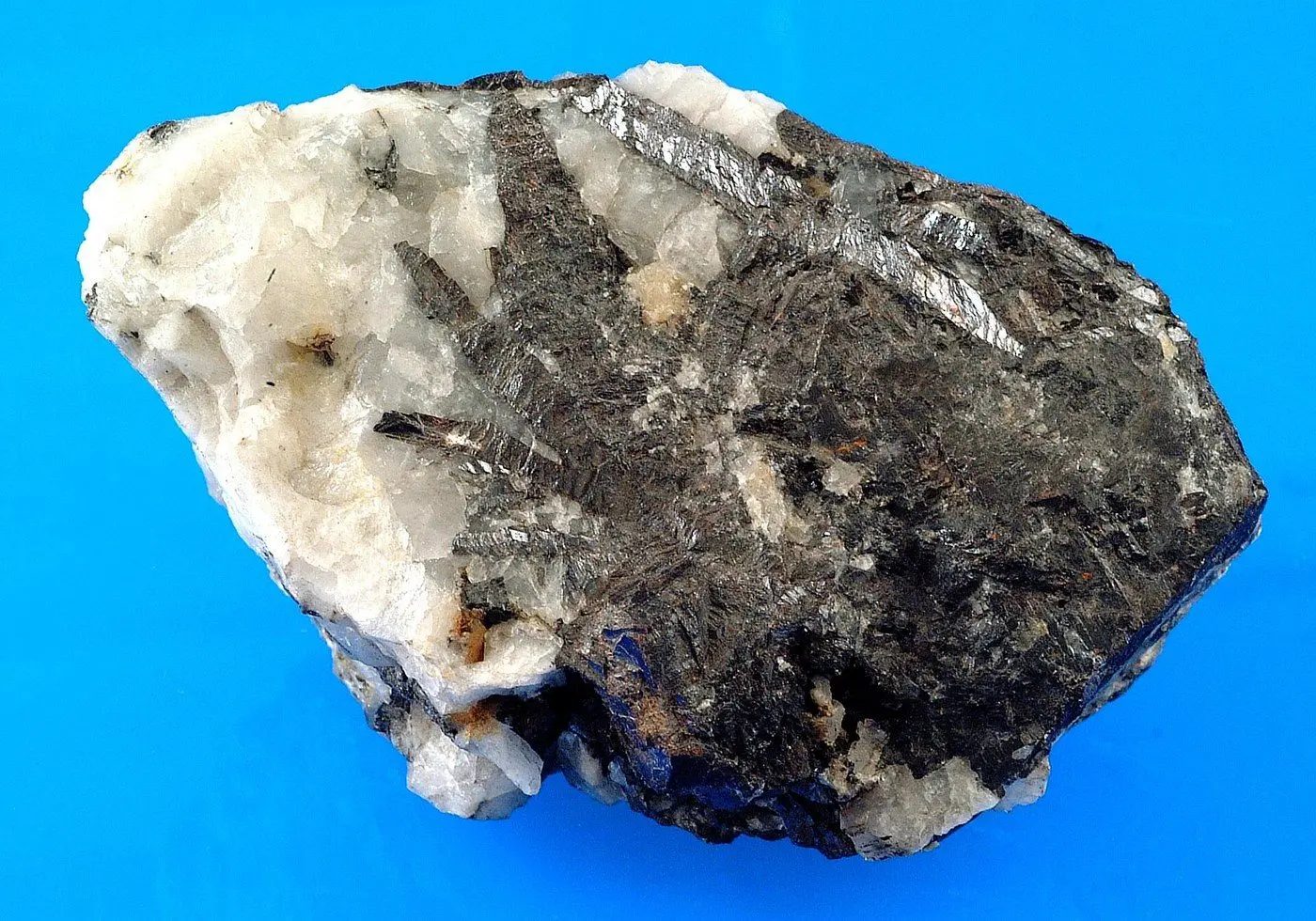
Military production depends on reliable supplies of specialised materials, and Western defence procurement is now competing for some that are mined in Africa. Tungsten and tantalum, used in munitions and military electronics, give African producers a second form of mineral leverage beside the energy transition. That leverage is largely unclaimed, and if African governments negotiate for it one deal at a time, buyers seeking supply guarantees may take more than they pay for.
The defence side of critical minerals
Tungsten, valued for its density and heat resistance, hardens armour-piercing rounds, reinforces high-temperature weapons components and anchors the precision munitions that Western military planners have consumed faster than their industrial production capacity can replenish. Military demand is rising, driven by conflict in Eastern Europe, tensions across the Indo-Pacific and an acceleration of defence procurement across NATO and its partners. China dominates mined tungsten production, which makes other sources, including African ones, more valuable to Western buyers.
The critical minerals conversation in African policy circles has, until recently, focused on the energy transition: the cobalt, lithium and manganese that electric vehicle batteries and renewable energy storage systems require. That focus is legitimate and the leverage it implies is real. But the military-industrial demand for critical minerals has been underweighted in African strategic thinking. The result is a negotiating posture that has captured some of the green transition leverage while leaving the defence supply chain leverage largely unclaimed. As Western governments accelerate defence industrial production and find that their supply chains for tungsten and tantalum run partly through African territory, that oversight is becoming expensive.
Rwanda and the tantalum chain
Rwanda’s place in the coltan trade, the ore from which tantalum is extracted, illustrates both the opportunity and the structural limitation. Its exports feed electronics and military components globally and earn revenue, but the value capture remains concentrated in the processing and intermediary stages rather than in the manufactured end product. Questions about where the ore is sourced, and about mining conditions in Congo, continue to create reputational and legal exposure for downstream purchasers. The pattern is recognisable. African land and labour provide the raw material for supply chains whose most valuable nodes (processing, manufacturing, intellectual property) are controlled elsewhere. The defence version of this pattern differs from the green technology version only in its strategic sensitivity.
The case for coordinated positioning
The strategic logic African governments could apply is similar to the logic oil-producing states applied in the 1970s, when they recognised that control over an essential industrial input conferred negotiating power that bare commodity export did not. African critical mineral producers today also have multilateral vehicles for coordinated positioning in the African Union, the African Development Bank and the AfCFTA framework, and green transition demand and defence supply chain demand now create leverage at the same time. The OPEC analogy is imperfect but instructive. Coordinated production and pricing decisions by producers of an essential material can change the terms on which buyers negotiate.
The governance needed to convert this leverage into policy outcomes is the constraint. Bilateral deals struck under time pressure by individual African governments negotiating with better-resourced counterparts from major powers tend to produce terms that favour the buyer. The Lobito Corridor, the TAZARA rehabilitation and the mineral agreements being concluded between African governments and Western partners as part of US and EU critical mineral security strategies represent genuine infrastructure investment opportunities. They also carry an information and negotiating asymmetry that, unless corrected by stronger African institutional positioning, will reproduce the historical pattern in which Africa’s resources capitalise other nations’ industrial futures. The governance to convert leverage into sovereignty is still being built, and it must keep pace with the deals being struck.
The danger in a war economy
There is a particular danger in the defence version of this leverage that the green transition version does not carry, and African governments should weigh it before they celebrate the new attention. A buyer who needs your cobalt for a battery wants a market. A buyer who needs your tungsten for a munition wants a guarantee. In a war economy, guarantees are extracted by means that markets do not use. Strategic dependence on an African mineral can just as easily produce a security arrangement (a quiet basing concession, a side-agreement on alignment) as a fair processing deal, because the same urgency that lifts the price also lowers the buyer’s tolerance for being told no. The leverage is real, but it is double-edged. A continent that holds what the world’s arsenals require can name its terms, or it can find those arsenals’ owners naming theirs. The size of the reserve will not decide which of the two occurs. What decides it is whether African states negotiate as a bloc with a floor or one at a time under pressure. That choice is being made, deal by deal, now.



