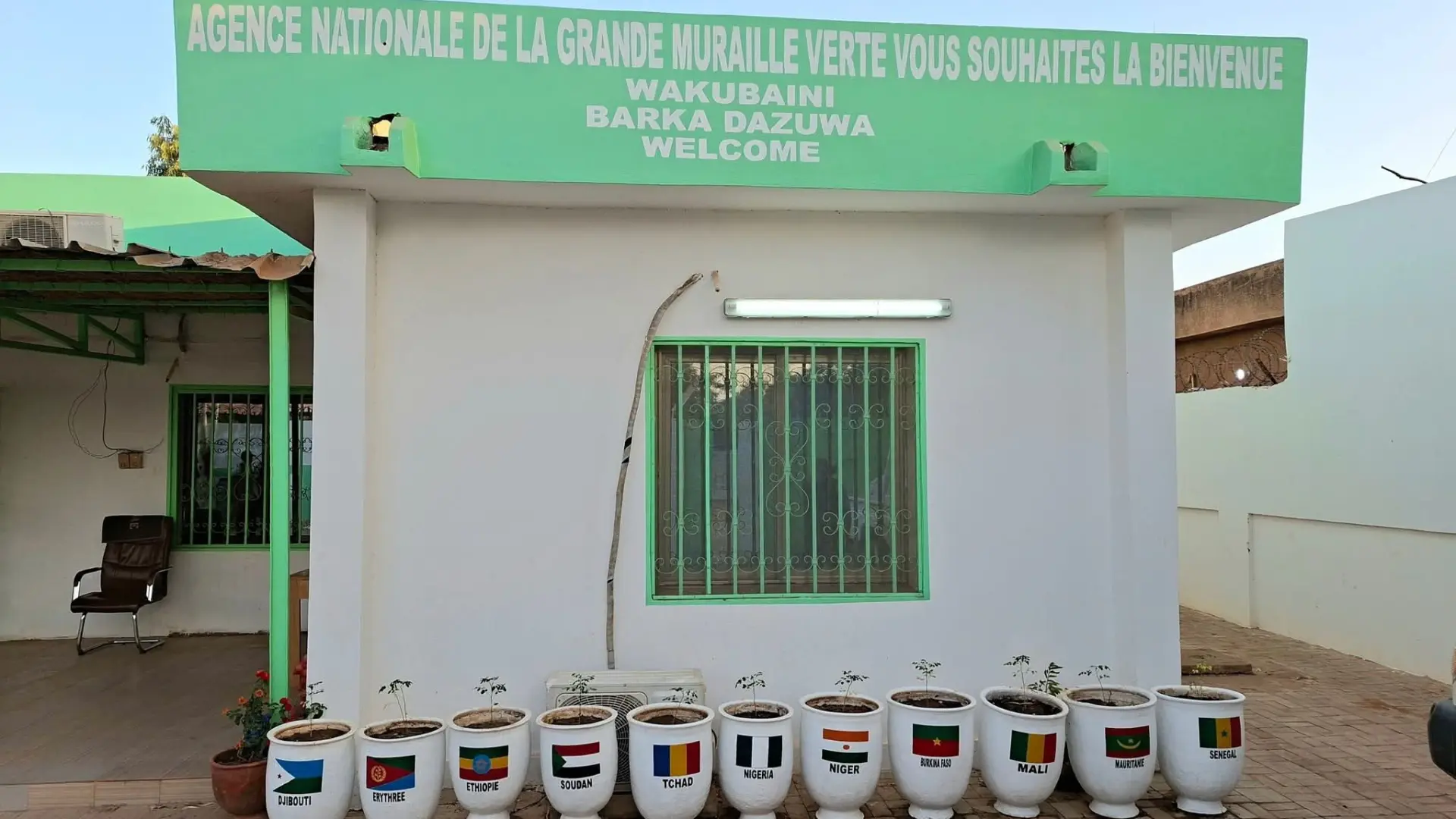
The Great Green Wall aims to restore degraded land across the Sahel and improve rural livelihoods. Launched under the African Union in 2007, the initiative set a goal of restoring 100 million hectares by 2030, but financing, security and delivery remain obstacles.
The gap between ambition and delivery is not mainly a story of African institutional failure, though that element is present. It is a story about the distance between global climate pledges and the funding and governance capacity on the ground needed to make them real. Rainfall patterns in the Sahel are shifting, and the populations of the eleven countries the Wall crosses (Senegal, Mauritania, Mali, Burkina Faso, Niger, Nigeria, Chad, Sudan, Ethiopia, Eritrea and Djibouti) are among the world’s most exposed to climate-driven food insecurity, displacement and conflict.
What restoration has achieved
Restoration efforts across the Sahel have included tree planting, protection of natural regeneration and changes to land management. Reported results need to distinguish trees planted from hectares restored, and planting from long-term survival.
Natural regeneration in Niger
Niger provides the most striking single case. Over the past three decades, Nigerien farmers working largely without external funding have protected and regenerated an estimated 5 million hectares of trees across degraded farmland through a practice called Farmer Managed Natural Regeneration (FMNR). This has improved crop yields, reduced soil erosion, increased water retention and created shade that lowers ground temperatures, all without the carbon credit mechanisms, international NGO infrastructure or satellite monitoring systems that formal climate finance tends to require. The lesson is significant. Some of the most effective restoration in the Sahel has been driven by necessity rather than philanthropy, and by communities with a knowledge of their landscapes that no external programme can replicate.
Obstacles to delivery
The funding architecture remains the Wall’s most serious vulnerability. Delivery of the $14.3 billion pledged at Paris in 2021 has been fragmented and slow, and much of it is filtered through intermediaries (international financial institutions, development banks and NGO delivery mechanisms) before it reaches the communities doing the restoration work. At the COP27 summit in 2022, African negotiators pressed for the Loss and Damage mechanism, a fund to compensate countries already bearing the costs of climate change they did not primarily cause. The mechanism was agreed in principle, but its capitalisation remains contested. The global community has been more willing to set targets than to fund them.
Security adds a layer of difficulty that no amount of restoration funding can resolve on its own. Mali, Burkina Faso and Niger, three of the countries the Wall crosses, are among the most conflict-affected in the region. They host overlapping insurgencies and coup governments, and have seen the withdrawal of international security and development partnerships that provided some of the logistics for Great Green Wall programming. Reforestation cannot happen at scale in active conflict zones. The Wall’s most ambitious sections pass through areas where the state’s presence is contested and where community land rights, the foundation of lasting restoration, cannot be reliably enforced.
What policymakers should press for
The question Africa’s policymakers must press is not whether the Great Green Wall can succeed. Niger’s experience shows that restoration at scale is achievable. The question is whether the global climate finance system can be reformed quickly enough to deliver adequate, accessible and community-accountable funding in time to make the 2030 targets meaningful. That requires African governments to negotiate firmly over the capitalisation of climate funds. It requires reform of the project approval and disbursement processes at institutions such as the Green Climate Fund, to reduce the transaction costs that make climate finance hard for community organisations to reach. And it requires recognising that the Sahel’s ecological and security crises are connected, and must be addressed through the same integrated investment logic.
The initiative’s credibility depends on whether funding reaches communities and supports restoration that lasts. Measuring survival, land health and livelihoods matters as much as announcing new commitments.



