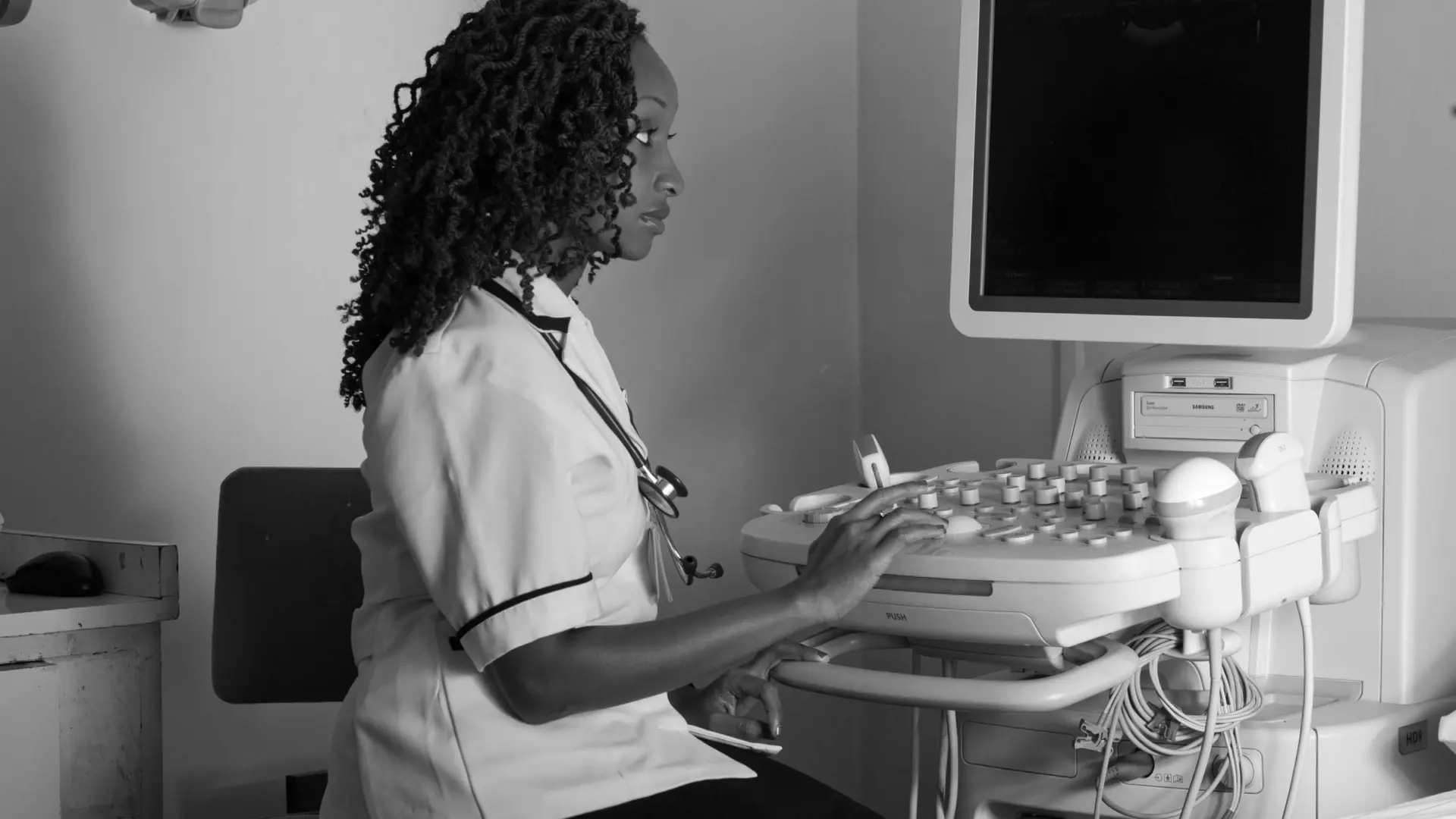
Health workers leave African health systems for reasons that are rarely mysterious. Salaries are delayed for months. Equipment is missing. Power cuts interrupt care. Promises of reform arrive as policy documents and go no further. Retaining staff depends on fixing those conditions, and reliable electricity is one part of the capacity needed to support both staff and patients.
The departure is not driven by ambition alone. Trained nurses move to Britain’s NHS, Canada’s provincial systems and elsewhere because the arithmetic of staying does not add up.
Infrastructure and health services
Unreliable power is a serious clinical hazard. A 2023 WHO-led report found that it affected about half of health facilities in sub-Saharan Africa. Where the grid fails, vaccine cold chains break, oxygen concentrators stop and diagnostic equipment sits idle, in conditions that would be treated as a regulatory crisis in any high-income country.
This is usually described as a resource deficit. It is also a matter of governance, of whether the health facilities serving poorer and rural populations are treated as priorities to be served or as residuals to be managed.
Working conditions and migration
Each departure is individually rational. An Accra-trained cardiologist who accepts a position in Toronto is not betraying the continent. She is responding to a signal that institutions have been sending for decades: that they cannot protect her salary, her equipment or her patients. The cruelty is structural, not personal.
The cruelty is structural, not personal.
The importing systems are not passive beneficiaries. High-income countries recruit actively, with agencies, fast-track visas and licensing pathways aimed at professionals whose training was paid for by some of the poorest treasuries on earth. A nurse educated in Blantyre and employed in Birmingham represents a subsidy flowing from Malawi to Britain, unacknowledged in any aid ledger. The WHO’s code on international recruitment is voluntary, and recruitment pressures can weaken its implementation.
The potential for return and exchange
Movement itself is not the problem. The question is whether institutions will be built to make it productive rather than desperate, converting the flight of professionals into a circuit of capacity rather than a one-way export of expertise. Diaspora engagement can include investment, mentoring and temporary professional work. Making that circuit routine requires policy rather than sentiment: portable professional accreditation, bilateral health workforce agreements and fiscal incentives for diaspora investment in under-served counties and provinces.
Retaining health workers requires dependable pay, safe facilities, working equipment and career opportunities. Reliable electricity supports those conditions, but it is one part of a broader institutional task. Progress should be judged by the care patients can obtain and the conditions in which staff are asked to provide it.



