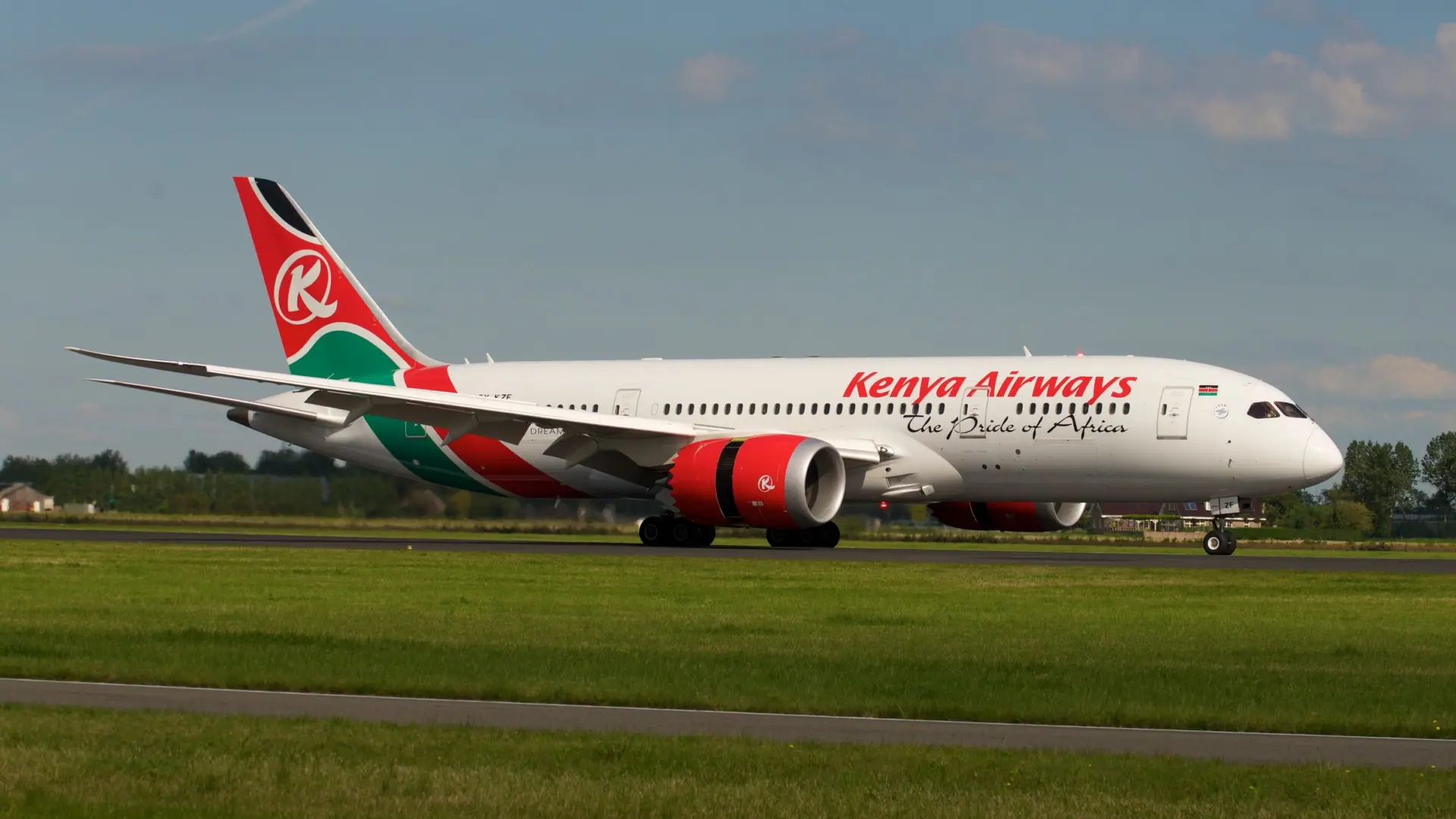
Kenya Airways’ acting chief executive, Captain George Kamal, described rising fuel costs and narrow margins at a 19 August briefing in Nairobi. He reportedly cited about $1.50 in net profit per passenger seat and a 72% increase in fuel costs during the half-year. Fuel’s reported share of operating costs rose from about 40% to 50–55%.
Read narrowly, this is a story about an airline having a difficult year, and airlines have difficult years. Read properly, it is a measurement. Kenya Airways gives an unusually public, near real-time readout of how much a distant chokepoint costs. Most of the transmission runs through channels that are rarely quantified, in the price of transported maize, in a matatu fare, in a generator that runs fewer hours. The airline is the visible instrument on a dial that is moving everywhere else without a readout.
The airline is the visible instrument on a dial that is moving everywhere else without a readout.
The airline is exposed to international jet-fuel prices and exchange rates, and a Middle East disruption can raise its costs far beyond the conflict zone. Financial hedges, supply contracts and fuel surcharges can alter that exposure; whether Kenya Airways uses them requires its actual disclosures.
Management can review contracts, routes, schedules, fleet use and fares, though each choice has limits. The question is how much of the cost increase can be offset or passed through without losing more revenue than the adjustment saves.
Engine and spare-parts shortages add a separate operating constraint. Longer maintenance periods can leave aircraft unavailable and reduce schedule flexibility. Flying more seats is not a universal remedy for a cost shock. Its value depends on demand, load factors and the additional cost of operating those flights.
Kenya Airways reported a pre-tax loss of 17.93 billion shillings in the preceding year. The state’s position as its largest shareholder creates an exposure worth examining, but an airline loss is not automatically a Treasury liability of the same size. The fiscal effect depends on guarantees, funding decisions and restructuring terms.
The half-year results should reconcile the briefing’s unit-profit figure with operating and net results, cashflow, fuel spending and grounded capacity. A thin unit margin explains vulnerability only when its denominator and period are clear. Those disclosures will be more informative than treating a single dollar figure as the airline’s entire ability to withstand a shock.



