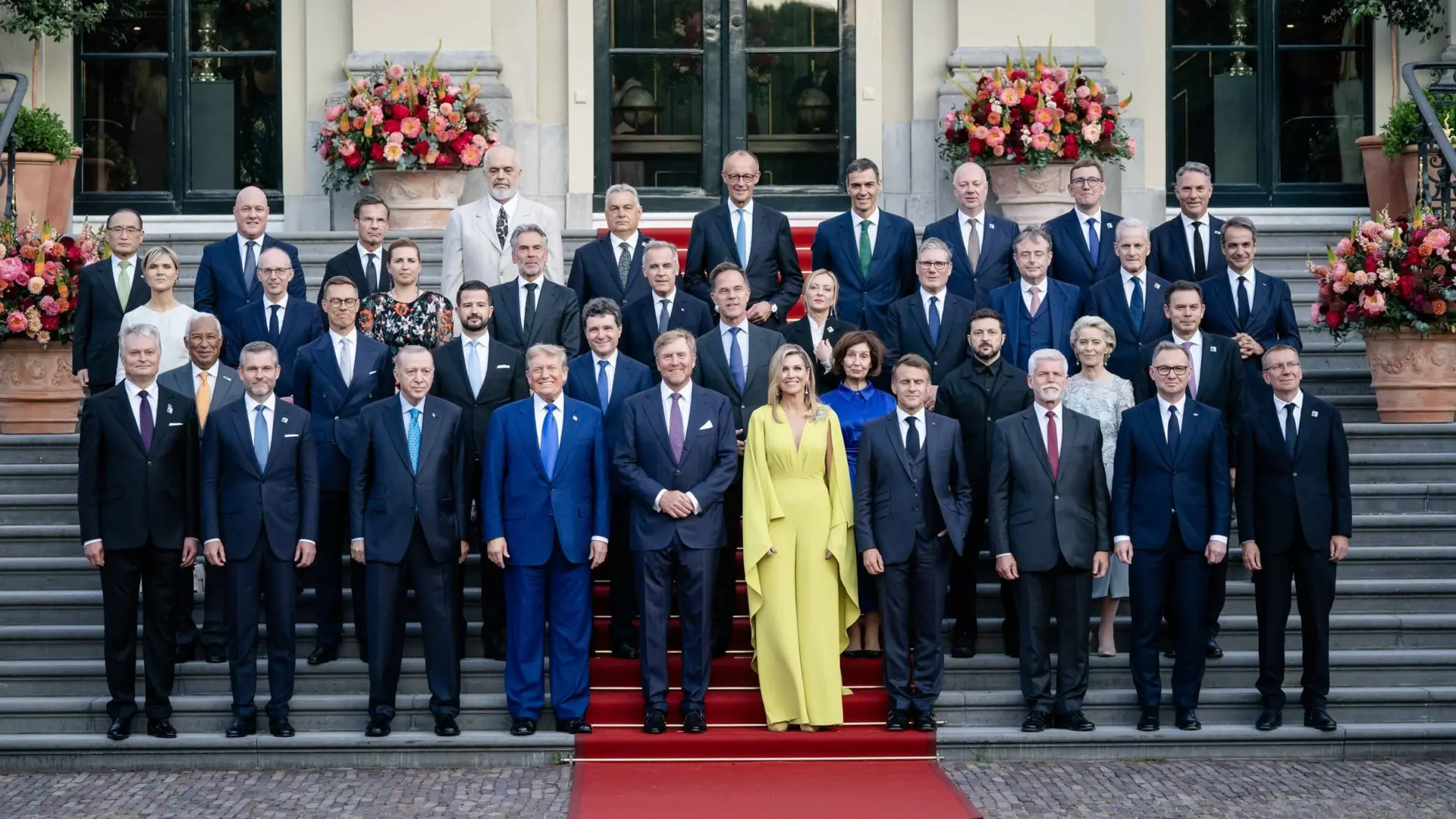
The enduring shadow of Donald Trump over the transatlantic alliance has exposed something European and African governments preferred to treat as theoretical. The United States’ commitment to collective security is a political choice, not a structural inevitability, and it changes with the occupant of the White House. Trump’s return to the presidency in 2025 has not merely reignited anxiety in Brussels and Kyiv. It has accelerated a reconfiguration of the global security architecture. African states, whose own security arrangements are entangled with Western partnerships in ways both visible and obscured, cannot afford to observe it from a comfortable analytical distance.
The Russia-Ukraine war is where Trump’s foreign policy unpredictability has been most intensely tested since his return. His administration has shown public sympathy for Russian positions, pressed Kyiv to negotiate from a position of military disadvantage and made military aid packages conditional rather than automatic. European NATO members are now committed to Ukrainian territorial integrity and uncertain, at the same time, whether American commitment to that position survives the next budget cycle or the next Trump press conference. That uncertainty is not incidental to European security planning. It is now the central planning assumption.
The uncertainty reaches Africa
For Africa, the NATO fracture carries consequences that are less dramatic but structurally significant. Several African security architectures operate in formal or informal partnership with NATO member states. France has worked in the Sahel, the United States through AFRICOM in East Africa and the Horn, and the UK in East and West Africa through bilateral security assistance programmes. The coherence of those partnerships depends partly on the coherence of the alliance that binds those Western partners together. When Trump signals that NATO’s Article 5 collective defence commitment may be conditional on members’ financial contributions, he is not merely making a fiscal argument. He is casting doubt on the security guarantees that underpin Western partnership offers to African governments.
Why Sahel governments changed partners
Sahel coup leaders expelled French forces in the name of sovereignty and out of dissatisfaction with security cooperation. Their decisions predated Trump’s return to office and cannot be attributed to his second-term NATO policy. The deeper logic was more precise. A Western security partnership might be unable to prevent terrorist territorial control or guarantee sustainable funding, and it sits within an alliance whose political coherence is subject to American electoral cycles. If so, the value calculation changes. Russia offered something simpler, if less sophisticated: deployment without conditionality, presence without governance demands. Wagner Group instructors and Russian security contractors do not require their hosts to hold elections or respect press freedom. They require basing access and commodity arrangements. For some governments facing immediate security threats, the offer was structurally more legible than the Western alternative.
Africa’s diplomatic interests
Much Western commentary on the Ukraine war’s African dimension has focused on African states’ voting patterns at the United Nations General Assembly and read abstentions as moral ambiguity. The more accurate reading is that African governments are navigating a security environment in which both major external partners, Russia and the Western alliance, are instrumentalising the relationship for their own strategic purposes. Russia has used its existing African relationships to sustain diplomatic cover for its Ukraine operation. The United States and European states have used their African relationships to build support for Ukraine in UN votes. Neither treats Africa as a primary strategic partner rather than a secondary diplomatic instrument.
The African leaders’ peace initiative for Ukraine was proposed in 2023 and received with polite scepticism in both Kyiv and Moscow. It was strategically significant not because it was likely to succeed but because it represented Africa’s attempt to assert a mediating identity in a conflict where it had been assigned observer status. The framework acknowledged that the war directly affected African food security through grain export disruptions, fertiliser price spikes and shipping cost inflation. African governments therefore had legitimate interests in the conflict’s resolution beyond the humanitarian. The claim that African material interests entitle African institutions to a seat in the negotiation architecture is a more significant assertion than its reception suggested.
The long-term consequence of Trump’s NATO shadow for Africa is not that Western security partnerships become impossible. They remain, in most cases, more materially substantial than the Russian alternative. The consequence is that African governments have received, in real time, confirmation of a vulnerability. Security architecture that depends on the political continuity of a partner whose domestic politics are contested on four-year cycles is fragile by design. The Sahel has demonstrated one response to that fragility. The more sustainable response is harder, more expensive and more consequential. It means building African collective security capacity through the African Peace and Security Architecture, reducing dependency on any single external partner, and using the multipolar moment to negotiate security terms rather than simply receive them.
The lesson concerns the architecture of dependence itself. A security guarantee is only as durable as the domestic politics of the country that issues it. A state that outsources its defence to a foreign electorate has, in effect, given that electorate a vote over its survival. Western security partnership has too often been treated as a fixed feature of the landscape. It was always a discretionary policy, renewed or revoked every few years by voters who have never heard of Gao or Garissa. Trump did not create that exposure. He merely switched on the light that revealed it. The uncomfortable gift of his unpredictability is that it has made the cost of dependency legible in real time, and a vulnerability that can finally be seen is a vulnerability that can, at last, be budgeted against.



