Sudan’s war, which began in April 2023, has proved unusually resistant to resolution. The Sudanese Armed Forces and the Rapid Support Forces are not locked in stalemate by military logic alone. This analysis argues that the incentives surrounding the war, gold revenue at home and strategic competition along the Red Sea, make compromise harder for the armed factions and their external supporters, and that a ceasefire alone will not change them.
What began as a power struggle between two military formations now operates as both a war economy and a contest among outside powers. The first runs on gold extraction and illicit trade. The second links the Middle East, the Red Sea and the Nile basin in competition over ports, minerals and maritime access. Changing these incentives requires pressure on both armed factions and on their external support networks.
For Africa, Sudan shows how quickly a resource-rich state can be pulled out of domestic politics and into wider strategic competition when governance fractures and outside powers see an opening.
Gold, weapons and famine
Sudan holds some of Africa’s most significant gold reserves. Under functioning governance, that would anchor public revenue, infrastructure investment and creditworthiness. In wartime, gold is a source of hard currency for both factions. The United Arab Emirates is the main destination for Sudan’s gold, and gold that leaves outside official channels escapes state oversight.
The war economy is reinforced at every level: protection rackets around mining zones, checkpoint taxation along supply routes and armed control of extraction sites. For commanders on both sides, these revenues weaken the incentive to accept a settlement that would dismantle them, although gold production and taxation would not disappear with peace.
The human cost is severe. The IPC estimated 21.2 million people faced Crisis-level acute food insecurity or worse in September 2025. Fighting, displacement and restrictions on access have worsened hunger.
The Red Sea frontline Sudan never asked to join
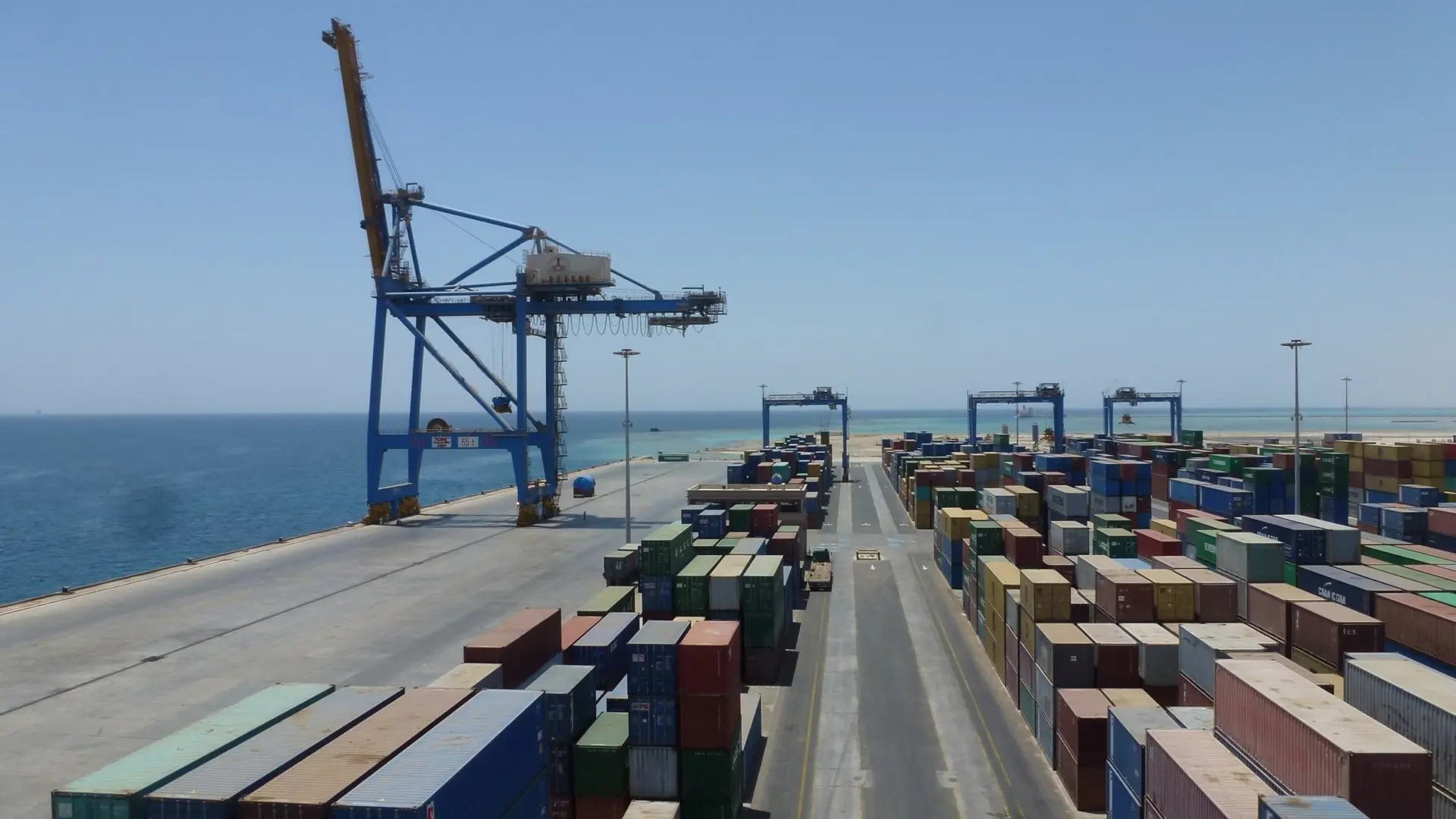
Sudan’s coastline runs for roughly 850 kilometres along the Red Sea, one of the world’s most strategically pressured maritime corridors. Port Sudan is a logistics hub, an energy gateway and a potential naval asset. Iran’s regional activity, from drone supply to support for armed movements around the Red Sea, has drawn Sudan further into a contest it did not start. War-risk insurance premiums on Red Sea shipping have risen sharply, raising import costs for food and fuel across East Africa. Russia has shown sustained interest in a naval logistics facility on Sudan’s coast, which would extend its presence into a zone already contested by Gulf states.
Sudan sits where two strategic systems meet: Nile security and Red Sea trade. The outside actors include the UAE and Saudi Arabia competing for Red Sea positioning, Iran projecting military technology southward, Egypt managing its Nile and border security, Ethiopia contending with its own internal fragility, and Russia seeking a naval foothold. Standard conflict-resolution frameworks struggle in settings like this. They are designed to broker agreements between parties who want to stop fighting, not to address outside interests that make continued fighting tolerable for the factions they back.
What Sudan reveals
The more than 13 million people displaced by the conflict are both a humanitarian emergency and a fiscal burden on receiving states. The Sudanese pound has depreciated sharply, and formal banking has collapsed in conflict-affected areas. South Sudan’s oil export revenue is exposed because it depends almost entirely on the pipeline running north to Port Sudan. The instability is regional whether or not the fighting is.
Sudan is not a domestic conflict awaiting a ceasefire. It is a civil war whose financing and consequences extend well beyond its borders. Resolving it requires addressing the external incentives, the gold trade, the arms supply networks and the competition for strategic position, that make the war more valuable to some actors than peace. Until those are addressed, Sudan is likely to remain in an equilibrium of sustained, monetised disorder. States that lack the institutions to enforce the terms of resource extraction and resist external patronage are not protected by their wealth. They can be targeted because of it.



