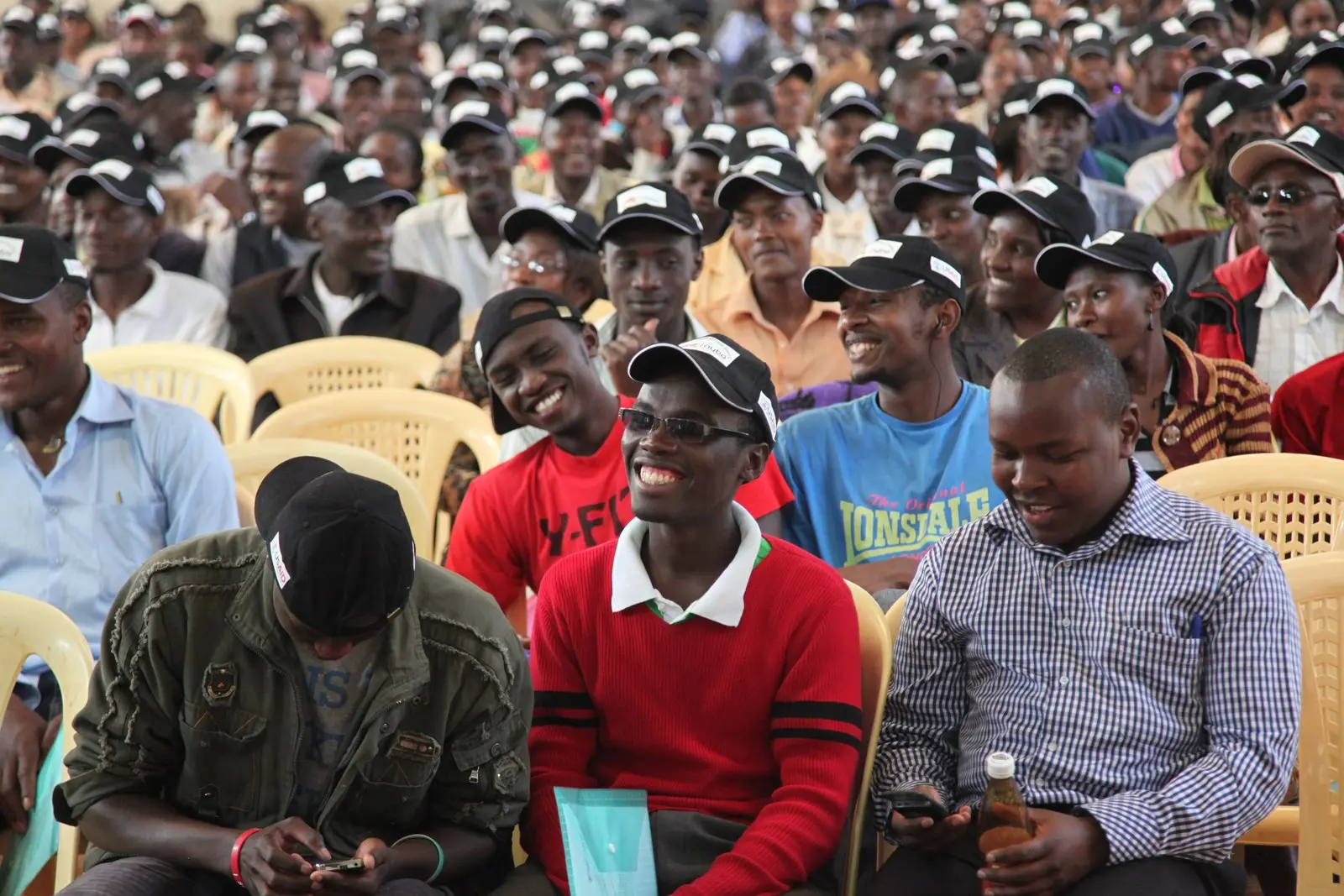
Young people in Africa have shown a strong wish to take part in policy-making. Yet they are kept out of the decisions that matter most, because governments and policymakers are often reluctant to let them into formal political systems. This piece argues that their numbers and their command of technology make young people central to the continent’s political future, and that they deserve a real place in it.
Rising political awareness, globalisation and advances in technology have given young people more weight in politics and the economy. Figures such as Uganda’s Robert Kyagulanyi Ssentamu, the 37-year-old musician known as Bobi Wine; Kenya’s Caroline Mwatha, a human rights campaigner from Nairobi’s Dandora district who documented police killings and died in February 2019; and Nigeria’s Kingsley Moghalu of the Young Progressives Party (YPP) have sparked fresh activism and political awareness among young people. Mwatha’s death caused outrage among rights groups.
It is neither right nor proper for the “old cargo” alone to decide the balance between war and peace, the priorities and strength of the economy, or the health of the environment. Young voices are just as essential to those decisions. Young people have both a right and a responsibility to help shape the future they will inherit and the quality of life they will have.
Young minds as the real agents of change
One way young people are taking the lead in political participation is through information and communications technology (ICT). They are its natural beneficiaries, and they are generally far more at home with it than the older politicians who hold power.
With these skills, young people can organise themselves to address their own needs and interests. They can contribute to social progress, bring positive change to the political arena and be an asset to a growing economy, since their skills and labour are in high demand in the boom in new technology.
Bringing young people into power would bring the government closer to the governed, spark new ideas and draw more citizens into public life. In the author’s view, scepticism about what the young have to offer is hard to justify when the older generation’s record in office is so poor.
The age, the numbers and the trust
Young people aged 18–35 make up just over half of registered voters in a country such as Nigeria, according to INEC. If young people voted in line with their numbers, they would change the debate about who gets what, when and how from the political pie.
That gives young voters the means to show candidates that their concerns can no longer be ignored. To use it, young people need to get educated, get registered and vote, so that future generations always have a voice.
The author’s conclusion is that the “big men” who have held power have repeatedly failed the people who trusted them, and that young people have earned the chance to show what they can do.
What happened next
The figures the author named went in different directions. Kingsley Moghalu won 21,886 votes, or 0.08 per cent, in Nigeria’s February 2019 presidential election, according to published election results, and later stepped back from party politics. Bobi Wine challenged President Yoweri Museveni in January 2021 and lost, rejecting the result as fraudulent. He ran again on 15 January 2026. Uganda’s Electoral Commission gave Museveni a seventh term with 71.65 per cent against 24.72 per cent for Wine, and African observers condemned the intimidation, arrests and abductions of opposition supporters, AFP reported.
In Nigeria, young people have not yet voted in line with their numbers. Turnout in the presidential election fell from 34.75 per cent in 2019 to 26.71 per cent in 2023, when 93,469,008 people were registered to vote, according to International IDEA turnout data.



