By April 2018 several African presidents had held office for decades. Teodoro Obiang Nguema Mbasogo had ruled Equatorial Guinea since 1979, Paul Biya Cameroon since 1982 and Yoweri Museveni Uganda since 1986. In the Democratic Republic of Congo, Joseph Kabila was still president although his constitutional mandate had expired in December 2016.
This piece argues that presidents who overstay are held in office largely by what office gives them, protection from the courts and the rewards of power, the incentive the author calls kleptocratic, and that term limits are the best guard against the conflict that follows when opponents see no peaceful way to replace a president. The refusal to leave also runs against the governance commitments African states made in the early 2000s, when the continent’s politics moved from liberation to the work of building democracies.
Charters that leaders ignored
The Organisation of African Unity gave way to the African Union, launched in Durban in July 2002 with that shift in mind. The new body adopted the African Peer Review Mechanism, which member states join voluntarily to have their governance assessed by their peers.
Many states also signed the African Charter on Democracy, Elections and Governance, adopted in January 2007 and in force since 15 February 2012, which was meant to guard against unconstitutional rule. These instruments promised good governance, democracy and security.
The charter pointed in the right direction, but not every leader followed it. Some have resisted leaving at the end of their legal terms, whatever their record in office. Each president who overstays weakens the attempt to renew leadership that the AU’s founders set out to make.
Leaders can choose when to go, by resignation, retirement or the end of a term. Botswana’s presidents have handed over on schedule even while one party dominated its politics. Ghana, Zambia, Namibia, Nigeria, Malawi and Tanzania are among the other African states where power has changed hands regularly.
Elections alone have not been enough to secure that. Where ruling parties divide voters through patronage, and where electoral systems are open to manipulation, an incumbent runs little real risk of losing office.
The presidents who stayed
The cases below describe the position in April 2018. A fuller account of how these tenures were built is in our profile of Africa’s longest-serving presidents and how they entrench power.
Obiang seized power in Equatorial Guinea on 3 August 1979 in a coup against his uncle, Francisco Macías Nguema, who was tried for crimes including genocide and executed in September that year. Obiang was elected president, unopposed, under a new constitution in 1982. With the fall of the long-time leaders of Yemen and Libya, The Globalist noted in December 2013, he became the longest-serving leader in the world.
Biya was prime minister under Ahmadou Ahidjo from 1975 and succeeded him as president on 6 November 1982. He ruled within a one-party system in the 1980s and accepted multiparty politics in the early 1990s under pressure. Presidential term limits were abolished in 2008, and the opposition has disputed his election victories, claims that he and his party have rejected.
Robert Mugabe was Zimbabwe’s prime minister from 1980 to 1987 and its president from 1987 to 2017, and he is probably the most divisive name on this list. Western governments condemned him, while supporters at home and abroad admired his defiance of Western influence.
José Eduardo dos Santos became Angola’s president in 1979, four years after independence, and held the post until 2017, a period in which the oil industry grew. Many Angolans remained poor. In 2018, 39.3 per cent of the population lived below the poverty line of $3.00 a day (in 2021 purchasing-power terms), according to World Bank data. Forbes’s 2018 list, meanwhile, ranked his daughter Isabel as Africa’s richest woman, with a net worth of $2.6 billion, Africanews reported.
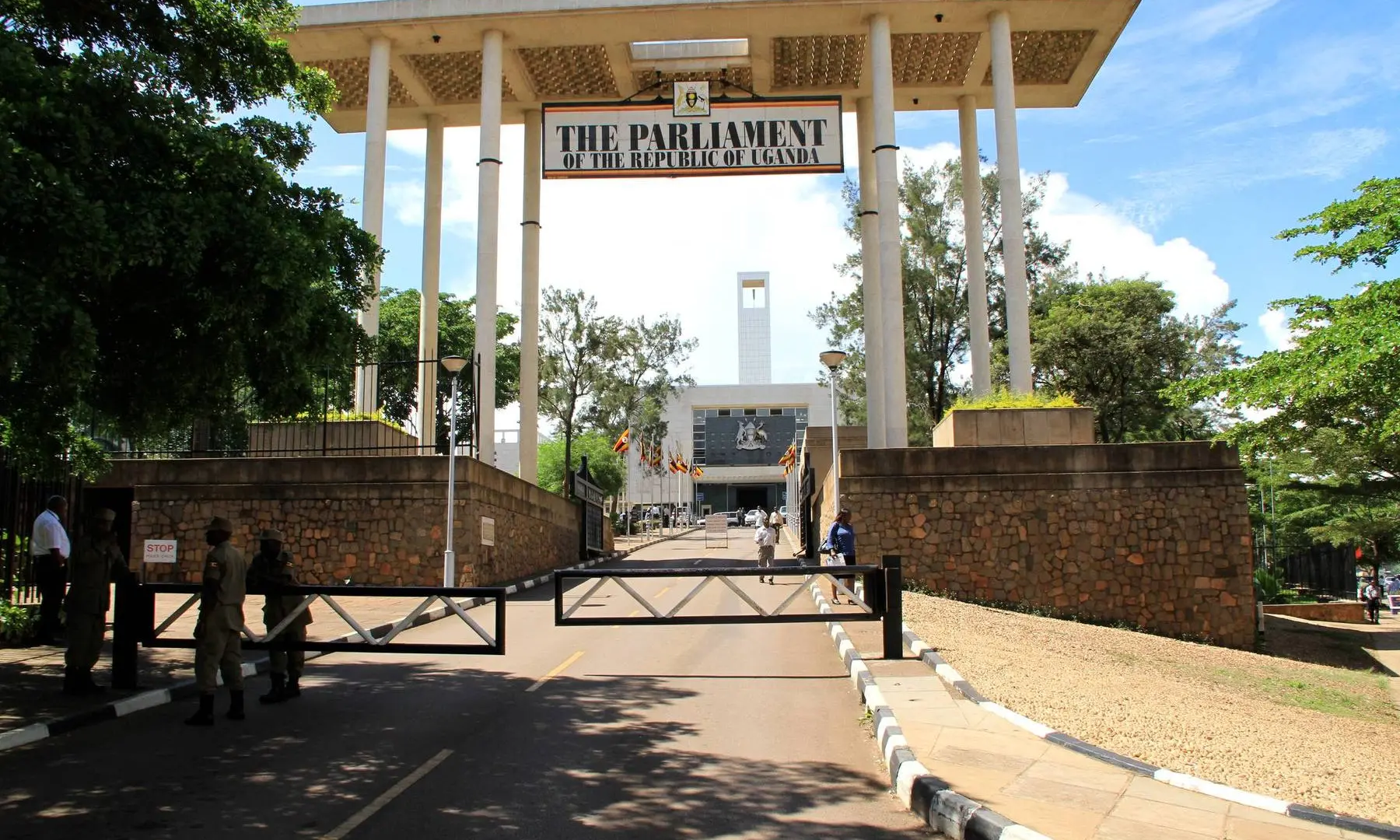
Museveni took power in January 1986 by ousting the military government of Tito Okello, which had overthrown Milton Obote in July 1985. He was first hailed as one of a new generation of democratic African leaders, and Uganda gained relative stability and economic growth after the ruinous years of Idi Amin. A 2005 constitutional amendment scrapped presidential term limits. On 20 December 2017 parliament voted to remove the age limit of 75 as well, and Museveni signed the change on 27 December, Al Jazeera reported. At 73, he is free to stand again in 2021.
Omar al-Bashir, then a brigadier, took power in Sudan in a 1989 military coup against the elected government of Sadiq al-Mahdi. The International Criminal Court issued warrants for his arrest in March 2009 and July 2010 on charges of crimes against humanity, war crimes and genocide in Darfur, according to the court’s case record. He has not been tried. In June 2015 he attended a summit in South Africa, which the court later found had failed in its duty to arrest him.
Isaias Afwerki has led Eritrea since independence in 1993 at the head of the People’s Front for Democracy and Justice, the only party that has governed the country. In September 2001 his government suspended all private newspapers, the Committee to Protect Journalists reported, leaving a state-owned daily as the only publication allowed.
Yahya Jammeh seized power in The Gambia in a coup in July 1994, first chairing the Armed Forces Provisional Ruling Council and then winning the 1996 presidential election, at 31. He was forced to step down in January 2017, after losing the December 2016 election.
Idriss Déby took power in Chad in December 1990 at the head of a rebellion against President Hissène Habré. He survived several rebellions against his own rule and had led the country for more than 27 years by April 2018.
Denis Sassou Nguesso ruled the Republic of the Congo from 1979 to 1992 and returned to power in 1997 after a civil war. After the disputed 2016 election, Amnesty International reported, the authorities detained opposition figures who had peacefully criticised the result. In June 2007 the campaign group Global Witness published documents that, it said, appeared to show his son, Denis Christel Sassou Nguesso, spending hundreds of thousands of dollars that might derive from sales of state oil on shopping in Paris, Marbella and Dubai. In August 2007 a High Court judge in London refused the son’s application to have the documents removed from the group’s website. “It is an obvious possible inference that his expenditure has been financed by secret personal profits made out of dealings in oil sold by Cotrade,” Judge Stanley Burnton said, Reuters reported. The ruling concerned publication and was not a finding of guilt, and Reuters reported that the son’s representatives could not be contacted immediately.
The record of the leaders who did leave is thin enough that a prize was created to reward them. The Mo Ibrahim Foundation’s leadership prize goes only to a former head of state or government who was democratically elected, served the constitutional term and left office in the previous three years, according to the foundation. By April 2018 it had been awarded five times since 2007, to Joaquim Chissano, Festus Mogae, Pedro Pires, Hifikepunye Pohamba and Ellen Johnson Sirleaf, with Nelson Mandela named an honorary laureate.
Why they hold on
In the author’s view, a president who stood above the law while in office fears the courts once out of it, and so prefers to stay, or to retire into exile. Several of the cases above, recorded in the update below, show that the fear is not idle.
Leaving office need not mean leaving public life. In Kenya, Daniel arap Moi handed over to Mwai Kibaki in December 2002, and Kibaki stepped down in April 2013 after two terms. Nigeria’s Olusegun Obasanjo, Ghana’s John Kufuor and Tanzania’s Benjamin Mkapa went on to be counted among the continent’s senior statesmen.
The case for term limits
A term limit caps the number of terms an official may serve. It sets a timetable for succession, checks the temptation to stay too long, and gives an elected leader a firmer claim to legitimacy.
Regular handovers, as in Mauritius, Ghana, Botswana, Senegal and Zambia, do not by themselves guarantee political or economic stability. They do give citizens reason to expect that a new government will bring new policies, and that is more likely to repair political, social and economic damage than one ruler’s unbroken hold on power. Incumbents stay alert because they know they can be voted out if they govern badly.
Term limits are contested. Some leaders have pushed through constitutional amendments to extend their rule, usually passed by ruling parties with little or no input from the opposition. In Cameroon and Equatorial Guinea, constitutions and regular elections exist, yet the same man has held the presidency since 1982 and 1979, so that resignation, retirement and term limits have meant little. The argument that voters should be free to choose anyone, even a leader who has already served two terms or more, goes to the heart of democracy and carries some weight.
The author’s answer is that term limits change the calculation for everyone. A voter might want a favoured candidate to rule forever, but faced with the risk that the candidate could instead be shut out forever, a cautious voter will prefer a system in which power can change hands later. Because newcomers have a real chance of beating an incumbent at the ballot box, violence becomes unnecessary.
Long incumbency lets a leader fill the key institutions with supporters and build patronage networks that trade favours for loyalty. A leader who knows he must one day leave, and live under the institutions he built, has a reason to build fair and effective ones.
In Central Africa, where several presidents have held office for decades, leaders who cling to power are taking their countries down a dangerous road. The presidents themselves rarely bear the cost of civil conflict. Their citizens do.
Term limits level the political field, help democracy take root and remove one of the commonest causes of political violence. Civil society groups in several African countries are pressing their leaders to respect them. Where presidents put their own tenure first, opposition will keep growing and keep meeting resistance, and lives and resources will be lost in the crises that follow.



