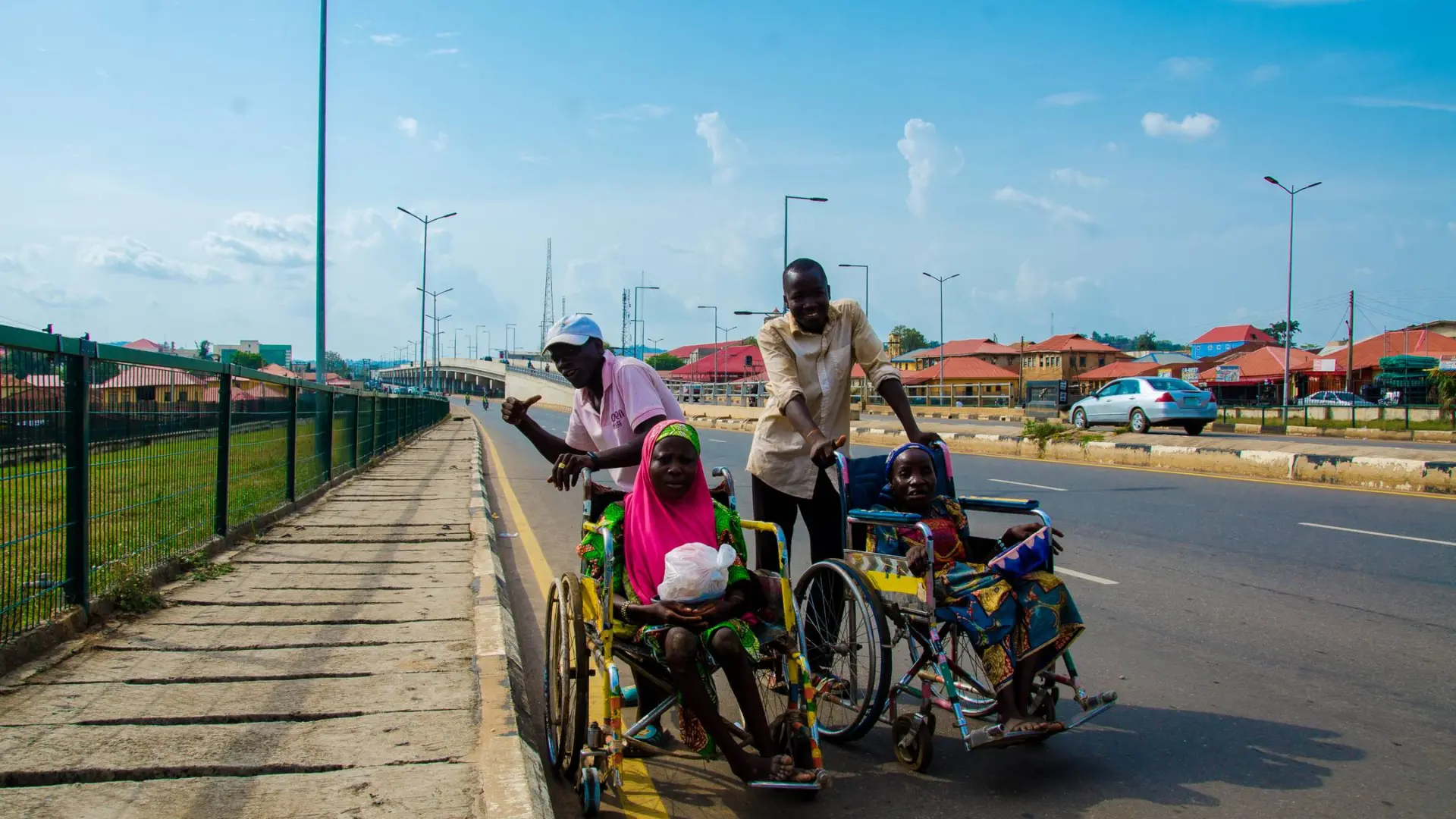
The news that the Nigerian Senate had passed a disability rights bill took me aback. It was not the bill that surprised me but the timing: the Senate seemed only now to have discovered that Nigeria is home to many people with disabilities. This piece argues that a bill on its own will not end discrimination against them.
Funding for special education is poor, special schools are falling apart and disabled people are shut out of work. Passing yet another bill does nothing about any of that.
Prejudice and its cost
We have all heard the offensive labels attached to disabled people because of the misconceptions of others. They have faced inhumane treatment and many forms of unfairness, among them denial, condemnation, discrimination and stigma.
Living with a condition does not mean a person does not belong in this world, or in this country. What their situation demands from the rest of us, particularly the government and its agencies, is empathy and support, not the condemnation and sidelining that have cobwebbed people’s minds.
I once heard someone say that disabled people “add no value to our living”. I took it as a prejudice born of ignorance. It is inhumane to think they are capable of nothing. Given specialised rehabilitation, education and vocational programmes, they can reach the same developmental milestones as their peers, and achieve more than many imagine.
A bill without funding
Poor funding for special education in Nigeria limits the progress and opportunities of disabled people. Funding for their education and care seems to be either insufficient or absent.
The recently passed disability rights bill sets out, in its title, “to ensure full integration of persons with disabilities into the society” and to outlaw discrimination against them. It was not the first such bill, and in the author’s view the government should not keep raising the hopes of people already disadvantaged by their circumstances.
“I was very disappointed to learn that due to some administrative mishaps, this Bill,” the Senate President, Dr Bukola Saraki, was quoted as saying in March 2018, explaining that a bill already passed by both chambers had never left the National Assembly for the President’s signature. Someone needs to ask Dr Saraki whom he is ‘disappointed’ in. The episode shows how little priority the National Assembly has given disabled people.
The WHO’s 2011 World Report on Disability put the number of disabled people at about 15% of the population, or at least 25 million Nigerians, as Human Rights Watch noted. Yet special schools remain neglected. In the author’s experience, Nigerian government special schools are known for dilapidated buildings and foul air.
Passing once again the same bill that has achieved little over the years recycles hopelessness. If the government truly wants to end discrimination against disabled people, it must start by meeting their basic needs and providing what they need to become independent.
What would make a difference
For school-age children, the government should provide stimulating educational materials and introduce inclusive classrooms, where children with disabilities learn under the same roof as other children. This will give them a good sense of identity and break down discrimination.
People of working age with disabilities should not be left behind in employment. Jobs that suit their abilities should be provided, which will also help them meet their legal obligation to pay tax. In sport, Nigeria should follow other countries and create competitive events that include them.
We should start seeing disabled people as equals who have their own purposes to fulfil. As Scott Hamilton rightly said, ‘the only disability in life is a bad attitude.’ A bad attitude does more to disfigure a person than any impairment. It is the only disability that should be discriminated against.
Discrimination will persist if the Senate does no more than preach against it in a bill. What disabled Nigerians need is funded, concrete and workable action.
The bill did eventually become law. President Muhammadu Buhari signed the Discrimination Against Persons with Disabilities (Prohibition) Act on 23 January 2019, after disability rights groups had campaigned for nine years and protested when the bill was delayed. According to Human Rights Watch, the Act bans discrimination on the grounds of disability, with fines and prison terms for violations, gives a five-year transition period for making public buildings, structures and vehicles accessible, and creates a National Commission for Persons with Disabilities.



