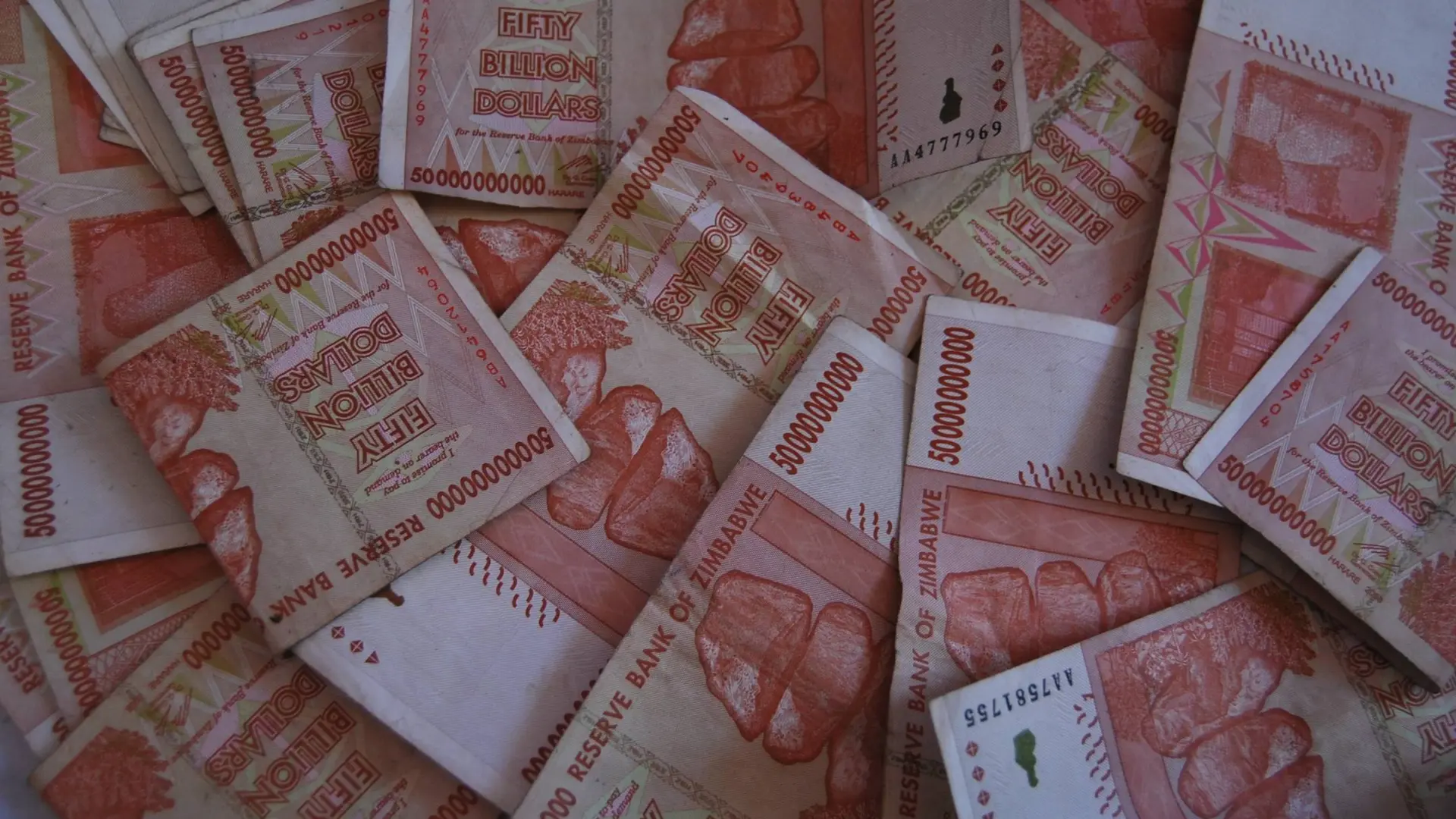
International Monetary Fund figures put Zimbabwe’s annual inflation at almost 300% in August, the highest in the world, ahead even of Venezuela, and for the second time in two decades its economy has entered hyperinflation. As prices soar and incomes are rapidly eroded, living standards for ordinary Zimbabweans and conditions for business have deteriorated. At the root of the crisis is a lack of public trust in the country’s reintroduced currency.
On 16 October the price of bread shot up by 60%, as bakers said rising production costs had forced them to raise their prices. Bread is the country’s second most important staple after a thick cornmeal porridge known in the Shona language as “sadza”.
Strikes and collapsing wages
On Monday 14 October, rural teachers began a stay-at-home strike “against underpayment”. Government workers also said they could not afford to go to work, because surging inflation had shrunk their salaries 15-fold and cut the value of their pay by more than 90%. “Our salaries have been eroded from an average of US$500 in 2018 to only US$40 which is declining every day,” said Cecilia Alexander, chairwoman of the Apex Council, the umbrella union representing most public sector workers outside the uniformed forces.
Last week, nurses at two of the largest government hospitals in the capital cut their working days from five to two. Doctors have been on strike for more than a month, despite a government attempt to raise their pay. They have defied a court order to return to work, saying the pay rise on offer is too low. High inflation has reduced a doctor’s pay to the equivalent of about $100 (£80) a month.
Fuel and electricity prices have also risen by more than 400% since the start of the year, amid power shortages that have left parts of the country without electricity for up to 18 hours a day.
The economy has been on a downward spiral for more than a year, as hopes fade that President Emmerson Mnangagwa, Robert Mugabe’s successor and former deputy, will deliver the prosperity he promised. Figures reported on Tuesday 15 October put annual inflation at 290%, while other estimates, as reported by Bloomberg, ranged from 230% to 570%. The economist Steve Hanke, who tracks inflation through market exchange rates, put the annual rate at 286%.
The poor have been hit hardest. The tumbling Zimbabwe dollar has sent the prices of basic goods soaring, and because of exchange rate instability and differences between rates, salaries and wages have been badly eroded in real terms, as have savings and pensions held in the local currency. Landlords have abandoned it and now charge rent in foreign currency to preserve its value.
In August, supporters of the opposition Movement for Democratic Change (MDC) took to the streets in a series of nationwide demonstrations against the collapsing economy and the government of President Mnangagwa, in defiance of a court order banning anti-government protests. In the capital, Harare, police fired tear gas and beat the protesters with batons.
Zimbabwe’s history of hyperinflation
Zimbabwe first experienced hyperinflation from around 2005 to 2008, when it peaked, by the IMF’s estimate, at almost 500 billion per cent. US$1 became worth Z$2,621,984,228. Zimbabweans who wanted to buy basic goods such as bread and milk had to carry plastic bags bulging with banknotes to pay for them. In 2009 the currency collapsed under the weight of hyperinflation, and the government adopted a multi-currency system dominated by the US dollar.
What caused the hyperinflation
Tendai Biti, a former finance minister who chairs the Parliamentary Portfolio Committee on Public Accounts, has blamed the crisis on a lack of confidence in the economy and its leadership. “A currency is a subject of political confidence,” he told Parliament in June, arguing that the country was suffering from a “kwashiorkor of political confidence”.
On 24 June 2019, Mr Mnangagwa’s administration ended the multi-currency system and reintroduced the Zimbabwe dollar to strengthen the economy. But as Mr Biti pointed out, Zimbabweans have little confidence in the value of their currency, and this has contributed greatly to the present hyperinflation.
Money has no value in itself. Its value rests on the trust people place in it, and Zimbabweans have long shown little faith in their own dollar. Many prefer to buy foreign currency. It is simpler than buying shares or property, it works for small sums as well as large ones, and it can be turned back into local dollars within minutes when the need arises. The US dollar is especially prized. Those who already hold dollars, whether exporters keeping their earnings in nostro accounts, families receiving remittances from the diaspora, or people with banknotes hidden at home, keep their spare cash in foreign currency until they have bills to pay in Zimbabwe. They are hoarding dollars or spending them cautiously, not releasing them into the economy.
The temporary freezing of a handful of bank accounts, identified as the source of the RTGS dollars being used to buy US dollars at almost any price, also fed the pressure. A dearer US dollar raised the cost of imported goods, services and raw materials, and pushed up the local-currency price of finished products in the shops. On top of dearer imports came rises in purely local costs, such as salaries and wages, as employers tried to protect their staff or had to absorb rising costs passed on by others doing the same.
Many people expect things to get worse, or at least want to hedge against that risk. This fear feeds on itself, pushing up the exchange rate, which raises costs and the prices of everyday goods.
Whatever else must be done to secure the economy, the government needs to rebuild people’s trust in the value of the currency before weaning them off foreign currencies.
What happened next
Inflation kept rising after this article was written. The annual rate passed 500% in December 2019 and peaked at 837.53% in July 2020, according to official figures reported by ZimStat, as set out in the record of the 2019–2024 Zimbabwe dollar. Trust in the currency never returned. On 8 April 2024, after the official rate had passed 30,000 Zimbabwe dollars to the US dollar, the Reserve Bank replaced it with a new currency, the Zimbabwe Gold (ZiG), while foreign currencies remain legal tender. Annual inflation stood at 4.3% in October 2026, according to ZimStat data compiled by Trading Economics.



