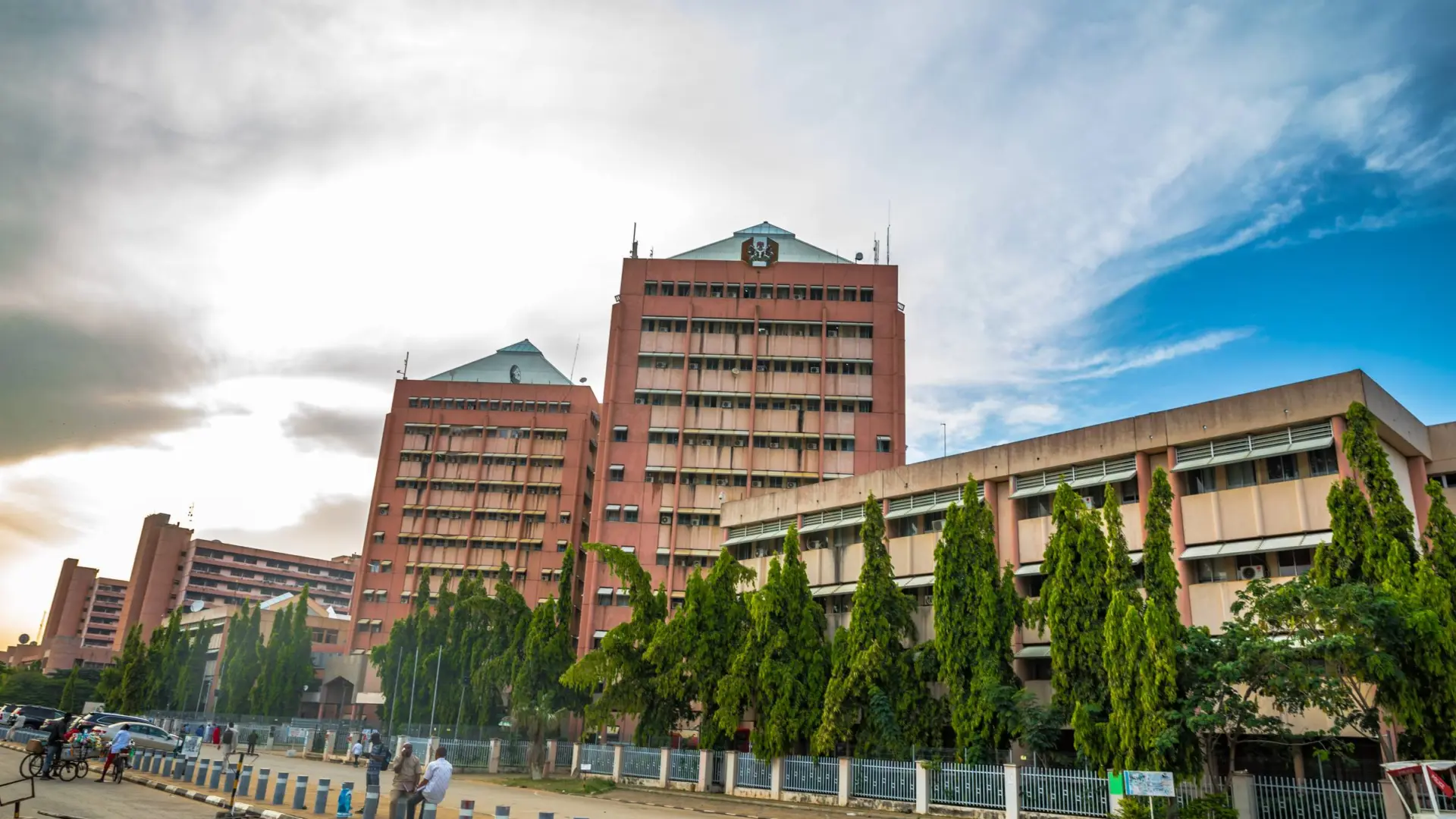
Nigerians recently learnt that the senators they elected to represent them would spend about 5.5 billion naira on cars. BudgIT, a well-known Nigerian civic organisation, ran a Twitter thread to raise public awareness of the looming profligacy of the National Assembly in general and of the Senate in particular. The cars are meant for the chairmen and vice-chairmen of Senate committees. But since the Senate has 69 standing committees, almost every senator is likely to be confirmed as a chairman or vice-chairman of one. In other words, every senator will probably get a car.
The purchase is the newest sign of the high cost of governance in Nigeria, and this article argues that the cost is no accident. The cost of running for office and the cost of maintaining that office reinforce each other: politicians who spend fortunes to win power come to treat the public purse as the return on their investment.
A costly structure
Nor is the spending new. The Senate under Dr Bukola Saraki bought official cars of the same brand four years ago. Just before the latest plan became public, President Muhammadu Buhari appointed 43 ministers with 43 portfolios to serve with him on the Federal Executive Council for 2019–2023. Ironically, as a candidate before he won the presidency in 2015, Mr Buhari had criticised the high cost of governance and the need to reduce it so that more money could go to development.
Nigeria is a federal presidential system with one federal government, 36 states and about 774 local governments, which serve as a third tier of government. The federal legislature has two chambers, and the president is expected to have at least 36 ministers, a number that can rise to 43, as the latest inauguration shows. The president has assistants and aides, and each of these keeps aides of their own. The same structure is repeated at state and local government level, with governors, commissioners and a single-chamber State House of Assembly, and with local government chairmen, secretaries, supervisors and a legislative arm.
Underpinning this arrangement is the enormous sum spent every year on running costs. In 2018 Shehu Sani, then a senator, shocked Nigerians when he revealed what lawmakers received. According to him, a Nigerian senator earns about 750,000 naira a month and also receives 13.5 million naira a month in running costs. A senator’s income, including expenses, therefore comes to about N171,000,000 a year.
Little left for development
The high cost of governance has not translated into good governance since the country returned to civilian rule in 1999. Nigeria’s annual budget has been dominated by recurrent spending on salaries and overheads, leaving little for the capital projects that could bring development. In 2018, for example, only 2.87 trillion naira of the 9.12 trillion naira budget went to capital expenditure, with the remaining 6.25 trillion going to non-capital spending, a pattern that has become routine. Amid this spending lie mass poverty and underdevelopment, and Nigeria has been reported as the poverty capital of the world.
While much attention has gone to the lawmakers’ budget, the problem is systemic. Pay at every level of government is so high relative to the available resources that public office is widely understood as a patronage relationship, and as a chance to accumulate wealth at the people’s expense. What commentators have glossed over is the link between the cost of governance and the cost of running for office.
The cost of winning office
It can be argued that Nigerian officials are paid these sums less for the work they do than for the money they spent before they won office. It has often been said that Nigerian politics is devoid of national interest and service, and that those who take part care chiefly about wealth, personal aggrandisement and the prestige of power. The sums individual politicians spend to become a party’s standard-bearer and win an election give that view weight.
During the 2019 presidential election campaign, in February 2019, two bullion vans were seen entering the Lagos home of Bola Tinubu, the national leader of the ruling All Progressives Congress (APC). Since bullion vans are used mainly to carry cash, his critics alleged money laundering and vote buying. Mr Tinubu brushed the criticism aside. “Is it my money or government money? I don’t work for the government,” he told reporters, the ICIR reported. It would be hard for someone who spent heavily to win an election not to spend 50 million naira on a luxury car, or 5.5 billion naira collectively, whatever the level of poverty in the country.
This also helps explain corruption among office holders. If political office is for serving the people, it makes little sense for politicians to spend such sums to win elections in a poor country like Nigeria, where about a fifth of the annual budget is financed with borrowed money, unless they expect to recoup it once in office.
It is therefore no surprise that senators are spending 5.5 billion naira on cars for themselves. It is a return on their investment. Nor is the extravagance limited to lawmakers. Former presidents and governors continue to enjoy the privileges of office in a country where civil servants are not paid regularly and 90 million people live in extreme poverty. As long as politics remains open only to the very rich, who take part to extend their wealth and influence, the cost of governance will keep rising.
Since this article was written, Mr Tinubu has himself become president. He was sworn in on 29 May 2023. Poverty has deepened. The World Bank estimates that over 60 per cent of Nigerians lived below the national poverty line in 2025.



