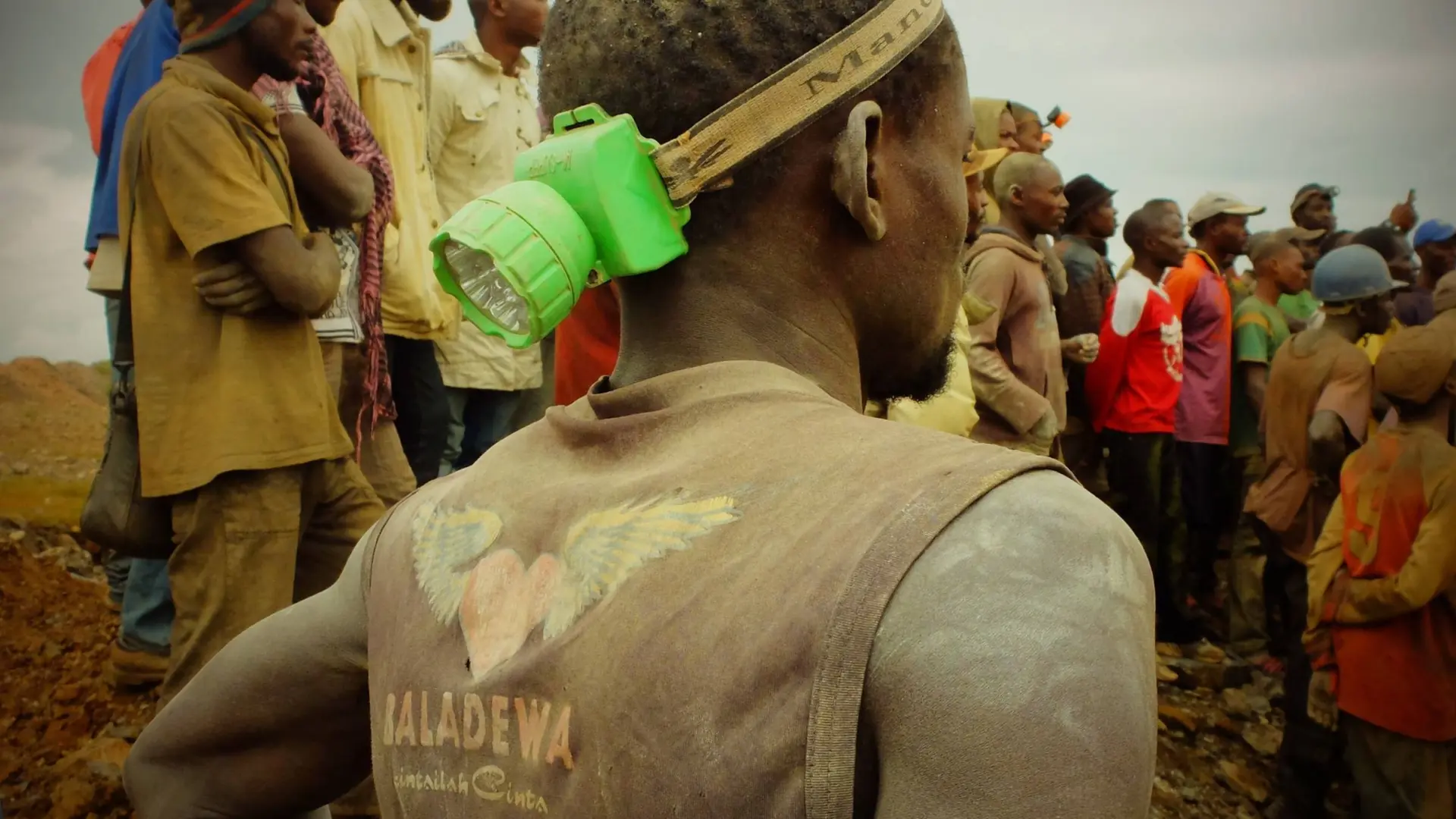
The energy transition depends in part on cobalt mined in the Democratic Republic of Congo. This analysis argues that the country’s importance to battery supply chains has not translated into development for its mining communities, because Chinese and Western engagement alike is built around supply security, and because the DRC’s institutions remain too weak to enforce labour, environmental and revenue rules.
The institutional architecture through which cobalt extraction occurs (artisanal mining networks controlled by a combination of local operators, militia groups and corrupt officials; industrial operations owned by foreign corporations; a regulatory framework that exists on paper more reliably than in practice) does not convert resource value into national prosperity. Instead, value leaves the country efficiently.
Supply security, not development
Chinese companies, led by Zhejiang Huayou Cobalt and a network of affiliated operators, control the dominant share of the DRC’s cobalt supply chain from extraction through processing. China’s position is not simply commercial. It is geopolitical. By securing long-term mining rights and investing in the infrastructure needed to move cobalt from shaft to international market, China has embedded itself in the upstream segment of a supply chain that Western economies now recognise as strategically critical. Western governments and corporations have spent the past several years attempting to diversify their cobalt sourcing, partly to reduce dependence on Chinese-controlled processing and supply.
Neither Chinese nor Western engagement in Congolese cobalt has been structured around Congolese development as a primary objective. Both have been structured around supply security. Neither has produced a cobalt sector in which local communities receive proportional economic returns from the extraction occurring beneath their land.
Who bears the costs
The artisanal mining sector, which employs large numbers of Congolese, is the most direct measure of this failure. Artisanal miners work without protective equipment in mines without safety infrastructure, earning daily rates that bear no relationship to the global price of the mineral they extract. The health consequences (respiratory disease from cobalt dust, heavy metal contamination in local water sources, contaminated agricultural soil) fall heavily on Congolese communities with limited access to remedies against the corporations whose supply chains their labour enters.
The environmental accounting follows the same logic. The global shift to electrification is marketed as a contribution to planetary sustainability. The environmental costs of cobalt extraction in the DRC (soil erosion, water contamination, biodiversity loss, deforestation) are not included in that accounting. They fall on Congolese communities while the sustainability benefits are claimed by consumers in Europe, North America and East Asia.
Why traceability is not enough
Corporate responsibility initiatives (traceability programmes, blockchain supply chain monitoring, ethical sourcing audits) have proliferated in response to pressure from investors, journalists and civil society organisations. Their practical effect has been limited. Traceability systems address symptoms, not causes. As long as the DRC’s institutions remain too weak to enforce labour standards, environmental regulations or revenue distribution requirements, transparency tools simply document the same extractive arrangements with greater technical sophistication. Better records alone do not improve miners’ working conditions.
A familiar juncture
The DRC stands at a juncture it has stood at before. Globally indispensable resource wealth has once again made it a critical supplier without translating that indispensability into negotiating leverage. The government’s attempts to increase state participation in mining revenues, through royalty adjustments, revised mining codes and state enterprise involvement, have met pushback from both Chinese and Western operators.
A reliable cobalt supply does not guarantee a sustainable mining economy for the DRC. Changing that relationship requires enforceable labour and environmental standards, transparent revenues and greater domestic economic participation.



