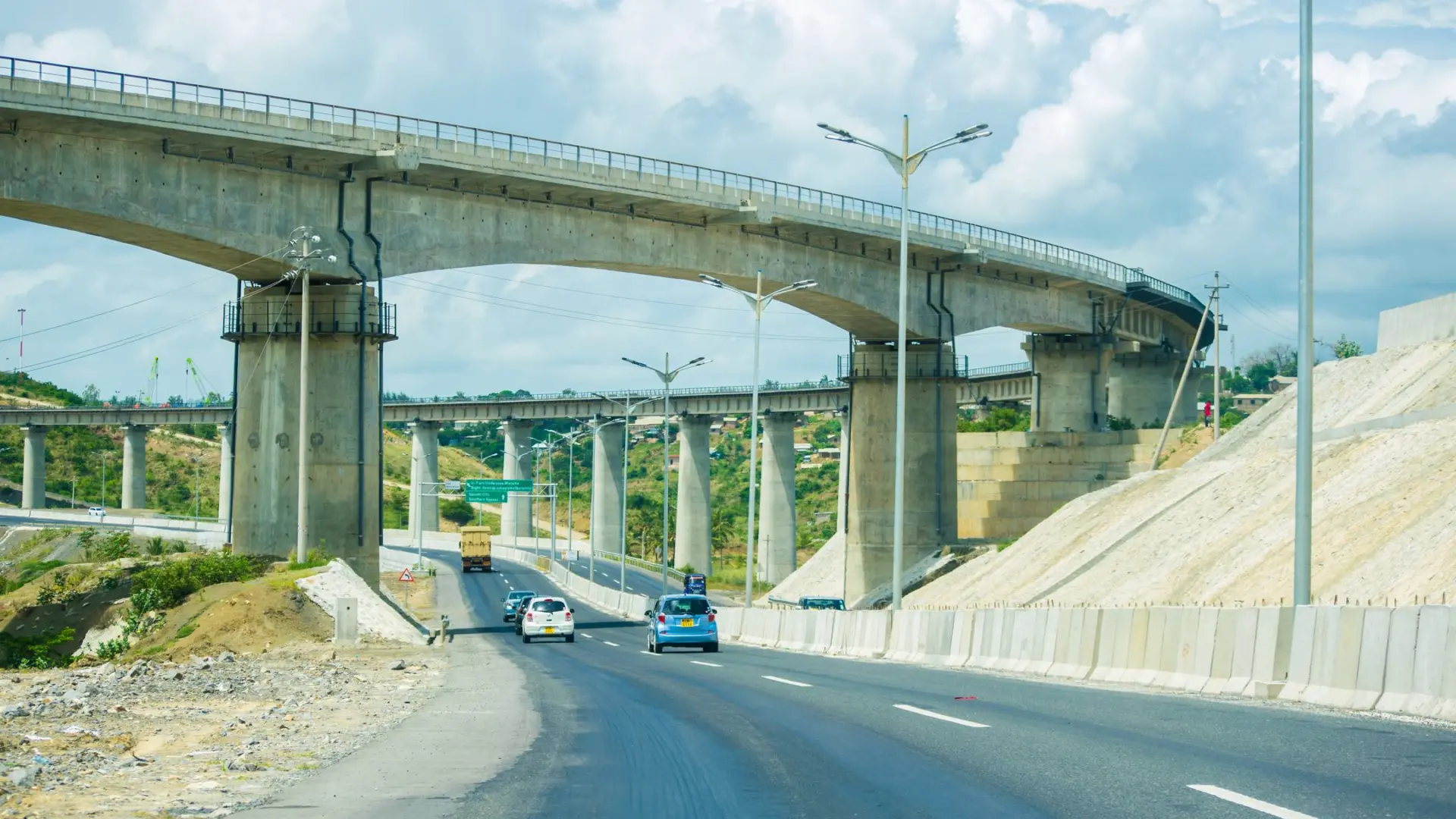
China has gone from a fairly small investor in Africa to the continent’s largest economic partner. According to McKinsey, there are more than 10,000 Chinese firms on the continent, about 90% of them privately owned, and they employ several million Africans. That stimulus matters in communities long marked by economic inequality.
Many people see China as Africa’s new best friend. This piece argues that much of what is called Chinese investment is in fact lending, that Africa gains far less from the relationship than China does, and that parts of it repeat the pattern of the old imperial powers. Here are seven popular claims about China in Africa, and what lies behind them.
Investment or lending
The first claim is that China is helping Africa reach its Millennium Development Goals by investing in its infrastructure, its markets and its development projects.
Look at the detail and much of the “Chinese investment in Africa” talked about in the media is, in the author’s view, a structured programme of concessional loans. China has become a lender to African governments on the scale once associated with the World Bank.
Direct investment remains comparatively small. According to the China Africa Research Initiative (CARI), Chinese foreign direct investment flows to Africa were US$3.37 billion in 2024, 15% lower than in 2023.
An equal partner
The second claim is that China is an equal partner that respects African states and helps them solve their problems.
Look at how the deals work. African governments choose where the infrastructure goes, but in some deals the money is repaid in natural resources, and in the author’s view the skilled and managerial jobs on many projects go to Chinese staff rather than Africans. That is not what an equal partnership looks like.
Jobs and markets
The third claim is that China has helped Africa develop over the past ten years by employing more and more Africans in business.
Chinese projects linked to natural resources have created jobs. But the author argues that cheap Chinese goods are also driving African traders and manufacturers out of business, because they cannot match the prices.
The trade imbalance has since grown. CARI’s figures show that in 2024 Africa’s exports to China reached a record US$99 billion, while its imports from China rose to US$179 billion (CARI trade data).
Support for leaders
The fourth claim is that China will always stand by African leaders, including those with poor human rights records.
The Chinese government has already departed from its own promise of non-interference in Sudan, where it “encouraged” leaders to change their policies with an eye to meeting international trade agreements and to stop targeting civilians. That may look admirable, but in the author’s view it was still about China and its “international trade agreements”. Nor did China use its veto to stop the International Criminal Court investigating the crimes in Darfur. It abstained when the Security Council referred Darfur to the court on 31 March 2005.
Respect for local rules
The fifth claim is that China will not try to take over Africa, that it will not intrude and will always abide by local rules.
That is what was “agreed” at the start, and on the surface it seems to be followed. The Chinese workforce on the continent has also shrunk. CARI’s count of Chinese workers in Africa fell from a peak of 263,696 in 2015 to 90,793 in 2024 (CARI data).
A new colonialism
The sixth claim is that China is not promoting a new form of colonialism on the continent.
China builds roads in its host countries. That is real progress, but in the author’s view many of those roads are designed above all to carry resources out of Africa, among them oil, timber, coal, copper and coltan. Some Chinese employers pay Africans very low wages and threaten to sack them when they object to working conditions, as Human Rights Watch documented in Zambia’s Chinese-owned copper mines in 2011. To the author, none of this is new. It echoes the policies the imperial powers used 70 years ago.
Then there is the environment. China is said to care deeply about environmental issues. In the author’s view, it cares above all about the environment in China, protecting the country from further damage while drawing resources from the rest of the world. Africa supplies only about 4% of China’s forest-product imports, but for some African countries China is almost the whole market: in Mozambique some 90% of exported timber goes there, according to the International Institute for Environment and Development.
Growth, democracy and stability
The seventh claim is that China will bring economic growth, sustainable development and, in time, democracy and stability.
In the author’s view, Chinese loans have helped prop up autocratic governments, with Sudan and Zimbabwe the most cited cases, and those leaders have held on to power against the will of their people for longer as a result.
Some go further and call South-South co-operation, championed by China, the best thing that ever happened to Africa, the force that will lift it out of extreme poverty.
Yet China is also one of the continent’s biggest arms suppliers. In 2013-17 it supplied 17% of Africa’s arms imports, second only to Russia, and 27% of sub-Saharan Africa’s, according to SIPRI. Ending extreme poverty should mean ending violence and crisis. Amnesty International found Chinese assault rifles common among armed groups in eastern Democratic Republic of Congo, delivered either directly or through neighbours such as Uganda. More recent assessments rank China the third most important source of arms to Africa as of 2023.
Setting Africa’s own terms
The author’s conclusion is that the relationship between China and Africa is quietly following the path of the old imperial powers. China offers help, but it stands to gain far more than it gives, while many Africans believe they are the ones gaining. African governments should set their own standards for these deals instead of accepting terms set elsewhere.



