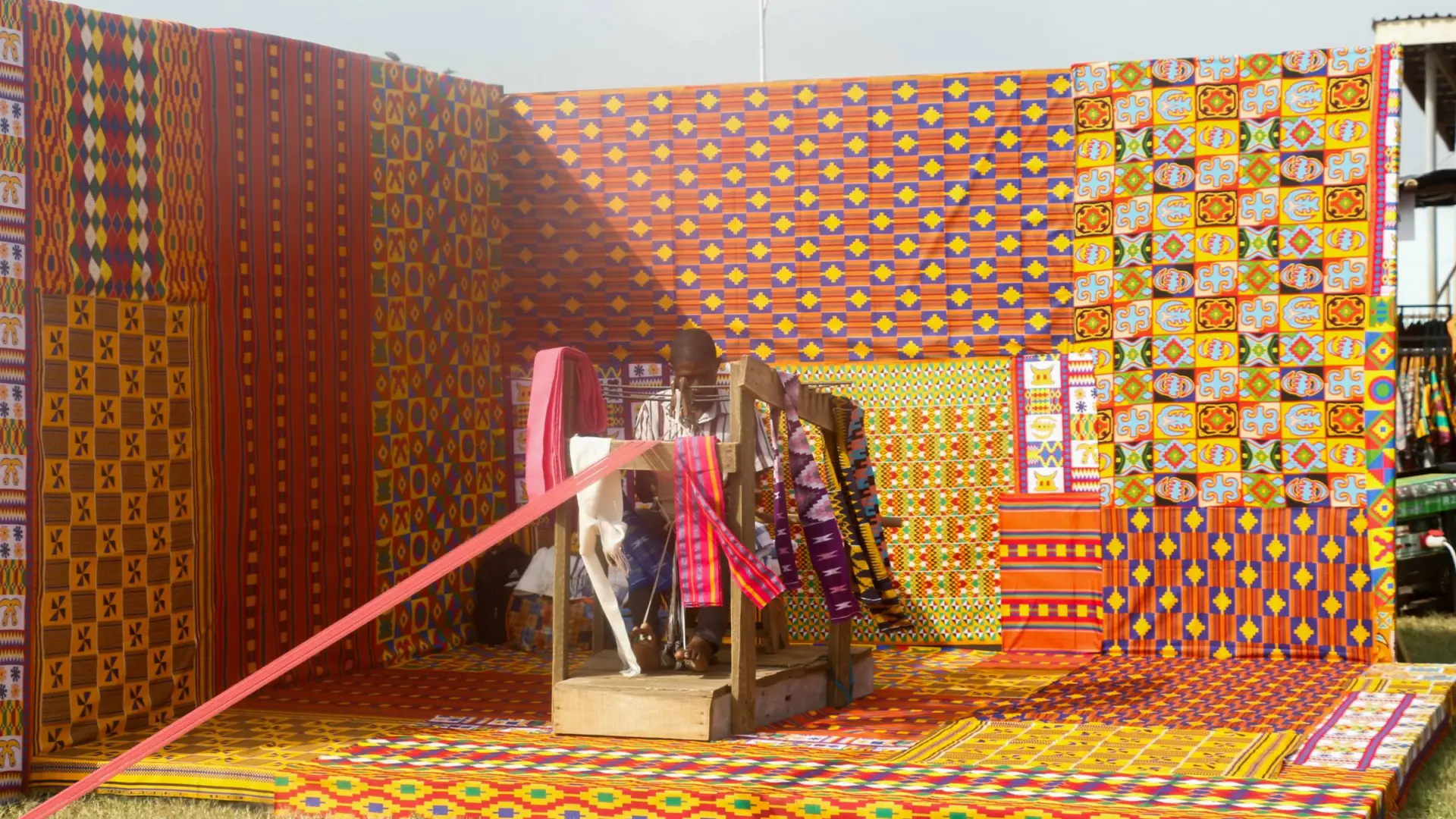
A designer in Lagos can show a celebrated collection, dress global celebrities and earn the continent a reputation for style, while the fabric was woven in Asia, the zips and trims were imported, the financing came on punishing terms or not at all, and the garment that reaches a customer abroad travelled through a logistics chain the designer does not control. African fashion has achieved remarkable visibility. Fashion weeks in Lagos, Nairobi, Johannesburg, Dakar and Casablanca draw international attention, and African aesthetics influence global design. The visibility is real. What it conceals is that the continent is selling an image far more successfully than it is building an industry.
Treating African fashion as a trend (a story about creativity and cultural pride) misses the structure beneath it. Fashion is a manufacturing and industrial-policy question before it is an aesthetic one. A garment is the end of a long value chain: cotton and other materials, spinning and weaving, dyeing and finishing, design, cut-and-sew manufacturing, quality control, finance, logistics and market access. Value is captured at each stage by whoever controls it. The countries that built fashion into a genuine economic engine did so by owning manufacturing capacity and the upstream and downstream links around it, not by hosting glamorous shows. Africa has the design talent and the cultural cachet. The industrial spine that converts those into captured value is largely missing or owned elsewhere.
A continent that designs garments but imports the cloth, lacks the manufacturing scale and cannot finance or move its products at competitive cost is exporting cultural influence while importing much of the industry. The runway is the visible surface. The value chain underneath is where the question of whether African fashion is a soft-power success or an economic missed opportunity is decided.
The chain behind the garment
Consider where the value sits and who holds it. Africa grows significant volumes of cotton, much of which is exported raw and re-imported as finished fabric, repeating in textiles the extractive geometry that governs the continent’s minerals and crops. Spinning, weaving, dyeing and finishing (the capital-intensive industrial stages that turn fibre into cloth) are concentrated in Asia. Even African designers using African cotton therefore frequently buy their fabric from abroad. Cut-and-sew manufacturing at scale and to international quality standards exists in pockets but is not broadly developed, so large orders that could anchor an industry often cannot be filled domestically. The design and branding at the top of the chain, where Africa excels, is also where the value per unit is real but the volume is small.
Finance, logistics and skills
Around the manufacturing core sit the enabling links that determine whether the core can function. Finance is scarce and expensive, and a designer or manufacturer who cannot access affordable working capital cannot fulfil large orders or invest in capacity, capping the business at boutique scale regardless of talent. Logistics (the cost and reliability of moving goods within Africa and to export markets) adds a penalty that erodes competitiveness against Asian producers who operate within dense, efficient supply networks. Skills (the trained pattern-cutters, machinists and production managers a scaled industry consumes) are in short supply. Each weak link constrains the whole, and the cumulative effect is an industry that can produce beauty in small quantities but cannot capture the value that comes from producing at scale.
A continent that grows the cotton, designs the garment and imports the cloth in between has not built a fashion industry. It has built two profitable endpoints and handed the middle to someone else.
Comparing production models
The African fashion economies that are advancing differ in how much of the chain they have managed to assemble. Some North African centres, integrated into European supply chains, have built genuine manufacturing capacity that produces for export, capturing the value of production even where the design and brand belong to foreign houses. East African hubs have attracted apparel manufacturing through trade-access arrangements and special economic zones, building employment and skills though often at the lower-margin, contract-manufacturing end. West African creative capitals lead on design, branding and cultural influence (the high-value but low-volume top of the chain) while remaining dependent on imported inputs and thin manufacturing. Southern African centres combine retail sophistication with selective manufacturing. The comparison suggests that the prize goes to whoever assembles the most of the chain, not to whoever stages the best show.
The continental trade area changes the strategic calculus, because small, fragmented national markets have been one of the reasons African manufacturing could not reach competitive scale. An integrated African market large enough to justify investment in spinning, weaving and large-scale manufacturing would let producers build the volume that fixed-cost industrial stages require. The opportunity is to use that integration deliberately. That means treating fashion not as a cultural ornament but as a manufacturing sector worth the same industrial-policy attention (the financing, the infrastructure, the skills investment, the trade strategy) that governments give to more obviously strategic industries. The cultural influence has already done the marketing. The industrial policy has to do the building.
Turning cultural reach into economic value
The deepest risk is mistaking visibility for victory. The applause for African fashion at international shows, the influence of African aesthetics on global design and the rise of celebrated African designers are genuine soft-power achievements. They are also the kind of success that can lull a continent into neglecting the unglamorous industrial work that would turn influence into income. Cultural cachet that is not converted into manufacturing capacity, jobs and captured value is a reputation other people can monetise: global brands can borrow African aesthetics, produce elsewhere and sell back to the continent that supplied the inspiration.
Fashion is unusually well placed to break the pattern of exporting raw value and importing finished goods, because the demand and the cultural ownership already exist, and those are the parts that policy cannot manufacture. What remains is to build the chain (the materials, the manufacturing, the finance, the logistics, the skills) with the seriousness of industrial policy rather than the enthusiasm of a cultural celebration. The image is sold. The industry is still mostly imported. Closing that gap is the difference between a continent admired for its style and a continent enriched by it.



