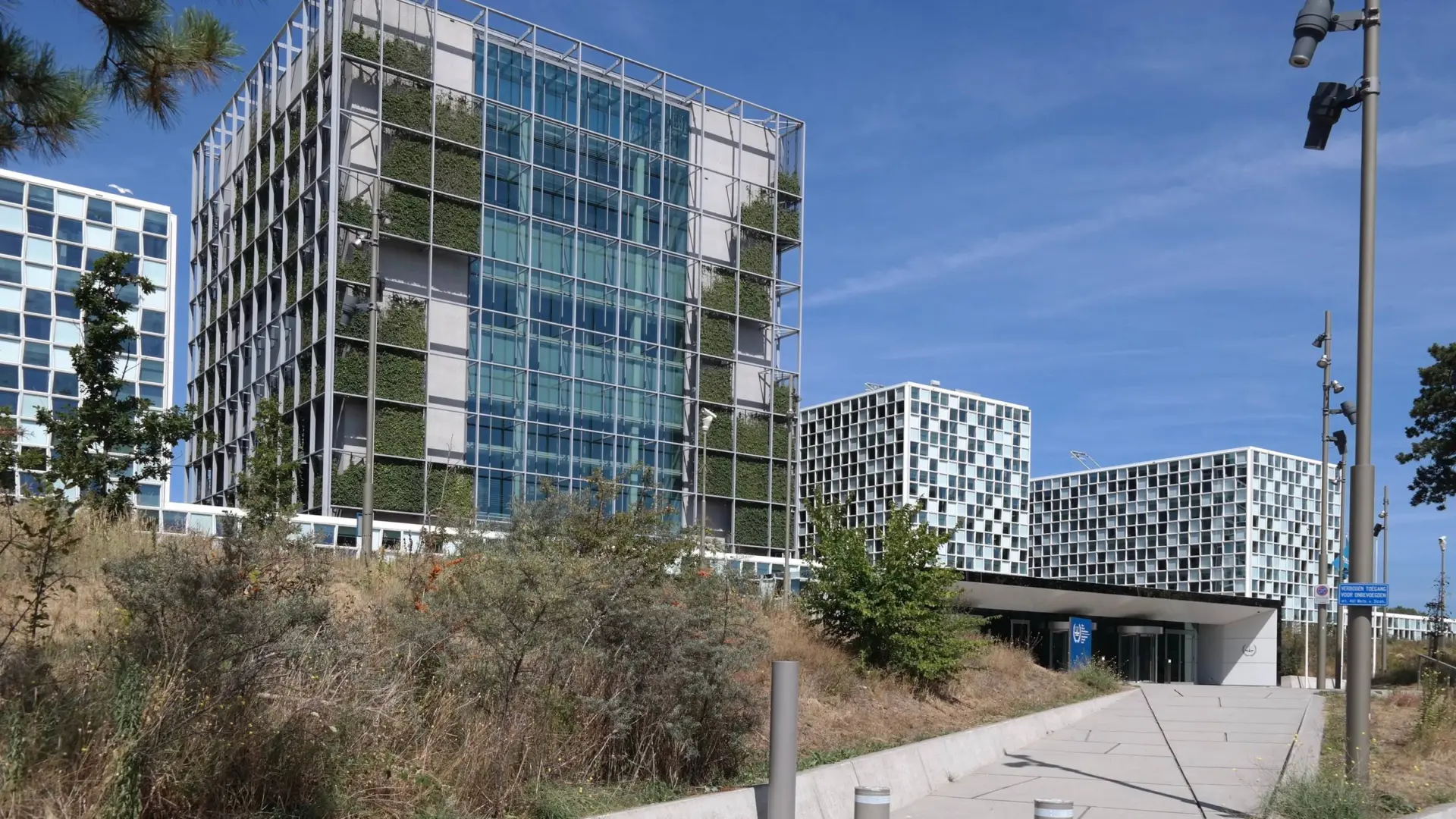
Niger, Mali and Burkina Faso have now formally lodged their Rome Statute withdrawal with the United Nations, nine months after announcing it. Niger deposited its notification on 18 June 2026. Burkina Faso and Mali followed on 24 June. Under Article 127 of the treaty, none of the three leaves the International Criminal Court until a year after those dates, so all three remain states parties until June 2027. Even then, they stay bound by obligations incurred while they were members. The withdrawals narrow the court’s future reach in the central Sahel. They do not cancel what is already before it. Africa 360° examined the sovereignty case behind the decision earlier this month. This piece sets out what the law now fixes in place.
What Article 127 says about Rome Statute withdrawal
The three military governments announced their departure in a joint statement on 22 September 2025, calling the court an “instrument of neocolonial repression in the hands of imperialism”, as The New Arab reported. They presented the decision as immediate. The treaty does not allow that. Article 127 of the Rome Statute provides that a withdrawal “shall take effect one year after the date of receipt of the notification, unless the notification specifies a later date”. The announcement had no legal force until the notifications reached the UN secretary-general, the treaty’s depositary.
The UN treaty record now gives the dates. Niger’s withdrawal takes effect on 18 June 2027, and those of Burkina Faso and Mali on 24 June 2027. Mali ratified the statute on 16 August 2000, Niger on 11 April 2002 and Burkina Faso on 16 April 2004. Every crime committed on their territory from those dates until June 2027 stays within the court’s jurisdiction.
The second paragraph of Article 127 sets the limits of departure. A state is not discharged from obligations that arose while it was a party. Its withdrawal does not affect cooperation in investigations and proceedings that began before the withdrawal took effect. Nor does it “prejudice in any way the continued consideration of any matter which was already under consideration by the Court” before that date.
Precedent shows the rule has force. Burundi’s withdrawal took effect on 27 October 2017 and the Philippines’ on 17 March 2019. Rodrigo Duterte, the former Philippine president, still faces three counts of crimes against humanity at The Hague. On 22 April 2026 the court’s Appeals Chamber rejected his challenge to its jurisdiction, upholding a ruling that the inquiry began before the Philippines left, AFP reported. The window also runs the other way. Hungary notified its withdrawal on 2 June 2025 and revoked it on 29 May 2026, before it took effect.
What is already before the court
Mali’s exposure is the largest. Its own government referred the situation in 2012, the first referral backed by other states, the Institute for Security Studies notes. The prosecutor has investigated since 2013, mainly in Gao, Timbuktu and Kidal. The court sentenced Ahmad Al Faqi Al Mahdi to nine years for destroying Timbuktu’s shrines. On 20 November 2024 it sentenced Al Hassan to 10 years for war crimes and crimes against humanity, including torture, mutilation and flogging, committed in Timbuktu under Ansar Dine’s control, JusticeInfo reported. A warrant for Iyad Ag Ghaly, made public in June 2024, seeks him on suspicion of murder, rape, sexual slavery and attacks on religious and historic monuments in Timbuktu.
Those proceedings began long before 2027. Mali’s duty to cooperate on the Ag Ghaly warrant therefore survives its withdrawal. Burkina Faso and Niger are in a different position: neither is the subject of a public ICC investigation, according to Amnesty International. For them, the next eleven months are the period in which an investigation could still open with Article 127 protecting it.
Enforcement, not jurisdiction, is the weak point
The court has no police force. It depends on states to arrest suspects, hand over evidence and protect witnesses. A government can stay bound by those duties and still decline to perform them. That is the practical meaning of the Sahel withdrawals: the legal obligations continue, but the governments that must carry them out have said they reject the institution.
The three governments’ case against selectivity has a factual basis. The United States signed the statute and told the depositary in 2002 that it did not intend to ratify it. Russia did the same in 2016. China has not signed. But non-membership is not immunity. The court issued a warrant for Vladimir Putin on 17 March 2023 because Ukraine had accepted its jurisdiction over crimes on Ukrainian territory, whatever the suspect’s nationality. The Security Council can also refer situations in states that are not parties. Criticism of uneven enforcement carries weight when it is legally accurate.
The Sahelian alternative and its test
The Alliance of Sahel States has offered its own route. Its justice ministers approved a Sahelian Criminal and Human Rights Court in mid-2025, with jurisdiction over crimes against humanity, war crimes, genocide, aggression, terrorism, terrorist financing, money laundering and serious rights violations, AllAfrica reported on 3 June 2025. A high-security prison would hold those convicted. Its seat was not decided. As of the end of July 2026, Africa 360° had found no public report of a ratified statute or appointed judges.
The governments have reasons of their own for moving now. The Institute for Security Studies links the decision to the bloc’s priority on unity after its exit from ECOWAS and the ECOWAS court. Amnesty says it has documented crimes under international law against civilians in all three countries for more than a decade, by armed groups and by state forces. An ICC that cannot investigate new conduct after June 2027 removes one source of external scrutiny over those forces. Withdrawals from the African Court on Human and Peoples’ Rights raise a parallel question, as our analysis of direct access to that court explains.
The statute already contains a path for sovereignty claims. Under Article 17, a case is inadmissible at the ICC when a state with jurisdiction is genuinely investigating or prosecuting it. Governments that want accountability at home can meet that test without leaving the treaty. The dates to watch are 18 and 24 June 2027, whether Bamako acts on the Ag Ghaly warrant, and whether the Sahelian court publishes a statute that guarantees independent judges. A bloc of three states leaving at once is new. Whether the 30 other African states parties treat it as a precedent will depend on what the alternative delivers to victims.



