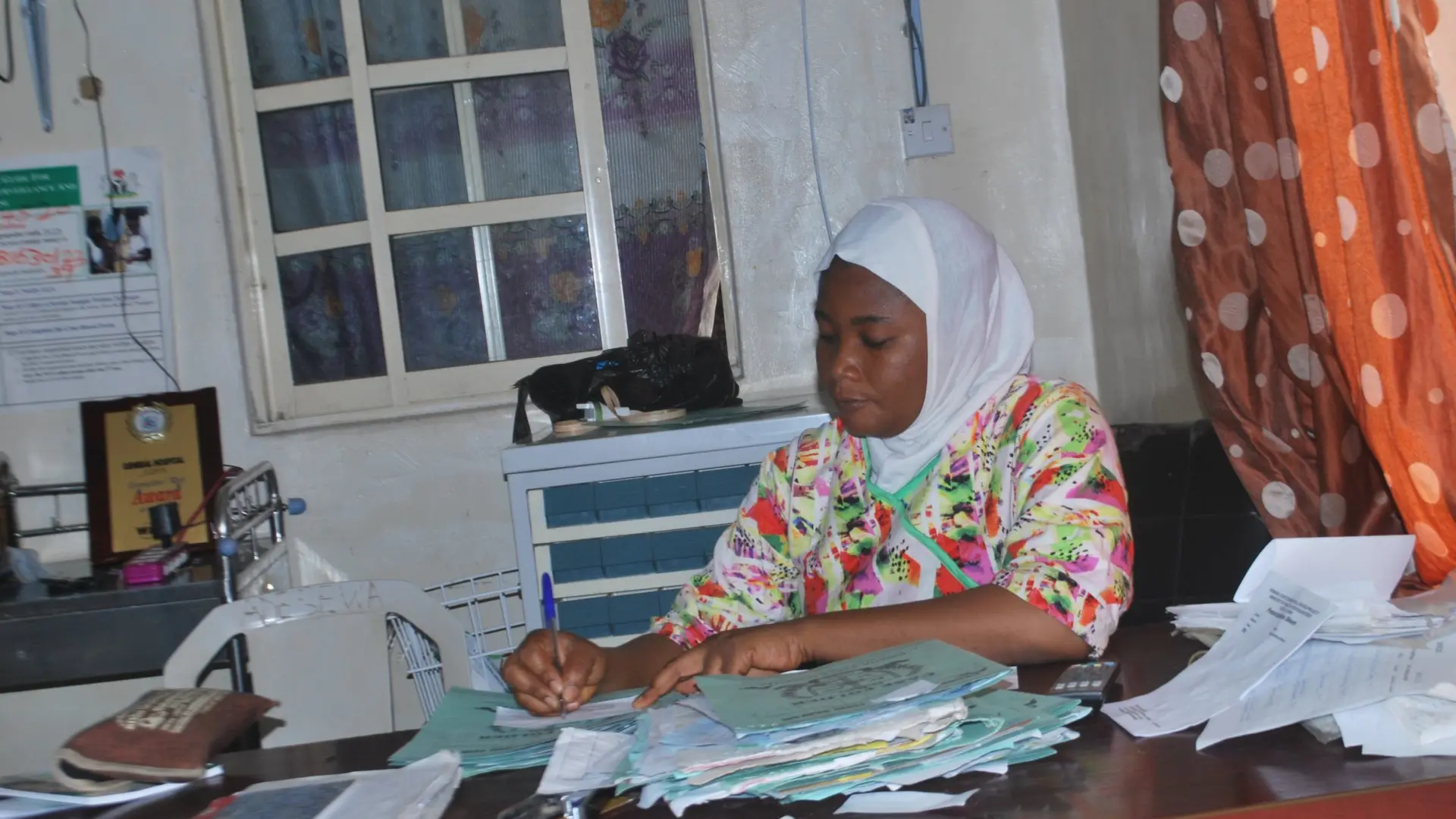
Nigeria’s doctor brain drain is a transfer of publicly funded skills from a poor health system to rich ones, and the Nigerian state has written much of the supply side of it. On 24 April 2019, on Channels Television’s Sunrise Daily, Chris Ngige, then Minister of Labour and Employment and himself a medical doctor, said he was “not worried” about doctors leaving because “we have surplus”. He argued that doctors working abroad were not a loss, since they sent home foreign exchange and gained advanced clinical skills. The remark revealed less about the health system than about how its managers had come to treat a workforce emergency as routine.
What the registration data shows
The data tells a different story. Nigeria faces shortages and uneven distribution of health workers, and many doctors on the national register no longer practise in the country.
The flow to Britain shows the scale. According to General Medical Council registration data by country of primary medical qualification, 1,796 Nigerian-qualified doctors joined the UK medical register in 2022, up from 1,458 in 2021. In 2017 the figure was about 445. The 2022 intake was therefore roughly four times the level of five years earlier, and Nigeria had become the third-largest source of newly registered doctors trained outside the UK, after India and Pakistan.
The World Health Organization’s Health Workforce Support and Safeguards List, updated in March 2023, names Nigeria among 55 countries, 37 of them in Africa, whose health workforce falls below the WHO threshold of 4.45 doctors, nurses and midwives per 1,000 people. The UK Department of Health and Social Care’s code of practice for international recruitment follows that list. It bars NHS trusts and recruitment agencies from actively targeting health workers in Nigeria, but it allows them to hire individuals who apply directly on their own initiative. Britain’s health service therefore continues to fill staffing gaps through independent applications from Nigerian doctors, while many of Nigeria’s rural health centres run with skeleton staff or none at all.
A subsidy that runs from poor to rich
The exchange is a transfer. Nigerian public institutions bear much of the cost of training a doctor: the subsidised university place, the public teaching hospital, the years of residency. They then lose the finished professional, at the start of their most productive years, to a receiving system that contributed little to that training. A poorer country underwrites part of the workforce of a richer one, which reverses the direction implied by the language of aid. Migration also brings individuals opportunity, and it can bring remittances, training and the possibility of return. Those benefits do not cancel the transfer.
The push factors are documented. Doctors report months of unpaid salaries, overstretched hospitals, inadequate protective equipment and uncertain career progression. In a manpower and emigration survey for 2022 to 2023, presented by its president, Emeka Orji, in early 2023, the Nigerian Association of Resident Doctors found that about 85 per cent of surveyed members planned to leave Nigeria if pay and conditions did not improve. A 2018 survey by NOIPolls and Nigeria Health Watch had found that 88 per cent of Nigerian doctors were considering work abroad. In rural areas, where one doctor may serve several towns, a single departure can leave whole communities without care.
Responsibility at both ends
The accusation has to point inward as well as outward. Britain hires because hiring is rational, but Nigeria loses doctors because it never made staying rational. A state that withholds salaries, underbuilds hospitals and treats its physicians as an export has created the conditions for its own shortage. The recruitment pull is real, and so is the neglect that makes it effortless. Holding only the destination country to account would let the originating government avoid the same standard.
Ngige presented remittances as compensation. The World Bank and KNOMAD, in Migration and Development Brief 38 of June 2023, put official remittance inflows to Nigeria at $20.1 billion in 2022, up from $19.5 billion in 2021 and more than a third of all remittances to sub-Saharan Africa. That is a large sum. But it flows mainly to household consumption, not to hospitals. Using it to justify the loss of essential health workers confuses household income with health-system capacity. Remittances can pay a family’s bills in Benin City. They cannot staff a ward in Bauchi.
Nigeria’s position is part of a wider continental pattern, examined in our earlier analysis of brain drain and Nigeria’s future. Ghana, Zimbabwe and Ethiopia also lose medical professionals to high-income countries. Competition for health workers sharpened after the pandemic. The UK launched its Health and Care Worker visa on 4 August 2020, with faster processing, lower fees and exemption from the Immigration Health Surcharge. Immigration, Refugees and Citizenship Canada introduced healthcare-specific Express Entry draws on 28 June 2023, with lower score thresholds for physicians and nurses. The WHO framework calls for safeguards on international recruitment. It restricts active recruitment, not individual migration.
What retention would require
Addressing the loss requires both short-term relief and structural reform: more residency places, better pay and working conditions, investment in hospitals, particularly in rural areas, and a serious diaspora engagement policy. Reliable power and safe facilities matter as much as salaries, a point developed in our report on retaining Africa’s health workers.
Diaspora medical bodies, including the Medical Association of Nigerians Across Great Britain and the Association of Nigerian Physicians in the Americas, report that many Nigerian doctors abroad are willing to contribute through clinical missions, training and investment. Working with the Nigerians in Diaspora Commission, they also say that permanent return depends on modern equipment, better hospital governance, security and narrower pay gaps. Retention and return turn on the same conditions: reliable pay, workable training and safe facilities. Those, rather than appeals to patriotism, should guide workforce planning.



