Extreme heat is no longer a peripheral risk in African public health planning. Heat-related illnesses and deaths have risen by nearly a quarter since the 1990s globally, and extreme temperatures now kill an estimated 546,000 people worldwide each year. Africa, with a large workforce operating under direct sun, an already warm baseline climate and chronically underfunded healthcare, is acutely exposed. Heat adaptation should therefore be understood not as an optional development cost but as the maintenance cost of productivity in a world warmed mainly by others, and Africa’s heat toll as a measurable loss-and-damage claim.
The productivity toll
The economic dimension of heat is as severe as the humanitarian one. In 2025, outdoor workers globally lost an estimated 639 billion hours of labour due to heat exposure, a productivity loss equivalent to over a trillion dollars in foregone output, according to Lancet Countdown tracking data.
In Africa’s agricultural, construction and informal trade sectors, where outdoor work is an economic necessity, this loss falls on the workers who can least afford it and the economies least able to absorb it. A smallholder farmer who cannot work the fields during peak afternoon heat in planting season loses yield. A market trader who closes early during a heatwave loses the day’s revenue on which the household depends. Heat productivity loss in Africa is not an abstraction measured in GDP percentage points. It is a daily erosion of survival margins.
A system without reliable cooling
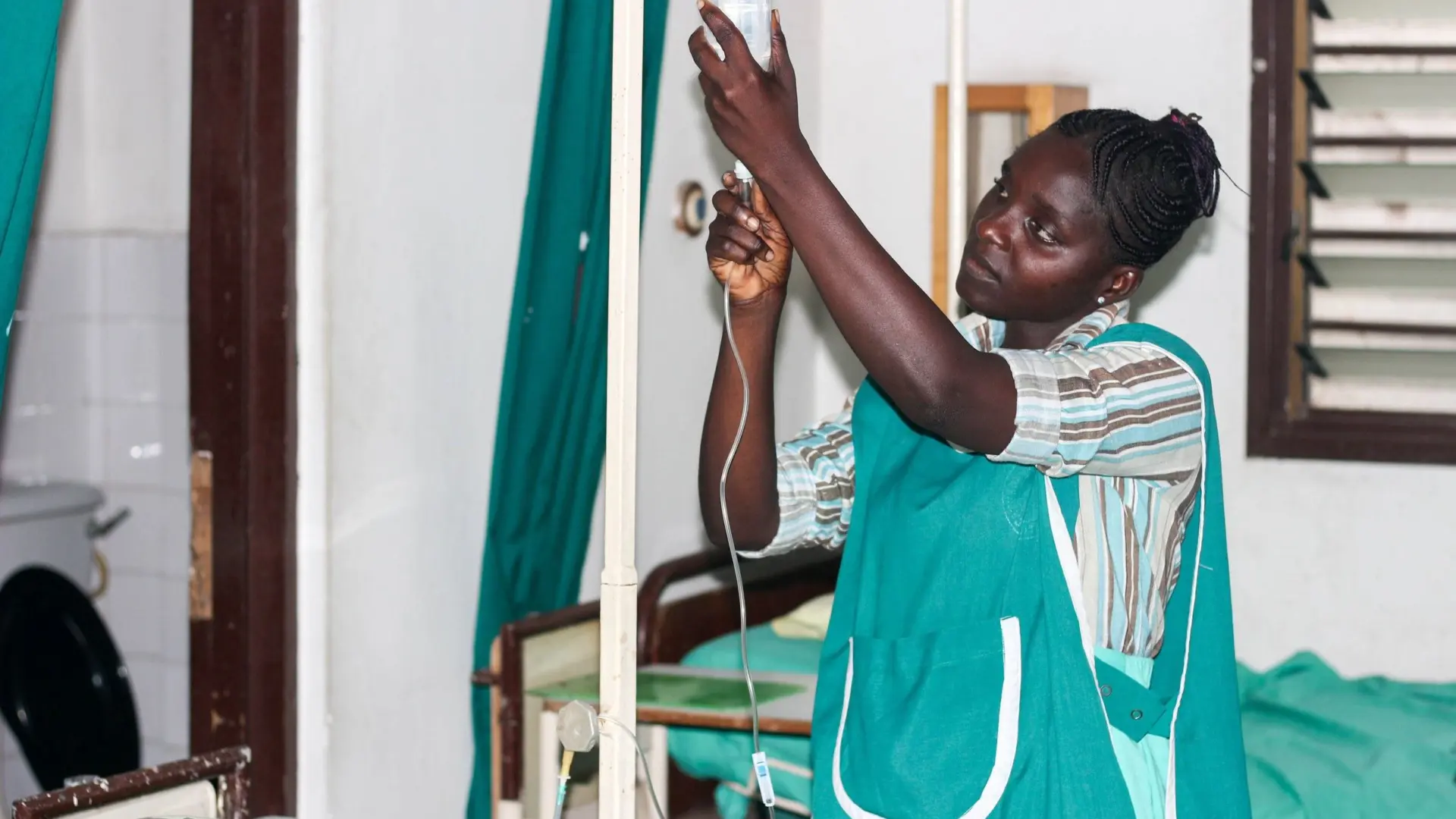
African healthcare systems are meeting this emergency with infrastructure designed for a different climate and budgets that reflect a different set of priorities. Cooling infrastructure, hospital air conditioning, the cold chain for heat-sensitive medicines and refrigeration for blood and vaccines, depends on a reliable electricity supply that large parts of African healthcare do not consistently receive. The climate health crisis in Africa is, in part, an energy infrastructure crisis.
The urban form multiplies the exposure. Africa’s cities are among the fastest-growing in the world, and much of that growth is informal: dense settlements of corrugated roofing that turn dwellings into heat traps at night, when the body is supposed to recover. High temperatures during both day and night endanger older people and those with chronic illnesses, and night-time heat is precisely what informal housing is least equipped to manage. The heat map of an African city is a poverty map with a thermometer.
Africa’s health systems are being asked to manage a climate emergency with infrastructure built for a different temperature baseline, budgets set before the emergency arrived, and electricity supplies too unreliable to run the cooling that survival now requires. This is a systemic failure, not a capacity one.
Nutrition compounds the problem. Climate-driven agricultural disruption, through reduced yields, shortened growing seasons and greater post-harvest losses from heat and poor storage, is adding to food insecurity that already affected hundreds of millions of Africans before 2025’s record temperatures. Malnutrition weakens immune systems, reduces heat tolerance and makes people more vulnerable to the respiratory and cardiovascular conditions heat stress triggers. Climate, food security and health are not separate problems but one emergency, visible in the weight of children in clinics and the anaemia counts of antenatal visits.
Financing heat adaptation
African governments investing in heat action plans, early warning systems that trigger public cooling centres, urban tree cover and shade, revised occupational health standards for outdoor workers, and solar energy for health facilities that keeps cooling running regardless of the grid, are not spending on peripheral environmental concerns. They are investing in the capacity of their populations and economies to function in the temperatures that already exist. That is the maintenance cost of human productivity in a world that wealthier nations warmed faster, further and earlier than Africa did. The bill arriving at African health ministries was written by others. The obligation to pay it, and the urgency of doing so, is nonetheless Africa’s to face.
The heat toll is also a climate justice claim. Africa’s loss and damage at the human level, in lives lost, labour hours forfeited and healthcare costs incurred, is measurable, documented and attributable to warming generated overwhelmingly by other regions’ industrialisation. African governments have not yet converted that measurability into the adaptation finance and health system investment the evidence supports. The human heat toll is both a catastrophe to mitigate and an argument to make, clearly, persistently and with the economic precision that turns moral claims into negotiable terms.



