Tunisia’s Decree-Law 54, adopted in September 2022, defines false-information offences broadly enough to expose journalists and critics to prosecution for reporting on public affairs. That risk is especially serious because the decree arrived alongside a wider concentration of executive power and increased pressure on the judiciary. It is best understood not as an isolated instrument but as part of President Kais Saied’s dismantling of the checks Tunisia’s transition built, and as evidence of how fragile those checks were.
From Arab Spring to executive consolidation
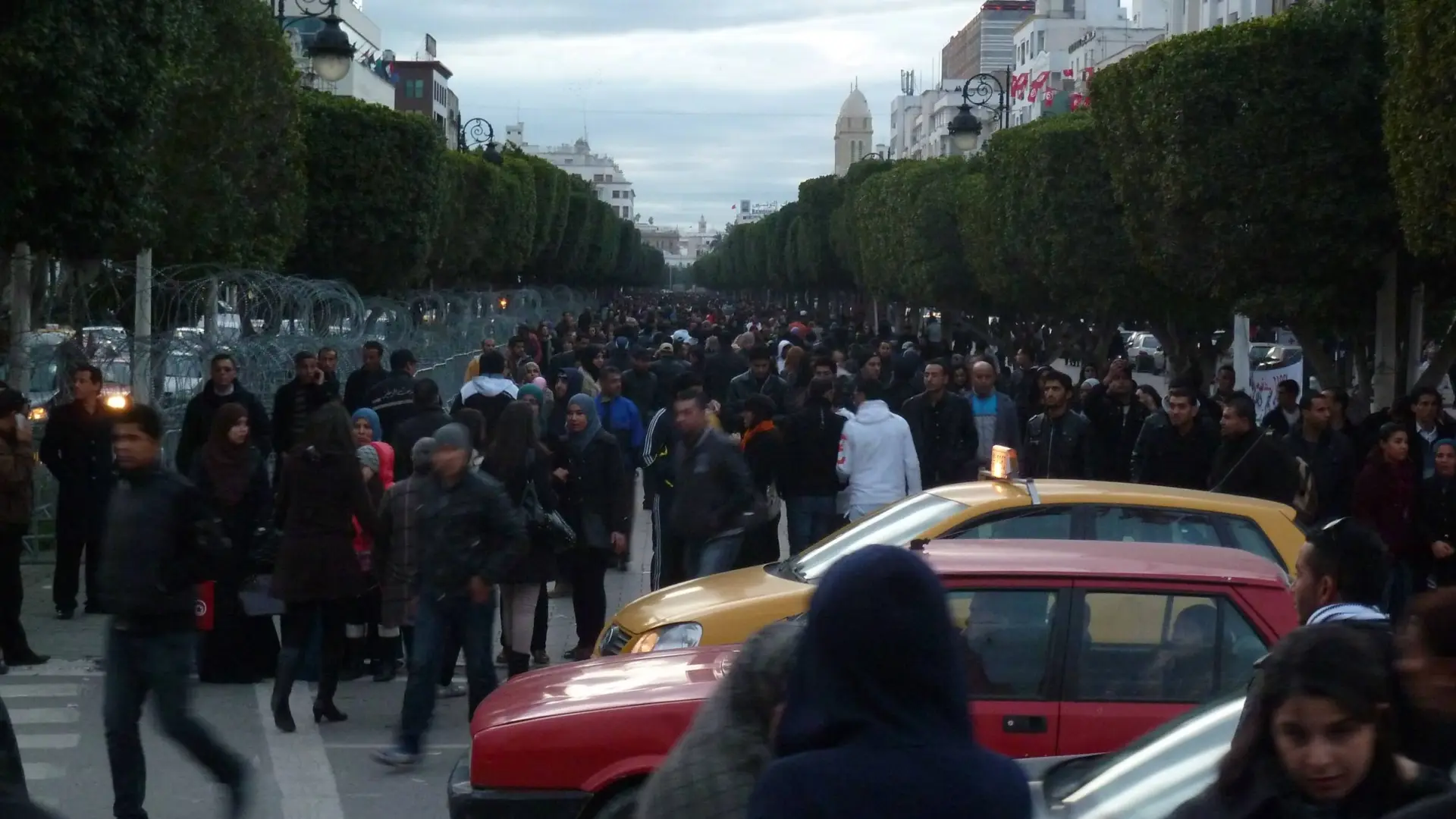
Tunisia is not the Tunisia of 2011. The country whose street protests dislodged Zine El Abidine Ben Ali and set off a regional wave of popular mobilisation has spent the decade since watching the democratic system that replaced him grow, fragment, be suspended and be redesigned under Saied’s 2021 consolidation of executive power. The 2022 constitution that Saied authored effectively dismantled the parliamentary system of the post-Ben Ali transition, concentrating power in the presidency and weakening parliamentary checks on the executive. The decree fits within that consolidation.
The risk of a chilling effect
Broadly defined offences do not need to be used often to work. Where criminal penalties are severe and courts cannot be relied on to protect speech independently, journalists and critics have reason to hold back from reporting that reflects badly on government. Scrutiny of the decree should therefore focus on the offences it defines, the cases brought under it and whether courts provide independent protection for speech. Claims that prosecutions target particular kinds of reporting need to be demonstrated through named cases; the chilling effect on legitimate reporting and criticism is a concern in its own right.
Tunisia’s case is notable because the decree arrived in a country that, as recently as 2019, was ranked among the freest press environments in the Arab world. Controlling information about the exercise of power has long been a priority for governments that cannot afford the consequences of citizens being accurately informed. The instruments are new. The political logic is not.
What the transition needed
Tunisia’s trajectory shows that the democratic transitions of the Arab Spring were not secured by the removal of the leaders who prompted them. They required institutions, independent judiciaries, free press frameworks and a civil society with genuine legal protection, that could hold successor governments to account with the same force the street had applied to the original regime. Those institutions were built partially and contested continuously. The fake news decree is not the cause of Tunisia’s democratic retreat. It is a symptom of a retreat that began when the institutional architecture of the transition proved insufficiently durable to survive a concentrated executive assault.



