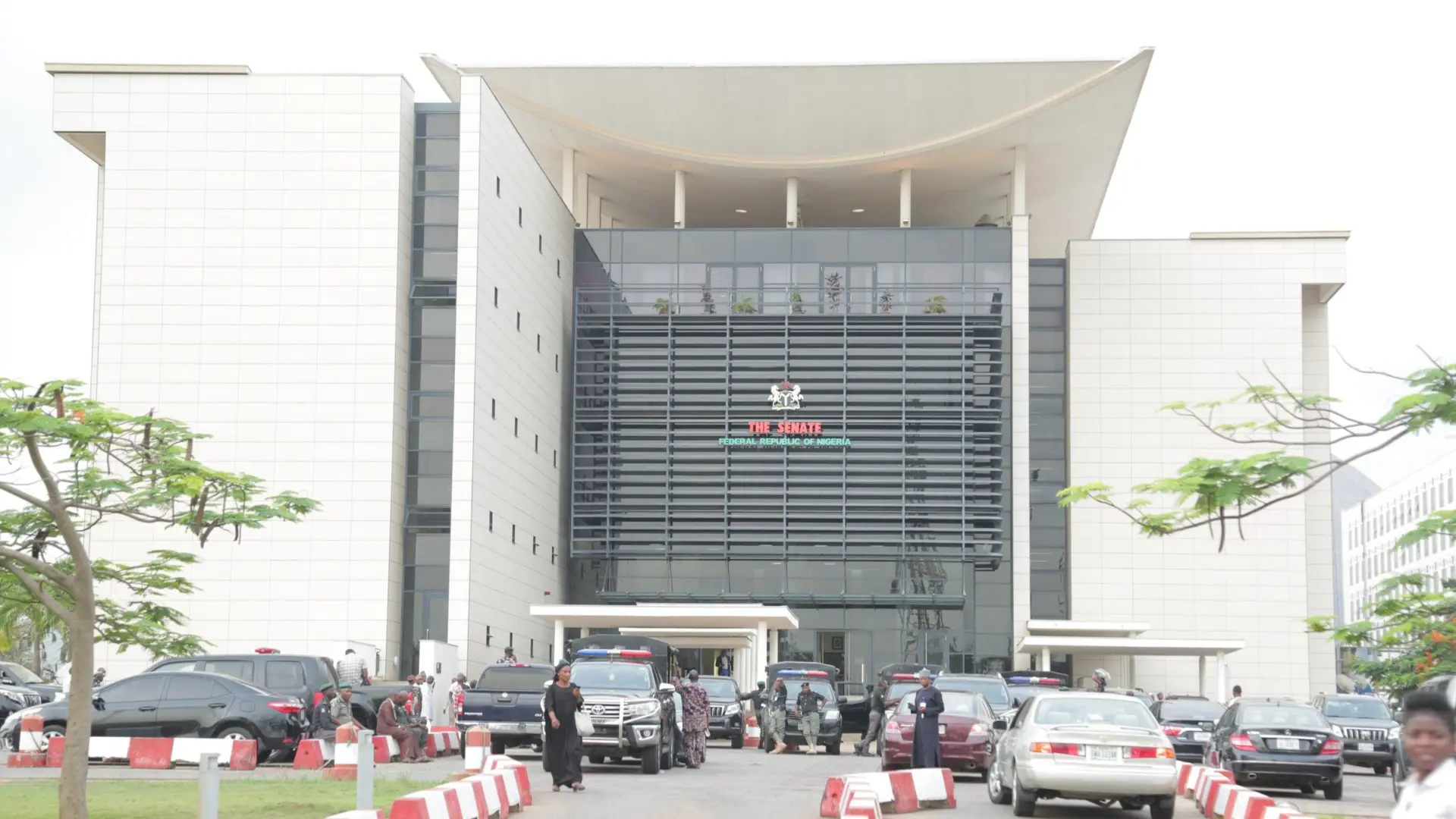
National Assembly oversight is the main constitutional tool Nigeria’s legislature has for holding ministries and agencies to account, and it is weakest where the legislature’s own finances meet the bodies it scrutinises. Committees often rely on the agencies they oversee to pay for oversight work. Legislators nominate constituency projects that those agencies then execute. Members arrive in office carrying campaign costs their salaries cannot repay. Each arrangement is lawful. Together they help explain why recurring allegations about budgets and committee conduct so rarely end in findings.
How committee oversight is paid for
The 10th National Assembly expanded its standing committees in 2023 and 2024 to more than 70 in the Senate and more than 130 in the House of Representatives. Each committee supervises a group of ministries, departments and agencies, and each chairmanship brings access to their budgets. Civil society monitors, including the Civil Society Legislative Advocacy Centre (CISLAC), SERAP and BudgIT, along with reporting by Premium Times and The Punch, have documented allegations that oversight has been commercialised through “sighting fees”, travel allowances and “oversight logistics” billed to the agencies under review. In October 2023 Senator Ali Ndume said publicly, as reported by Premium Times and Channels TV, that agencies frequently fund lawmakers’ oversight trips, accommodation and allowances. CISLAC has repeatedly warned that the practice compromises committee independence.
On that account, agencies come to treat committee investigations as a cost to be managed rather than a spur to better governance. The clearest case on the public record dates from March 2012. Arunma Oteh, then Director-General of the Securities and Exchange Commission, told a televised hearing of a House of Representatives ad hoc committee on the near-collapse of the capital market that the committee’s leadership had asked the commission for N39 million towards the cost of its hearing, with a separate request for N5 million. The House dissolved and reconstituted the committee that month. The Economic and Financial Crimes Commission later filed bribery and corruption charges over the alleged demand at the High Court of the Federal Capital Territory. The case ended in a discharge in 2018.
Critics describe a familiar sequence: investigations open with fanfare, dissolve into committee and end in the quiet exoneration both sides need to keep trading. Premium Times and The Punch have reported ad hoc probes across the 8th, 9th and 10th Assemblies, including the 2020 inquiry into the Niger Delta Development Commission and repeated inquiries into fuel subsidies and refinery maintenance in 2023 and 2024, that opened with televised hearings and stalled without published plenary reports or prosecutions. Because scandals tend to surface through falling-outs rather than routine controls, the public record probably understates the problem.
Constituency projects and the legislature’s own budget
The second arrangement is the constituency project. Under successive Appropriation Acts from 2016 to 2024, zonal intervention projects carried a baseline of N100 billion a year shared among the 469 members of the National Assembly, an average of about N213 million per legislator each year, before further insertions pushed individual allocations higher in 2024. Legislators nominate the projects and often the contractors. Federal agencies execute and pay for them. The Independent Corrupt Practices and Other Related Offences Commission tracks delivery through its Constituency and Executive Projects Tracking Initiative, but because the money is appropriated to agencies and paid to contractors, neither the member who chose a project nor the agency that paid for it carries clear responsibility for whether it is built.
Allegations of padding have recurred across sessions. In July 2016 Abdulmumin Jibrin, then chairman of the House Appropriations Committee, alleged that principal officers of the House had inserted unauthorised constituency and zonal projects into the 2016 budget, Premium Times reported. In March 2024 Senator Abdul Ningi alleged that the 2024 budget contained N3.7 trillion not tied to specific projects; the Senate rejected the claim and suspended him. Both episodes turned on the same weakness: insertions that are hard to trace once the budget is enacted. Our earlier analysis of the Senate padding row set out how that dispute unfolded.
Personnel and overhead dominate the legislature’s own spending. The National Assembly’s statutory allocation rose from N197.9 billion in the 2024 budget proposal to N344.85 billion in the enacted budget. BudgIT’s breakdowns of the National Assembly vote found that personnel and overhead costs routinely take more than 80 per cent of the total, leaving less than a fifth for capital spending. Members’ monthly office running costs, reported at between N13.5 million and N21 million in 2024, dwarf the statutory pay set by the Revenue Mobilisation Allocation and Fiscal Commission. The legislature defends control of its own budget as a condition of independence. The principle is sound, but independence over spending carries a matching duty to publish it in detail, a point the debate over legislative pay has not resolved.
Campaign finance and accountability
The third arrangement sits at the point of entry. The Electoral Act 2022, signed on 25 February 2022, caps election expenses at N100 million for a Senate candidate and N70 million for a House of Representatives candidate, up from N40 million and N20 million under the 2010 Act, and limits any single donation to a candidate to N50 million. Parties must keep audited records of contributions and spending and file audited returns with the Independent National Electoral Commission within six months of an election. These provisions are rarely enforced in practice.
A competitive campaign costs more than a legislator’s official pay can recover, and the money comes from business interests that expect access, executive patrons who expect loyalty and personal networks that become obligations once in office. Members who arrive bound by those relationships are poorly placed to scrutinise the executive, or the agencies whose budgets they help shape. Any link to a particular act of corruption has to be shown through financial records and investigation, not assumed for every member. The incentive, however, applies to all of them, a pattern money politics in Nigeria’s elections has long made visible.
The Fiscal Responsibility Act 2007 and the Public Procurement Act 2007 were meant to discipline public spending through medium-term expenditure frameworks, borrowing rules and competitive tendering overseen by the Bureau of Public Procurement. Neither was designed around a system in which legislators choose projects that agencies then procure, and much constituency spending sits in that gap.
What reform of National Assembly oversight would require
Reform would target the three arrangements directly. Oversight hearings and travel could be funded from the legislature’s own vote and published, rather than billed to the agencies under review. Constituency projects could carry a named sponsor, a published contractor and a completion audit, so that responsibility for delivery is clear. INEC could enforce the Electoral Act’s spending caps and audited returns and publish them, which would change the financing incentive at the point of entry. Independent budget scrutiny by credible civil society bodies with guaranteed access to legislative financial records would add an external check the institution cannot suppress. All of these require political will, and that will has so far been hard to find inside the institution that would have to reform itself.



