Africa’s deadliest ethnic conflicts, from Biafra and Rwanda to Sudan and the Central African Republic, were not the product of ancient hatreds. They were shaped by colonial borders and classifications, and political elites after independence then weaponised the identities those systems had hardened. This analysis argues that the way out lies not in erasing identity but in building legitimate political systems in states that inherited structures designed to extract rather than integrate.
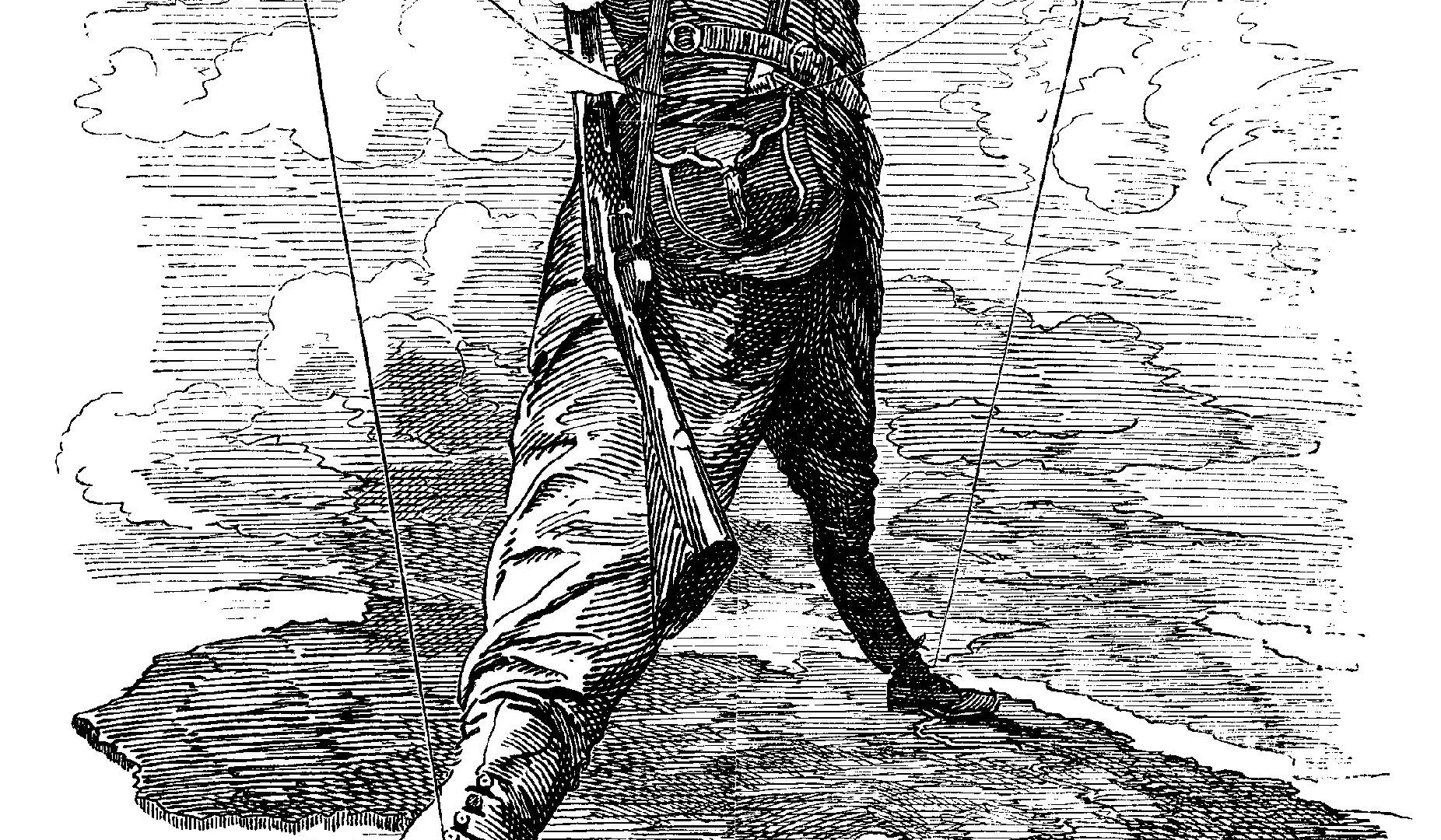
The Berlin Conference of 1884–85 helped establish the rules for European colonial expansion in Africa. The later drawing of borders and colonial systems of rule disrupted existing political communities, with consequences that outlasted independence.
This is not a claim that Africa had no internal conflict before colonialism. Every human society of sufficient complexity has produced conflict over resources, authority and territory. The partition produced something more specific. It converted rivals into mandatory cohabitants, elevated some ethnic groups over others as instruments of colonial governance, and weakened the means through which communities had managed their differences. Nor did colonial structures determine a single outcome: local histories, post-independence decisions and external interventions also mattered.
The structural account must still be stated clearly, because the alternative is a story in which Africa’s violence appears self-generated, a product of hatreds too deep for politics to resolve. That story is false, and it hands outside actors a licence to intervene while bearing no accountability for the conditions they helped create.
Biafra
Nigeria’s civil war of 1967 to 1970 is the most studied example of what that inheritance produces. Less than a decade after independence, a country assembled from the Hausa north, Yoruba southwest and Igbo southeast (three political communities with distinct histories, governance traditions and economic orientations, forced into shared statehood by British administrative convenience) reached a point of fracture. On 30 May 1967, in a broadcast from Enugu, Colonel Odumegwu Ojukwu declared the Eastern Region the independent Republic of Biafra. The declaration was a response not simply to the military coups of 1966 but to what those coups revealed: within the Nigerian federal structure, the Igbo were vulnerable in ways that the administrative unity of the state could not protect them from.
The Nigerian government’s response (backed by both the Soviet Union and the United Kingdom, in one of the Cold War era’s more revealing alignments) was a blockade strategy that recognised that conventional military defeat was insufficient. Biafra’s eventual collapse in 1970 was produced not primarily by battlefield loss but by famine, a million or more deaths from starvation in a conflict whose human cost was obscured for years by official silence and international diplomatic calculation. The Biafran question has not been resolved by the war’s outcome. It has been managed, imperfectly, through a federal structure that has never adequately addressed the inequities of power distribution that the secession attempt expressed.
Rwanda
Rwanda’s genocide of 1994 is the sharpest demonstration of what happens when colonial ethnic categorisation is weaponised at scale. Belgium’s elevation of the Tutsi minority above the Hutu majority, formalised through identity cards introduced in the 1930s that turned a fluid socioeconomic distinction into a rigid racial classification, was administered colonial policy, not a reflection of pre-colonial Rwandan social structure. Over one hundred days in 1994, the genocide against the Tutsi killed hundreds of thousands of people, including Hutu who opposed the killings. Government forces and militia organised and carried out the violence, with some civilians participating. What made it possible was not ancient hatred. It was a political infrastructure (including radio broadcasts that functioned as massacre coordination systems) that activated colonial-era categories in the service of contemporary political objectives.
Rwanda’s reconstruction since 1994 has included a deliberate effort to construct a national identity that transcends the Hutu-Tutsi binary. That effort is itself a measure of the cost of a catastrophe that was not inevitable. The colonial ethnic architecture that enabled the genocide was not a natural outgrowth of Rwandan history. It was an imposition.
Sudan and the Central African Republic
In Sudan the fracture lines run differently, but the pattern is comparable. The north-south divide that produced two rounds of civil war, and eventually the world’s newest nation in 2011, was deepened by British policy that governed the south and the north through separate legal systems, separate schooling and separate economic circuits. Independence delivered unified borders around a divided polity. The oil lay in the south. Power sat in Khartoum. The conflict that followed was, in large measure, a renegotiation of a colonial settlement that had never asked southern Sudanese what terms they would accept.
The Central African Republic tells a quieter story. International coverage focuses on militia atrocities, UN peacekeeping missions and the arrival of Russian private military contractors. Less attention goes to the weakness of the state itself. In the author’s reading, Françafrique (France’s post-colonial management of its former territories through economic exclusivity and political patronage) left CAR with an extractive administration and little institutional infrastructure of its own. The “chaos” that foreign observers catalogue is, in part, the outcome of a state built as a resource pipeline rather than a government.
The role of political actors
None of this makes African political actors blameless. Political elites have repeatedly weaponised ethnic identity for electoral gain, turning cultural difference into a tool of mobilisation. The M23 rebellion in eastern DR Congo draws on Tutsi community grievances about citizenship and land rights, even as it operates within networks of foreign military support and transnational mineral extraction. The domestic and the structural are not separate stories. They are the same story told from different altitudes.
International responses have fallen short. The African Union’s peacekeeping capacity remains underfunded and logistically constrained. The ECOWAS model has had real successes, particularly in Liberia and Sierra Leone, but its leverage is weakest where it is most needed, in states whose political elites hold economic interests in a conflict’s continuation.
Building legitimate institutions
The path through Africa’s ethnic wounds does not run through the erasure of cultural difference, a project that can itself produce repression and violence. It runs through the construction of political systems that distribute power and resources in ways that do not make ethnic affiliation the primary variable in survival outcomes. That is not a problem of culture. It is a problem of political architecture, and architecture can be rebuilt.
That reconstruction cannot be managed from outside. It demands that African states invest in conflict early warning, in truth-telling processes that do not amnesty perpetrators, and in devolution frameworks that give ethnic and regional communities a real stake in shared government. It requires continental institutions with real enforcement capacity and real funding, not rhetorical solidarity and passed resolutions. The ethnic wound is real. The question is whether the political systems built over it are designed to heal it, or to keep it open for exploitation.



