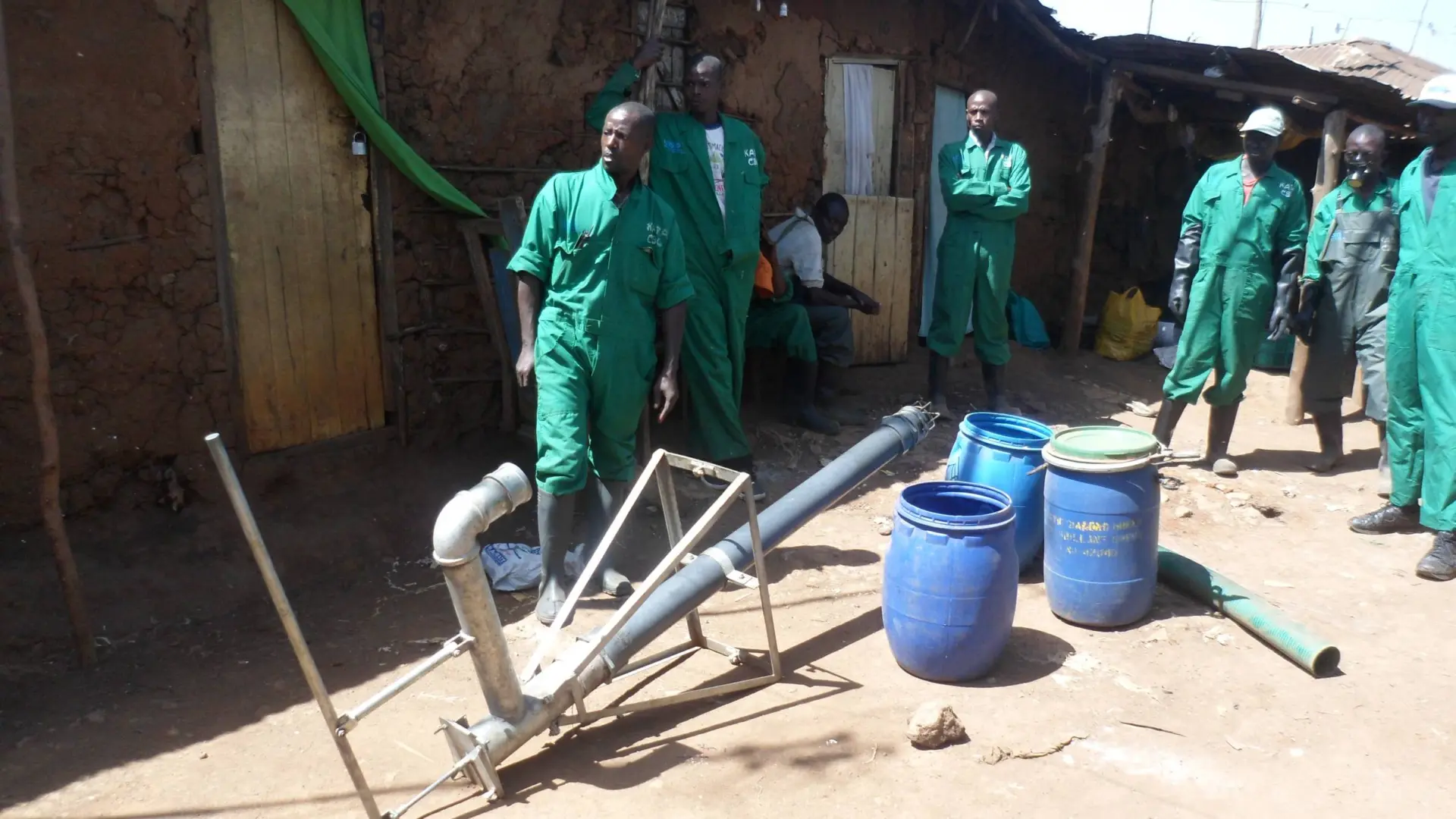
Africa’s sanitation gap persists less for want of technology than because of what sanitation fails to offer a politician. A buried sewer line has no ribbon to cut. A stadium, a highway interchange or an airport terminal can be seen, named and claimed, and public capital in much of the continent flows towards infrastructure of that kind. This analysis argues that sanitation needs to be funded as a continuing public-health service, not as a series of announced projects.
The cost of neglect is uneven access to safe sanitation, preventable disease, and daily risks to dignity and safety, especially where facilities lack privacy, water or maintenance. Diarrhoeal diseases, spread through water contaminated by open defecation, are not exotic illnesses. They are the preventable outcome of a system that has never been adequately built.
Political incentives and investment
Sanitation is the archetypal invisible good. Its success is the absence of a funeral, a cholera ward that never fills, a statistic that does not rise. Systems that are rewarded only when they are seen will always underfund the things that work best when no one notices them.
That matters because a functioning system is more than a toilet. Access depends on income, settlement patterns, water supply and public investment, and both urban and rural households may rely on unsafe facilities. Safe sanitation requires containment, emptying, transport and treatment, the parts of the chain that are least visible of all.
The gendered cost
The sanitation gap also exacts a toll on gender equity that is rarely disaggregated in policy discussion. Women and girls without access to private sanitation face the indignity of exposure and a higher risk of sexual violence during night-time trips to open spaces. Sanitation policy that does not begin with this reality is not sanitation policy at all.
What sustained investment can achieve
Bangladesh is the usual reference point. It sharply reduced open defecation through coordinated community mobilisation, sustained government financing and political will at the executive level. The sanitation ladder, the progression from open defecation through basic latrines to hygienic sanitation, is not aspirational fiction. The lesson is that resources alone do not determine outcomes. What mattered was the decision to treat the invisible good as a sovereign obligation rather than a donor’s hobby.
The financing gap is real, but where money goes when it does arrive matters as much. Investment in local ownership and maintenance keeps facilities working. Hardware delivered without a management system does not. The toilet built and abandoned is not progress.
Behavioural resistance to new facilities, where it genuinely exists, is not a cultural curiosity to be managed through shame campaigns. It is often a rational response to infrastructure that arrives without water supply, maintenance support or community trust. Fines applied without parallel investment in access generate compliance on paper and defiance in practice. The way to end open defecation is to make the alternative reliable, affordable and accessible, not to penalise its absence.
Governments need to fund sanitation as a continuing public-health service, with maintenance and treatment included in budgets. The relevant measure is whether households can reliably use safe facilities, rather than how many projects are announced.



