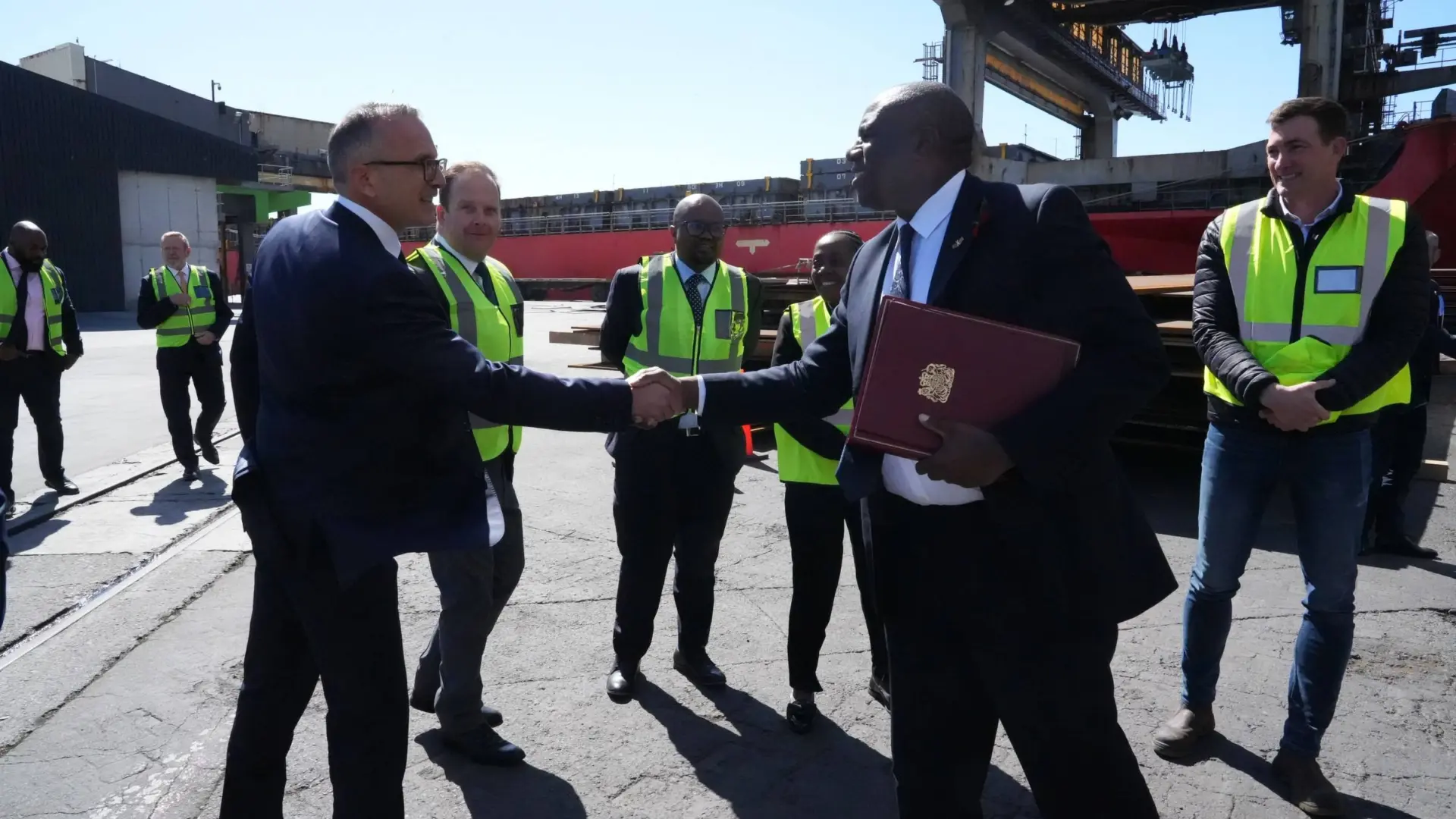
Keir Starmer’s Labour government took office in July 2024 with promises to renew Britain’s international partnerships. For African states, the test lies in aid budgets, trade terms, debt policy and the handling of colonial legacies.
The colonial inheritance
The historical baseline is not encouraging. The British Empire in Africa was not simply a system of political control. It was an economic extraction architecture: of land in Kenya and Zimbabwe, of labour in South Africa’s mines, of palm oil and cocoa and rubber across West Africa, and of ivory in East Africa. The institutions Britain left behind at independence (judiciaries, civil services, military structures, currency boards) were designed primarily to maintain administrative order and ensure the continuation of existing economic arrangements, not to build autonomous African state capacity.
The post-colonial relationship was managed, from the British side, through a combination of Commonwealth institutional maintenance, development aid programmes, and bilateral trade and investment relationships that continued to favour British companies in sectors from mining to telecommunications. The Department for International Development, established in 1997 under Tony Blair’s first Labour government and committed by statute to poverty reduction as its primary objective, represented the most systematic attempt to reframe the UK–Africa relationship around development partnership rather than commercial extraction. Its merger under Boris Johnson in 2020 (into the Foreign, Commonwealth and Development Office, where it was subordinated to broader foreign policy objectives) was read by critics as a signal that the development partnership framing was being abandoned in favour of a more explicitly transactional approach.
Aid and trade after Brexit
Labour’s 2024 manifesto committed to restoring international development as a priority, though it stopped short of restoring DFID as an independent department or setting an immediate date for returning to the 0.7 per cent of GNI aid target that the Conservatives had reduced to 0.5 per cent. The fiscal constraints of a government inheriting significant public debt limited the ambition of what could be promised. But the gap between what Labour offered and what Africa’s development financing needs require is significant. Even at pre-cut levels, the UK’s bilateral contribution was a small fraction of the continent’s infrastructure financing needs.
The trade architecture is equally constrained. Post-Brexit, the UK negotiated Economic Partnership Agreements with African regional blocs to maintain preferential access for African exports to the British market. The EPAs have provided some continuity, but they have also reproduced certain structural asymmetries of the EU–Africa trade relationship, favouring African exports of primary commodities while offering less accommodation for the processed and manufactured goods through which African countries would add more value to their own resources before export. The same structural critique that African governments have directed at EU trade frameworks applies, in a British variant, to the UK’s post-Brexit approach.
Where Britain can act
Where Labour has the clearest opportunity to make a structural difference is in two areas that fall within the UK’s specific institutional capacity. First, financial services. London is an important centre for African sovereign debt issuance and international commodity financing. The terms on which African governments access Eurobond markets, the debt sustainability frameworks applied when those governments face repayment difficulties, and the regulatory environment for African-focused investment funds are all substantially influenced by UK-based institutions. A British government genuinely committed to equitable UK–Africa economic relations has leverage in this domain that no aid budget can replicate. The question is whether Labour’s financial services policy will be designed to use it.
Second, historical accountability. The debate about colonial reparations is live across the Commonwealth, and Labour has been careful not to commit to any framework that would imply financial reparations. But there are forms of historical accountability (archival access, repatriation of looted artefacts held in British museums, formal acknowledgement of specific colonial atrocities such as those of the Kenya emergency) that fall short of financial reparations but would carry significant meaning for African governments and publics. Movement on any of these fronts would signal a qualitative shift in Labour’s relationship with African states that rhetoric about partnership cannot substitute for.
The structural verdict on whether Labour can break colonial legacies will not be delivered by speeches or summits. It will be delivered by the terms of trade agreements, by the architecture of development financing instruments, by the regulatory decisions taken in the City of London about African sovereign debt, and by whether the UK is willing to engage the reparative and historical dimensions of its Africa relationship with genuine honesty rather than managed acknowledgement. The colonial relationship was structural. Only structural change (in institutions, in financing, in trade terms) constitutes a real break from it. Labour has the rhetorical intent. The architecture is still to be built.



