The African Continental Free Trade Area, launched operationally in 2021, is the most ambitious attempt yet to turn the continent into a single trading economy rather than a collection of commodity exporters serving external demand. Tariff cuts alone will not achieve that. This analysis argues that the tariff, the transport corridor and the trade-finance gap are one structural inheritance, and that the AfCFTA will succeed only if all three are tackled together, on infrastructure Africa itself owns.
The trade pattern
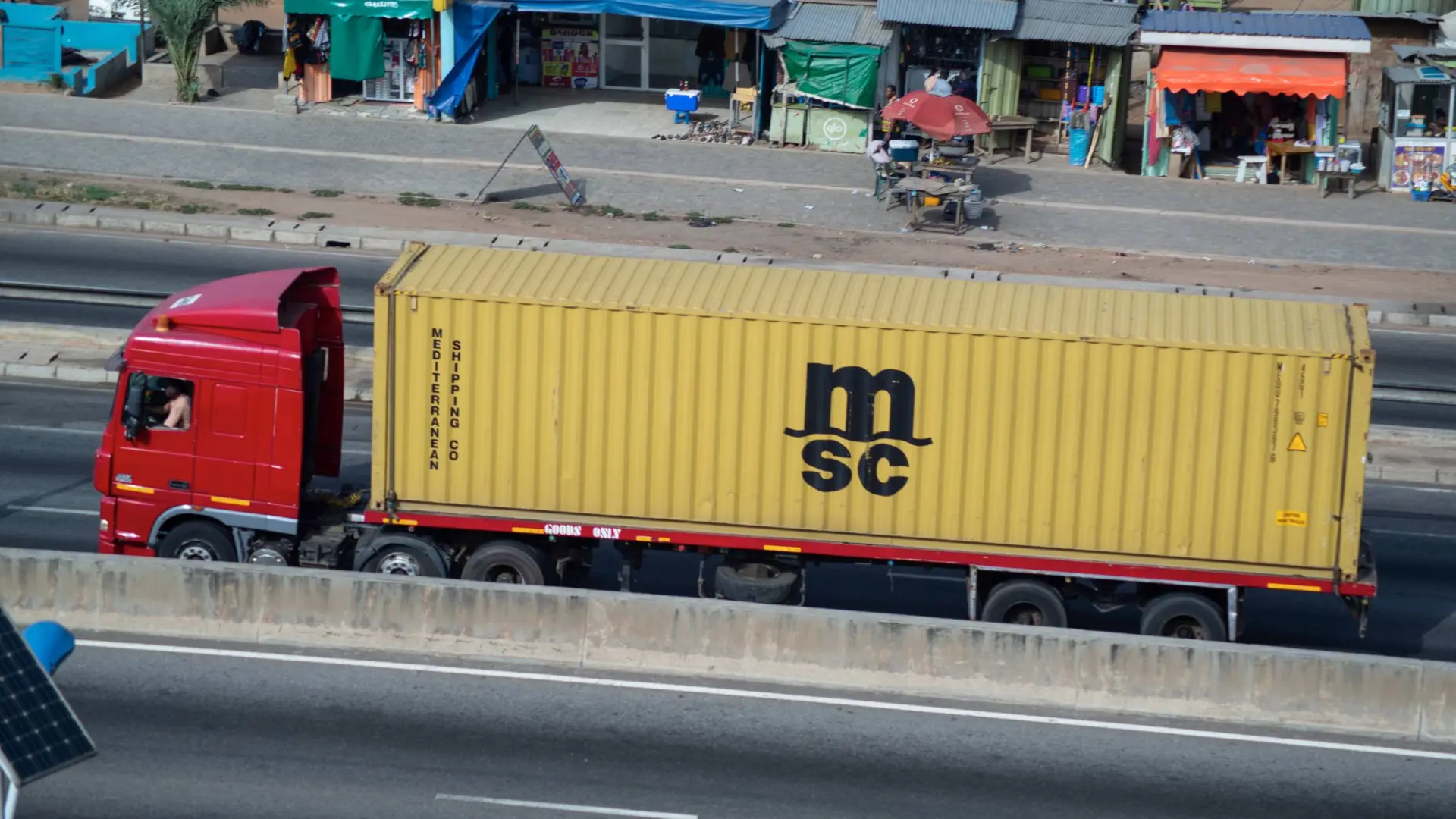
Intra-African trade accounts for about 15 per cent of the continent’s total trade, far below the shares of trade conducted within Europe or Asia. The reasons are structural, not cultural. Colonial trade architecture channelled African resources towards metropolitan markets rather than neighbouring territories. The road, rail and port infrastructure built in that era connected African hinterlands to Atlantic or Indian Ocean export points, not to each other. Cross-border shipments that should take days can take weeks, delayed by customs procedures, road conditions, border bureaucracy and the absence of harmonised documentation. These are not relics. They are active constraints on intra-African commerce in 2025.
Tariff politics
The AfCFTA’s tariff schedule, designed to eliminate duties on 90 per cent of tariff lines under the agreed schedules across member states, is the mechanism by which this architecture is supposed to be reoriented. Implementation is uneven. Several large economies have been slow to operationalise their tariff commitments. In Nigeria, domestic manufacturers raised concerns about exposure to more competitive imports during early negotiations. South Africa has been more engaged but faces its own pressures for sectoral protection. Tariff reduction always creates winners and losers, and the losers are usually more politically organised than the winners are visible.
The trade-finance gap
Trade finance is another barrier. Letters of credit, guarantees and working capital can be difficult or expensive for smaller firms to obtain. Estimates of unmet demand depend on the survey period and method, and not every rejected application represents commercially viable trade, but a finance gap can block otherwise useful transactions.
The gap persists partly because of how African risk is priced. International correspondent banks, retreating from perceived compliance risk, have withdrawn relationships across the continent, leaving local banks with fewer channels to confirm letters of credit and higher costs for those that remain. Pan-African financial institutions and payment systems such as PAPSS are built to route around this architecture, but scale is the test, and scale requires the large economies to commit their trade to African rails rather than merely endorse them.
Removing the tariff without building the road leaves the goods stranded.
Corridors and ownership
Trade corridors, the physical and institutional arteries of continental commerce, are where the question of ownership becomes concrete. The Lobito Corridor, linking Angola, the DRC and Zambia, has attracted international investors as a potential axis for mineral and agricultural trade across Central and Southern Africa. The Abidjan-Lagos Corridor offers a similar connective logic for West Africa’s most economically significant coastal markets. These corridors matter not only as logistics solutions but for who builds them, who finances them, who owns the infrastructure, and therefore who captures the value of the trade they enable. Africa’s race to finance its future is not simply a matter of mobilising capital. It is a question of whether the continent will own the infrastructure through which its growth flows, or find once again that the essential arteries of its prosperity are controlled by others.
One inheritance, three problems
The three barriers are usually treated as separate technical problems, but each was shaped by the same original design: an economy built to move value outward to a metropole rather than sideways to a neighbour. Removing the tariff without building the road leaves the goods stranded; building the road without closing the finance gap leaves the small trader unable to pay for the journey; and financing all of it with external capital that owns the resulting arteries re-routes the old extraction through a new map. The AfCFTA’s promise is not simply that Africa will trade more. It is that Africa might expand trade within the continent on infrastructure it owns. That promise will be lost in the gaps between the three problems if they continue to be solved one at a time, by different hands, on different terms.



