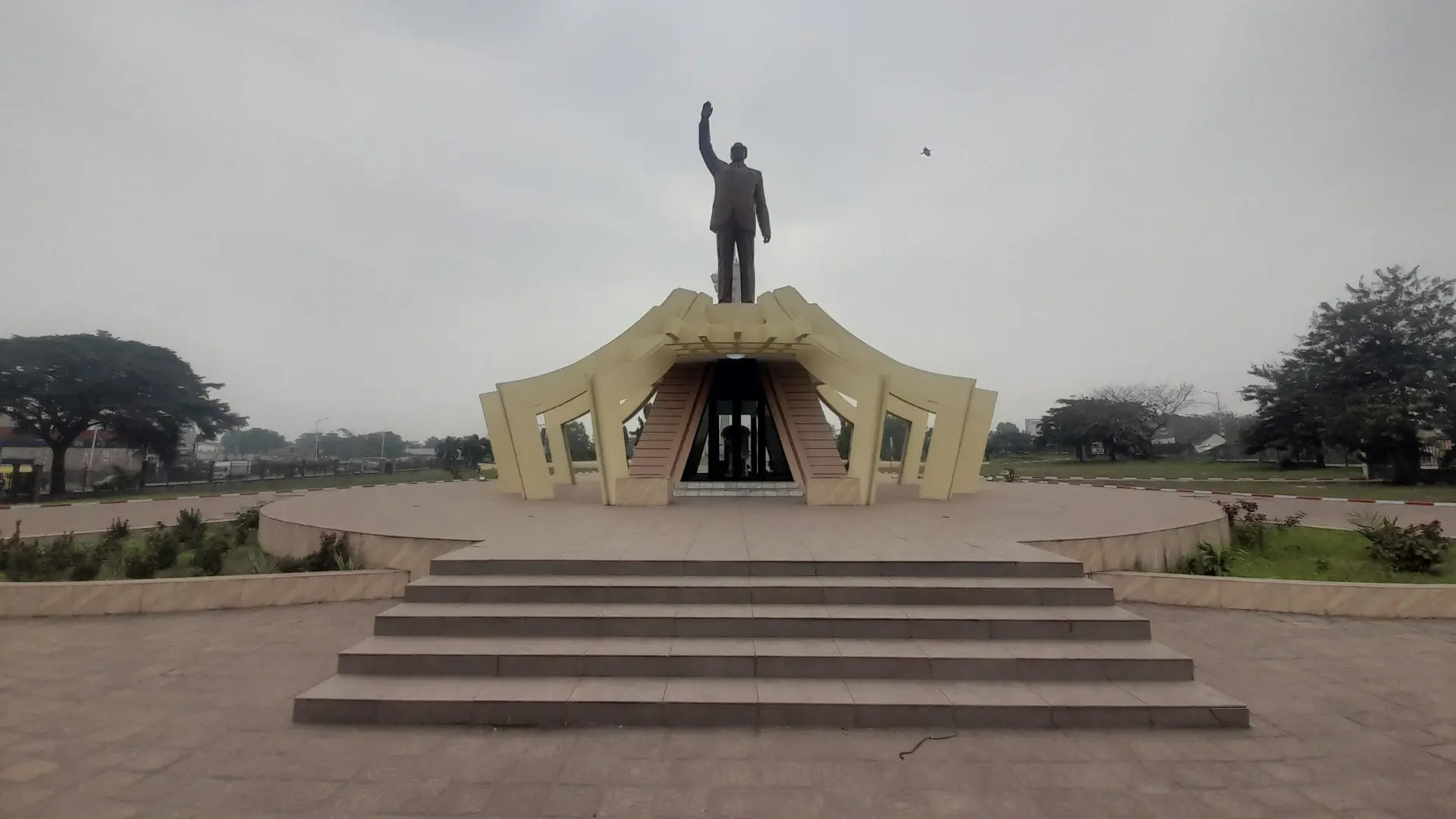
Patrice Lumumba governed the Republic of the Congo for seventy days. In that brief window between independence and assassination, he argued that a Congo which controlled its own resources would change the balance of power on the continent. His removal and killing in January 1961 left what this analysis calls a sovereignty debt: each later intervention weakened the institutions self-rule requires, and the debt is still being paid in the cobalt mines that feed the global energy transition while Congolese communities lack reliable electricity.
What the record establishes
The facts of Lumumba’s fall are well documented. Belgium’s parliamentary commission of inquiry, published in 2001, concluded that Belgian officials bore moral responsibility for his death. The United States Senate’s Church Committee documented CIA involvement in plans to assassinate him, including a scheme involving poisoned toothpaste. He was shot in Katanga province in January 1961. Mobutu Sese Seko, whose decades of kleptocratic rule followed, was sustained by Western backing throughout the Cold War.
Lumumba represented more than Congolese nationalism. He made a continental argument: that the resources of Africa belonged to Africa, and that independence without economic sovereignty was a performance rather than a transfer of power. His June 1960 independence speech, delivered unapproved in the presence of the Belgian king, described colonial rule with a precision the assembled dignitaries had not expected. He named what had been taken.
The legacy of intervention
The word debt is meant precisely, because the mechanism compounds the way debt does. Each interruption of Congolese self-rule did not merely delay it. It weakened the institutions self-rule requires, which made the next interruption easier and the next recovery harder. A state stripped of its first nationalist leadership struggles to build the bureaucratic memory, the army loyal to a constitution rather than a patron, or the negotiating capacity that would let it bargain over its own minerals.
Congo’s trajectory since 1961 follows that pattern. Mobutu was backed until he became embarrassing, then dropped. Laurent Kabila was installed, then killed. The M23 conflict, the involvement of Rwanda and Uganda and the persistence of militia networks across eastern Congo have kept the state weak and fragmented while cobalt, coltan, lithium and gold are extracted from its soil. The actors change: the mining company, the consuming market, the government in Kinshasa. The pattern of extraction without accumulation survives all of them, and a state that cannot organise itself cannot set the price of what is taken from it.
Cobalt and the energy transition
The cobalt dimension carries particular contemporary force. Many electric-vehicle batteries use cobalt, though some widely used chemistries do not, and the Democratic Republic of Congo accounted for an estimated 76% of world cobalt mine production in 2024, according to the US Geological Survey.
The energy transition, the West’s central response to climate change, therefore depends heavily on Congolese soil. Yet artisanal mining operations, many feeding supply chains that lead to London and Silicon Valley, operate without meaningful labour protection. Children mine by hand in conditions that safety regulation in the consuming countries would prohibit. The transition that promises a cleaner future for European and North American consumers is being built, in part, on the same extractive pattern that Lumumba died trying to interrupt.
What honest commemoration requires
Lumumba has been absorbed into iconography: his image on murals, his name on airport terminals, his words quoted at African Union summits. Iconography can honour a threat without addressing it. The honest commemoration of Lumumba is not a mural. It is the question of whether the Congolese state can be structured, protected and resourced well enough to negotiate the terms of its own mineral extraction, to capture value, build refining capacity and take part in the energy transition as a sovereign actor rather than a quarry. Belgium returned Lumumba’s only recovered remains, a gold tooth, to his family in 2022. The gesture was real. The sovereignty debt remains outstanding.