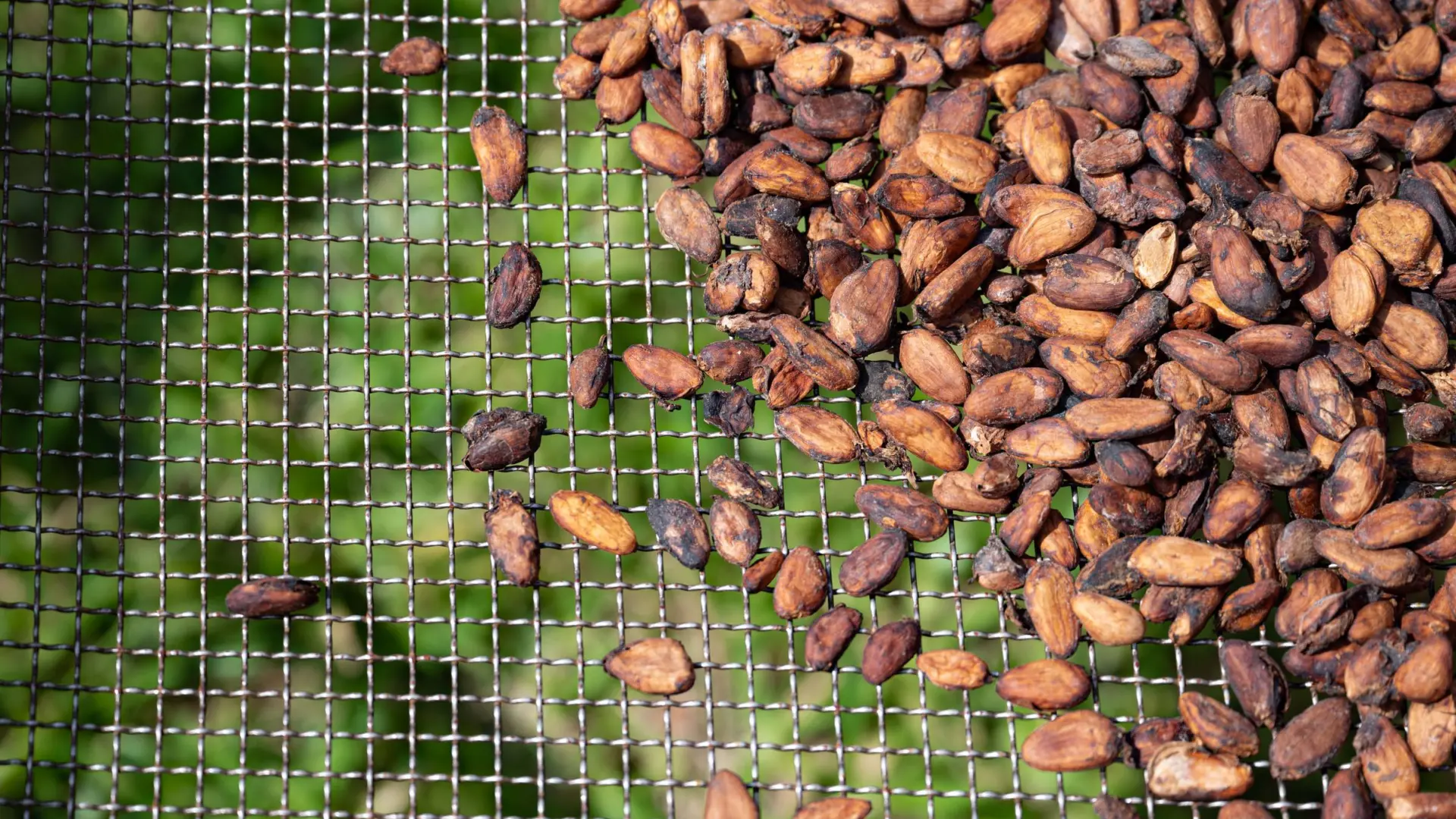
Two West African countries grow most of the cocoa the world turns into chocolate, yet capture a limited share of its retail value. Ghana and Côte d’Ivoire together account for roughly two-thirds of global cocoa production, yet the farmers who grow the beans earn a small fraction of the value of the confectionery made from them, and the price they receive is set not in Accra or Abidjan but on futures exchanges in London and New York. The two governments have decided this is no longer acceptable. Their effort to change it tests whether commodity producers can take durable control of the price of what they grow, and the answer depends on whether they add value at home.
The instrument is coordination. Ghana and Côte d’Ivoire have attempted to act as a bloc, introducing a premium intended to lift farmer incomes above the volatile world price and pressing towards more deliberate management of supply, an arrangement sometimes likened to a cocoa version of a producer cartel. The logic is straightforward. Two producers that between them dominate global supply should be able to influence the price the way large producers do in oil or other concentrated commodity markets, rather than accepting whatever offshore futures dictate. The premium is the visible edge of a deeper ambition, which is to move pricing power up the chain, towards the countries that actually grow the crop.
The hard question is whether this is a durable shift in commodity pricing power or temporary leverage borrowed from a supply squeeze. Cocoa prices surged on the back of climate-driven crop failures and disease across the growing belt, which handed producers unusual bargaining strength. Strength that comes from scarcity tends to evaporate when supply recovers. The test is whether Ghana and Côte d’Ivoire can convert a moment of high prices into a structure that survives the return of normal harvests.
The cocoa value chain
The imbalance in the cocoa chain is in its geometry. The bulk of the value in a chocolate bar accrues to grinding, processing, branding and retail, activities that take place overwhelmingly in consuming countries. The growing (the part requiring land, labour and climate risk) takes place in West Africa and earns the thinnest slice. The producing countries supply the raw input and import the finished product at many times the price, a pattern rooted in colonial trade that repeats across African commodities. Cocoa is one of the clearest living examples of an economy organised so that the place that produces the value is not the place that captures it.
Pricing and processing
Pricing power and value-addition are two routes out of that geometry, and they reinforce each other. A producer-price floor can support farmer income, depending on implementation, payment and production costs. Building domestic grinding and processing capacity moves the country up the chain towards the segments where the real margins live. A producer that both influences the price of its raw beans and processes a growing share of them at home is no longer a price-taker at the bottom of someone else’s value chain. The cocoa initiative gestures at both routes, and its credibility rests on whether the second (the harder, industrial one) actually advances.
Leverage borrowed from a bad harvest expires with the next good one. Leverage built into grinding plants and a managed supply structure is the kind that outlasts the weather.
Price gains and production resilience
The supply squeeze that lifted cocoa prices was driven in significant part by climate stress and disease in the growing regions, and that origin is double-edged. It strengthened producers’ hand in the short term while exposing the fragility of the asset itself: ageing trees, degraded soils, and a changing climate that threatens the crop’s long-term viability in its traditional belt. A pricing strategy that extracts more value today without reinvesting in the resilience of the crop is borrowing against the future. The durable version would use today’s higher prices to fund replanting, farmer support and climate adaptation, ensuring there is still a dominant supply to coordinate around in a decade.
A further pressure comes from the consuming side. New deforestation-compliance rules in major markets, notably the European Union’s requirement that imported commodities be proven free of links to recent deforestation, raise the bar for market access and impose real costs on producers who must trace and certify their supply chains. This can be read two ways. It is a burden that falls hardest on smallholders least able to afford compliance, and it is also, potentially, a lever, because the traceability and consolidation required to meet it could push the industry towards the organised, value-added structure the producing countries say they want. Whether compliance becomes another externally imposed cost or a spur to integration depends on whether Ghana and Côte d’Ivoire build the systems to turn it to their advantage.
Can coordination endure?
The cocoa initiative is a serious attempt by African commodity producers to gain pricing power, and seriousness is not the same as success. Coordination between two dominant producers is powerful, but it is fragile in the ways cartels are always fragile, vulnerable to the temptation of one partner to undercut the other, to substitution and stockpiling by buyers, and to the recovery of supply that erodes the scarcity underpinning the bargaining position. The premium can be announced more easily than it can be defended through a full price cycle. The producers have built a structure capable of capturing durable power, and have not yet proven they can hold it.
What makes the experiment matter beyond chocolate is what it tests for the continent. Africa supplies a large share of the world’s cocoa, cobalt, platinum and other concentrated commodities, and in almost every case it supplies the raw material and captures the smallest margin while the value is built elsewhere. If Ghana and Côte d’Ivoire can convert dominance of supply into lasting pricing power and a real shift towards domestic processing, they will have written a template that producers of other African commodities can study and adapt. If the effort fades when harvests recover, it will confirm the older lesson that producing the value and capturing it are different things. The beans are West African. Whether the power follows them is the question now being decided in the cocoa belt.



