There are pairs of African cities a few hundred kilometres apart that are most reliably connected by flying thousands of kilometres north to Europe and back. A traveller moving between two African capitals can find that the cheapest, fastest, or only practical route passes through Paris, London, or Istanbul, where direct or regional connections are scarce, costly or poorly timed. This is usually filed under the inconveniences of African travel. It is better understood as a symptom of a continent whose air connections remain uneven. The cause is a structure of protectionism and weak national carriers that aviation reform was specifically designed to dismantle.
The remedy exists on paper. The Single African Air Transport Market, the continental open-skies initiative through which African states committed to liberalising air travel between one another, was meant to break exactly this pattern, allowing airlines to fly freely across the continent, increasing competition, lowering fares, and stitching African markets together by air the way Europe and North America long ago connected theirs. Many states have signed up. The implementation has stalled, because the same governments that endorsed open skies in principle have protected their national carriers and bilateral arrangements in practice, declining to surrender the controlled access that shields a struggling flag airline from competition.
This is not a convenience story about frustrated travellers. Air connectivity is trade infrastructure, as fundamental to the continental free-trade ambition as roads, ports, and power. A continent that aspires to trade with itself under a single market but cannot move people and high-value goods efficiently between its own cities has built the legal architecture of integration on top of a physical inability to integrate. Airspace, and who is permitted to use it, is a sovereignty and economic-leverage question, and the failure to liberalise it quietly caps the entire project of African economic union.
Protectionism and integration
The barrier is a collective-action problem dressed as national interest. Each government protects its national carrier and guards the bilateral air-service agreements that ration which airlines may fly which routes, on the reasoning that an unprotected flag carrier would be outcompeted and lost, taking with it jobs, prestige, and a strategic asset. The logic is comprehensible at the level of a single state and ruinous at the level of the continent, because when every country protects its own market the result is a patchwork of restricted bilateral routes, limited competition, high fares, and the thin direct connectivity that forces African travellers through foreign hubs. The protections that each state adopts to defend its aviation interests combine into a system that damages all of their aviation interests, the airlines included.
Who benefits from indirect routes
The foreign hubs are the beneficiaries of this fragmentation. When intra-African routes are restricted and expensive, the efficient connection between two African points runs through a European, Gulf, or Turkish hub whose carriers have built their networks precisely to capture this traffic. African protectionism, intended to defend African aviation, instead hands a share of African air travel to non-African airlines, which carry the passengers and capture the revenue that a liberalised continental market would keep at home. The structure meant to protect sovereignty over the air has the effect of ceding the continent’s connectivity to carriers headquartered outside it.
The protections that each state adopts to defend its aviation interests combine into a system that damages all of their aviation interests, the airlines included.
Ethiopian Airlines as a comparison
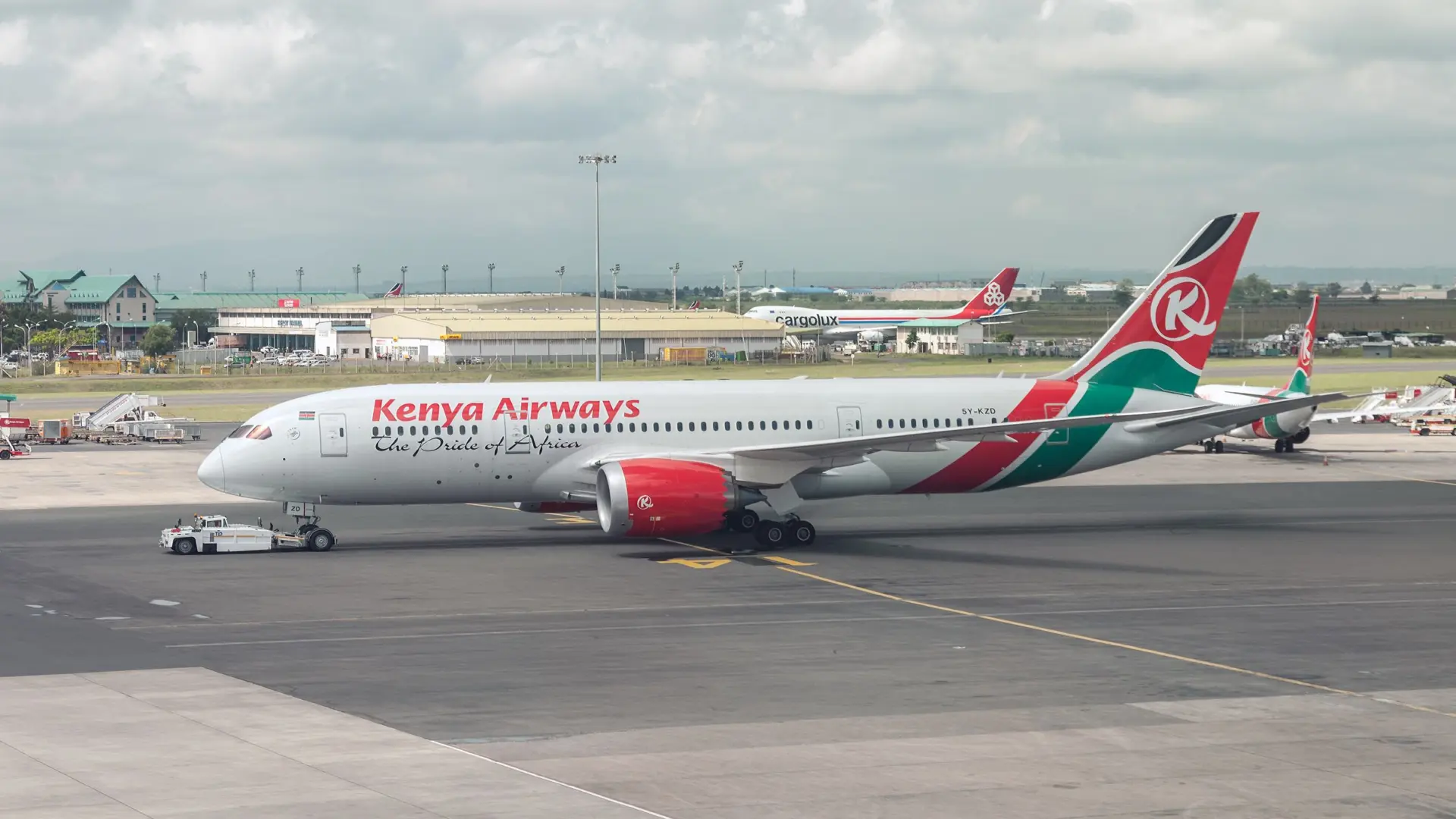
Ethiopian Airlines is the standing rebuttal to the fear that drives the protectionism. The largest carrier on the continent, profitable and operating a wide pan-African and intercontinental network, it demonstrates that an African airline can compete and win at scale rather than requiring shelter to survive. Its success rests on commercial discipline, strategic investment in fleet and hub, and a network strategy that treats African connectivity as an opportunity to be captured rather than a market to be defended. The airline has turned Addis Ababa into the kind of hub that would otherwise sit in Europe or the Gulf. It shows that the choice is not between a protected weak carrier and no carrier, but between protection that breeds weakness and competitiveness that builds strength.
The lesson cuts directly against the protectionist instinct. The carriers most exposed by liberalisation are the weak national airlines kept alive by restricted access, and the experience of the strongest African carrier suggests that protection has been part of what kept them weak, insulating them from the competitive pressure that forces efficiency and scale. A liberalised market would indeed threaten airlines that cannot compete, and it would reward those that can, while delivering to passengers and to the broader economy the connectivity, lower fares, and integration that the current structure denies. Defending the weak carrier at the cost of the continent’s connectivity is a choice to protect the least valuable part of the system at the expense of the most valuable, which is the trade and mobility that aviation is supposed to serve.
Aviation and the free-trade project
This is where the aviation question stops being about airlines and becomes about the entire integration project. A single market presupposes the physical ability to trade, to move perishable and high-value goods quickly, to let business travellers, traders, and professionals reach counterparts across borders without routing through another continent. Air liberalisation is not a parallel nicety to the trade agreement. It is part of its load-bearing infrastructure, as essential as the corridors and ports that receive more attention.
The choice in front of African governments is therefore larger than aviation policy. It is whether the commitment to continental integration is real enough to override the national-carrier protectionism that contradicts it, and whether states will accept short-term competitive pressure on their flag airlines in exchange for the connectivity that makes the single market possible. The signatures on the open-skies agreement were the easy part. The implementation (surrendering protected bilateral routes and letting African carriers compete across the continent) is the test of whether the integration is intended or merely declared. Until it is passed, Africans will keep flying to Europe to reach the city next door, and the continent will keep paying foreign carriers to do the connecting it has forbidden itself to do.



