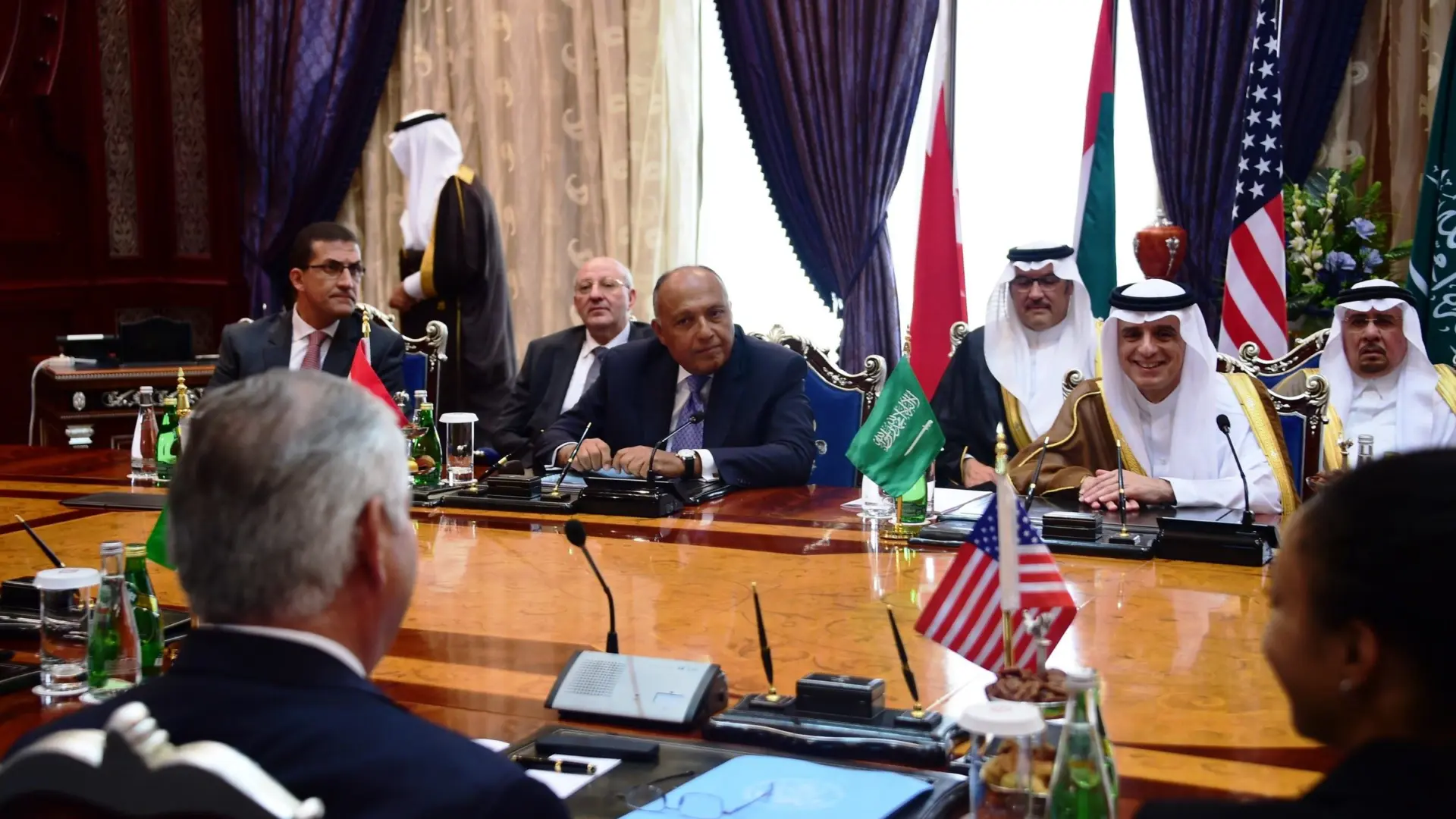
Saudi-Egyptian relations rest on an exchange. Riyadh supplies capital and diplomatic cover. Cairo supplies a large army, a large domestic market and control of the Suez Canal. By mid-2024 the terms had shifted. Saudi support moved from central bank deposits towards equity stakes in Egyptian assets, while Houthi attacks on Red Sea shipping cut the canal revenue that Egypt counts on to repay its debts. Both governments are pursuing their own interests, and the partnership holds because those interests still overlap.
From deposits to equity
The older model was the deposit. Saudi Arabia placed $3 billion with Egypt’s central bank in November 2021 and a further $5 billion on 30 March 2022, according to the Saudi Press Agency, as reported with AFP. On the same day the Egyptian cabinet announced a draft agreement for Saudi investment projected at $10 billion.
The vehicle for that money is the Saudi Egyptian Investment Company, which the Public Investment Fund launched in August 2022. It was set up to take positions in infrastructure, property, healthcare, financial services, food and agriculture, manufacturing and pharmaceuticals, Arab News reported. The change matters. A deposit is a loan to the state. An equity stake gives Riyadh a claim on Egyptian companies and a return on them. For Cairo, selling stakes raises dollars without adding to debt, at the price of ceding ownership.
Estimates of the total Saudi position vary widely with the definition used. A Saudi deputy minister, Abdulrahman Altawil, said in November 2023 that 6,225 Saudi industrial businesses operated in Egypt with $30 billion of investment, and claimed that Saudi Arabia was Egypt’s largest investor, Argaam reported. That is a Saudi official’s figure, not an audited one.
The 2024 rescue showed the limits of Saudi primacy. On 6 March 2024 Egypt agreed an expanded $8 billion programme with the IMF, enlarging a $3 billion facility from December 2022. The central bank let the pound trade freely and raised interest rates by 600 basis points. The pound had lost around half its value against the dollar since January 2022, Al Jazeera reported. The largest single injection came from Abu Dhabi, not Riyadh: a deal with the Emirati fund ADQ expected to bring $35 billion. Egypt is not a client of one patron. It draws on several Gulf creditors and lets them compete.
Energy and the grid
Energy links are the most durable part of the relationship because they are physical. On 5 October 2021 the two governments signed $1.8 billion of contracts for an electricity interconnection with a peak capacity of 3,000 megawatts, using a 22 km undersea cable across the Gulf of Aqaba, The National reported. Saudi developer ACWA Power signed a $1.5 billion agreement on 21 June 2022 for a 1.1 gigawatt wind farm on the Gulf of Suez, targeting financial close in the third quarter of 2024. It already operates solar plants at Benban and Kom Ombo. These projects serve Riyadh’s aim of building non-oil revenue abroad and Cairo’s need for power capacity it does not have to pay for upfront.
Security, the Red Sea and the canal
Egypt’s armed forces number about 440,000 active personnel, the largest in the Arab world, according to Global Firepower figures cited by Fanack. That gives Riyadh a partner with depth it cannot build at home. The two governments’ positions have often aligned. In Libya, Egypt and the UAE backed Khalifa Haftar as a bulwark against Islamist groups, and The Wall Street Journal reported in April 2019, citing advisers to the Saudi government, that Riyadh offered him tens of millions of dollars days before his offensive on Tripoli, as Al Jazeera summarised.
Alignment is not identity. In Sudan, Cairo has backed the army under Abdel Fattah al-Burhan, whom it regards as the institution able to hold the state together, Al Jazeera’s analysis of April 2023 found. Riyadh instead positioned itself as a mediator. With the United States it hosted the talks that produced the Jeddah Declaration of 11 May 2023, a seven-point commitment by the army and the Rapid Support Forces to protect civilians, which the Washington Institute judged weak on enforcement.
The Red Sea is where the two economies meet. The canal normally carries about 15 per cent of global maritime trade volume, and Suez trade volumes fell by half year on year in the first two months of 2024 after attacks by the Iran-aligned Houthi movement, the IMF found. President Abdel Fattah al-Sisi said on 20 February 2024 that canal revenue had dropped by 40 to 50 per cent, from a record of nearly $9.4 billion in the 2022 to 2023 fiscal year. That loss raises the value of Saudi capital to Cairo at exactly the moment Riyadh can set firmer terms.
Limits of the partnership and what it means for Africa
The relationship has a domestic cost in Egypt. The 2016 agreement transferring the Red Sea islands of Tiran and Sanafir to Saudi Arabia set off rare street protests, and Sisi was accused of having sold the islands. Parliament approved the deal in June 2017 while challenges to it were still before Egypt’s courts. Any Egyptian government must show that Saudi investment does not buy sovereignty.
Cairo also keeps its own options. President Recep Tayyip Erdogan’s visit to Cairo on 14 February 2024 was his first since 2012, and the two governments set a target of $15 billion in annual trade. Egypt has restored ties with Turkey on its own timetable. Riyadh’s growing equity stakes in Egypt sit alongside wider Saudi ambitions for the region.
For the rest of Africa, the partnership matters because Egypt carries Gulf capital and backing into the African Union, into the Nile negotiations with Ethiopia and into Sudan. An Egypt with Saudi money behind it is a weightier negotiator, including in a Nile dispute that also shapes Egypt’s ties with Somalia. Whether that weight serves African interests or mainly Saudi-Egyptian ones depends on whether African institutions can set the terms on which Egypt engages them. The test to watch is whether Saudi equity in Egyptian companies and power projects converts into leverage over Cairo’s African positions.



