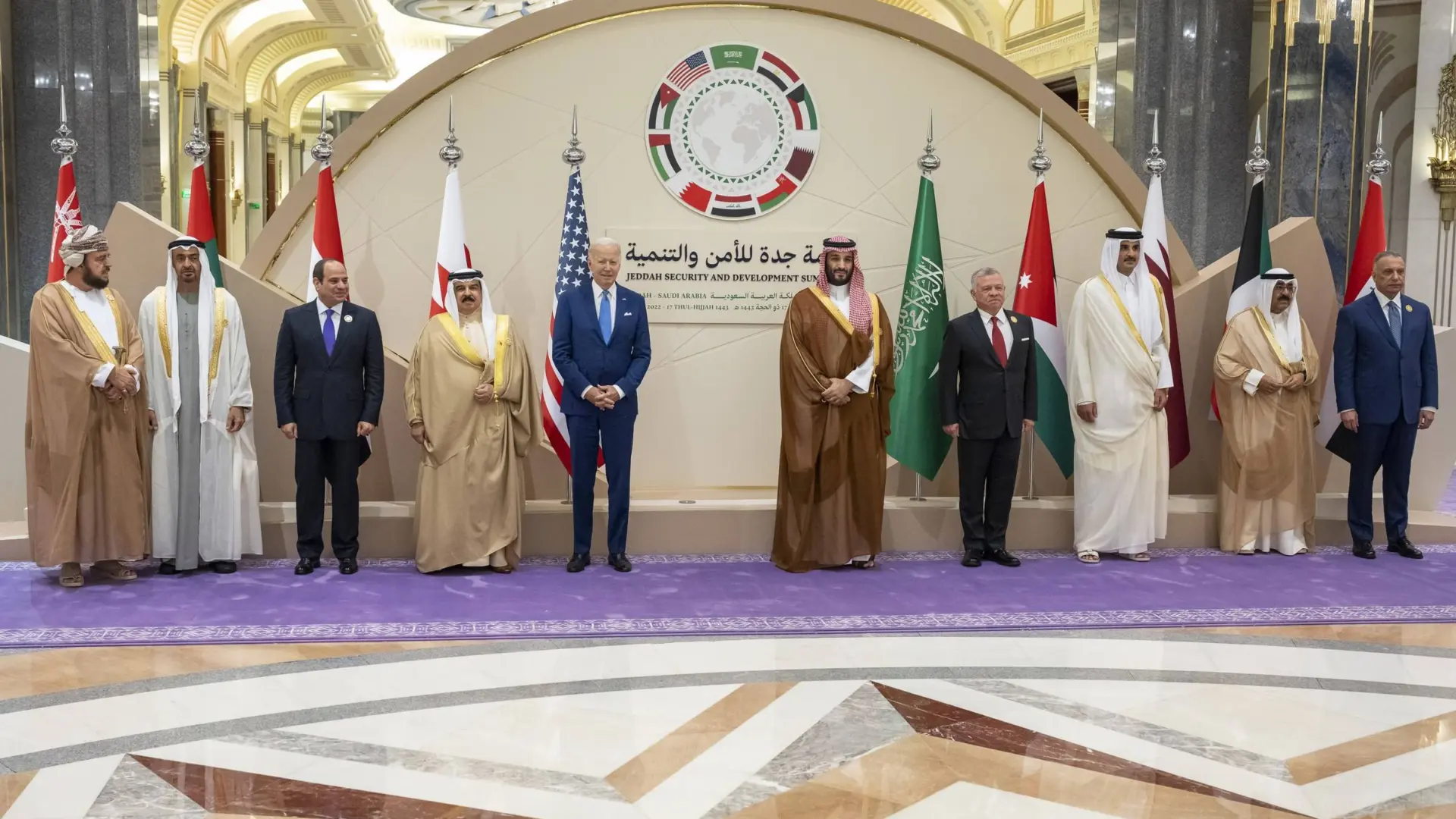
Saudi investment and security ties with Egypt link Gulf capital to one of North Africa’s most influential states. For Riyadh, Egypt anchors a regional strategy that reaches Red Sea shipping, Libya and Sudan. For Cairo, Saudi capital has eased pressure on the pound, but it constrains Egyptian foreign policy wherever Egypt’s interests diverge from Riyadh’s.
Egypt is the most populous Arab country, the geographic bridge between the Arabian Peninsula and North Africa, the custodian of the Suez Canal and the holder of a large military. That makes it more than a convenient partner for Saudi Vision 2030’s diversification agenda. It is the anchor Riyadh needs if it is to position itself as the dominant power in an Arab world contested between Riyadh, Ankara, Doha and Tehran.
Investment and dependence
The Saudi-Egyptian Investment Fund operates across infrastructure, real estate, tourism, energy and manufacturing, and Saudi-backed renewable energy projects in Egypt align Vision 2030’s domestic goals with Egypt’s infrastructure requirements. Both countries benefit, but Saudi Arabia holds the capital, and with it the leverage over how the benefits are distributed.
For Egypt, the relationship carries both necessity and risk. Sustained pressure on the Egyptian pound, driven by external debt obligations, import dependency and the economic aftershocks of the pandemic, has made Saudi capital flows close to essential for macroeconomic stability. Saudi investment has provided foreign currency while Egypt pursues IMF-supported fiscal reforms. That dependence is itself a form of leverage.
Shared threats hold the partnership together. Iran’s expanding influence in Yemen, Iraq and Lebanon, and its nuclear programme, unify Saudi and Egyptian strategic interests. Turkey’s regional activism in North Africa, particularly in Libya, concerns both Cairo and Riyadh. Qatar’s historical support for Muslim Brotherhood-affiliated movements, which Egypt banned as a terrorist organisation after the 2013 coup, remains an irritant even after the 2021 Gulf reconciliation formally restored relations.
Red Sea interests
The Red Sea and the Suez Canal bring Africa directly into this calculus. The economic futures of Saudi Arabia and Egypt depend on the stability and openness of maritime corridors that run along Africa’s northeastern coast. The Bab el-Mandeb Strait, through which oil exports and manufactured goods move between Asia, the Gulf and European markets, is directly affected by the security situation in Yemen and the Horn of Africa.
Libya and Sudan
Libya and Sudan are the two North African states where Saudi-Egyptian influence has been most actively deployed. In Libya, Saudi and Egyptian support for the Libyan National Army and associated political formations reflects a shared preference for counterterrorism-oriented governance that puts stability before electoral process. In Sudan, where a fragile post-Bashir transition has been further complicated by the 2023 civil war between the Sudanese Armed Forces and the Rapid Support Forces, Saudi and Egyptian engagement shapes the diplomatic environment in which international responses are being constructed.
The cost to Cairo
Egypt carries the greater share of the risk. An economy reliant on external capital flows is vulnerable to any shift in Saudi priorities, whether driven by Vision 2030’s fiscal pressures, global oil price volatility or geopolitical recalculation. Where Egypt’s interests genuinely diverge from Riyadh’s, as on the Israeli-Palestinian conflict and the Ethiopian dam negotiations, its ability to hold independent positions is constrained by the terms of the economic relationship, in ways that are not always visible in formal diplomatic communications.
What Saudi Arabia and Egypt are building is a regional order anchored by Gulf capital and Egyptian institutional weight. Whether it serves the populations it governs as well as it serves their governing elites is a question that the region, and the continent whose northern tier it directly affects, will be answering for decades.



