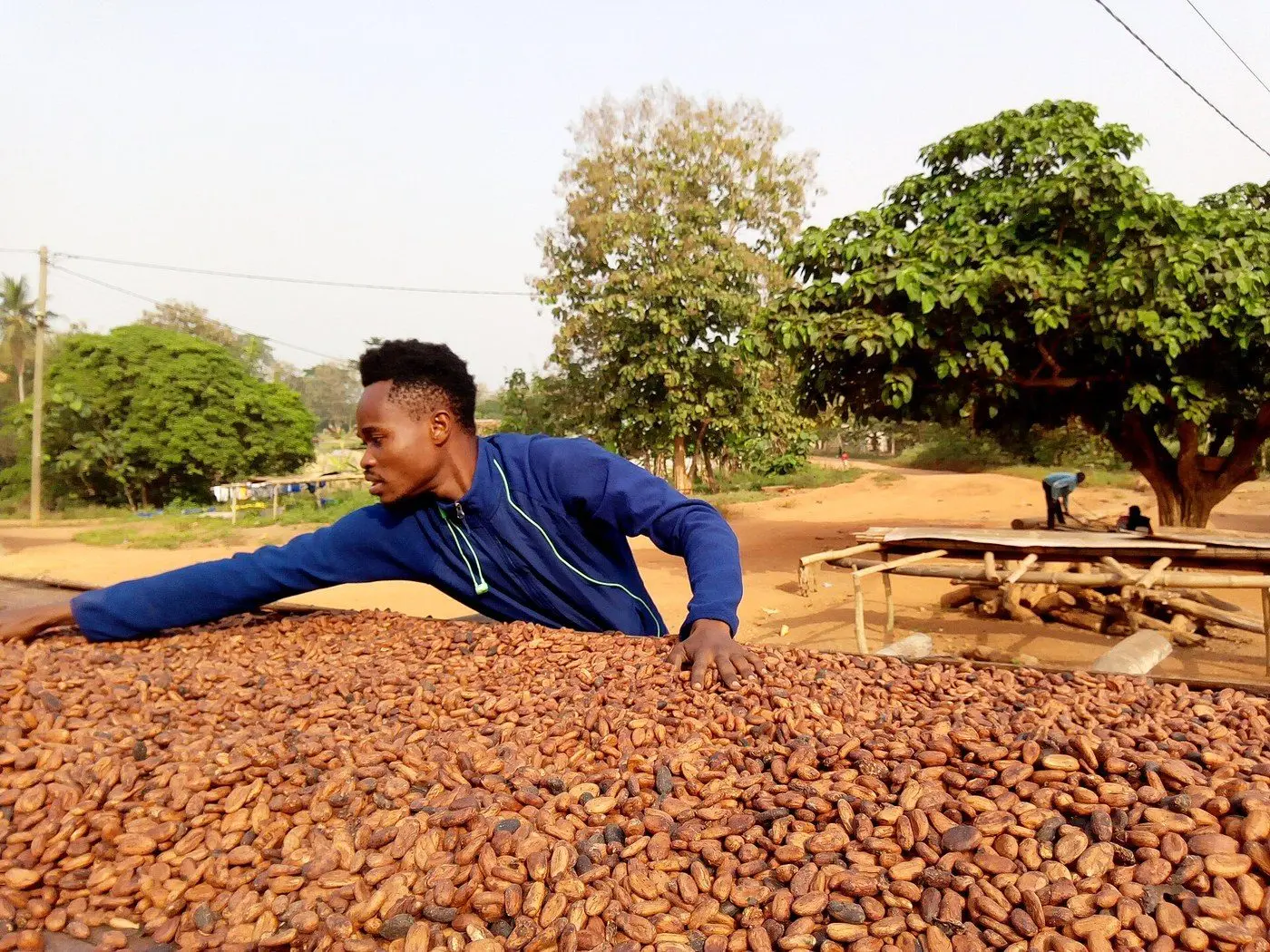
Ghana received a significant boost to its economic recovery narrative this week when Fitch upgraded the country’s sovereign credit rating, citing fiscal consolidation, lower inflation, progress on debt restructuring and improving reserves. For a government seeking to show that painful reforms are beginning to stabilise the economy, the announcement marked an important moment of international financial confidence. Almost simultaneously, another story emerged from Ghana’s cocoa sector, and it complicated the optimism in ways a ratings upgrade cannot resolve.
The state-linked Produce Buying Company was facing severe debt pressure. Farmers remained unpaid for cocoa they had already delivered. The contrast exposed a deeper tension inside Ghana’s recovery story. Sovereign stabilisation looks one way in a bond market and feels another way at the farmgate. That distance is not a rounding error. It is the structural problem Ghana’s recovery narrative has not yet answered.
At the macro level, the country is gradually rebuilding credibility after a painful debt crisis that forced restructuring negotiations, austerity measures and International Monetary Fund intervention. Inflation has eased from earlier peaks, fiscal management has tightened and investor sentiment has cautiously improved. But recovery at the sovereign level does not automatically bring relief to rural livelihoods and commodity supply chains. Cocoa is central to Ghana’s export earnings, rural economies, local commerce and national political stability. When financing stress within the cocoa chain disrupts payments to farmers, the effects extend far beyond agriculture.
To understand why the strain lands on the farmer first, follow the structure of the chain itself. COCOBOD operates a centralised model. It pre-finances the season, sets a guaranteed farmgate price and aggregates the crop for export. That model is only as durable as the financing behind it, and that financing is built on borrowing against a harvest not yet sold. When global prices swing, when production undershoots or when credit tightens, the guaranteed price does not disappear. It becomes a deferred promise. An unpaid farmer effectively carries part of the chain’s liquidity burden, financing the state’s gap with their own unpaid labour. The buffer that protects the system from shocks is the household least able to absorb one.
The deeper asymmetry sits one layer above national accounting. Ghana has domestic grinding and processing operations, but much of the value in branded confectionery is captured by firms far from the Ashanti farms that grow the crop. Ghana holds the asset and the risk while much of the value is captured downstream, in markets it does not set and currencies it does not print. A farmgate squeeze in a cocoa-growing district is therefore not only a domestic financing problem. It is the visible local symptom of Ghana’s position in the global value chain.
The problem matters especially because Ghana’s recovery strategy depends heavily on restoring confidence in state institutions and economic management. Delayed payments and mounting debt inside a critical sector risk undermining that confidence even as headline indicators improve. Stabilisation may show in bond markets before it shows in farming communities, and that lag is where political fragility lives. Ratings agencies, lenders and investors focus on fiscal discipline, reserve strength and debt sustainability. Citizens experience recovery through prices, wages, employment and the reliability of payments. In Ghana’s case, the two are moving at different speeds right now.
Cocoa’s symbolic weight compounds the practical stakes. It has long served as both an economic engine and a political stabiliser, sustaining rural economies while generating foreign exchange. The cocoa belt is also a political constituency. A pod that ripens on the branch while the cheque does not arrive is a grievance with an address and a ballot. When the financing strains, the guaranteed price becomes a measure of how much risk the state can quietly transfer to the people least able to refuse it.
The government and COCOBOD have announced reform measures and funding support to stabilise the industry. The unpaid deliveries suggest those measures have not yet reached the operational level where farmers are made whole. Ghana shows that sovereign stabilisation and sectoral distress are not mutually exclusive, and that countries showing signs of macro recovery can still face acute strain in sectors that directly support household survival and employment.
The significance of this week’s developments goes beyond the ratings upgrade. Sovereign stabilisation restores confidence internationally. Domestic resilience is tested much closer to the ground, in whether farmers are paid, supply chains function and livelihoods recover alongside the numbers. For Ghana, the challenge now is not simply proving that economic repair has started. It is proving that recovery can move beyond balance sheets and reach the systems ordinary citizens depend on most. That proof requires more than an improved credit rating. It requires a functioning cocoa chain.



