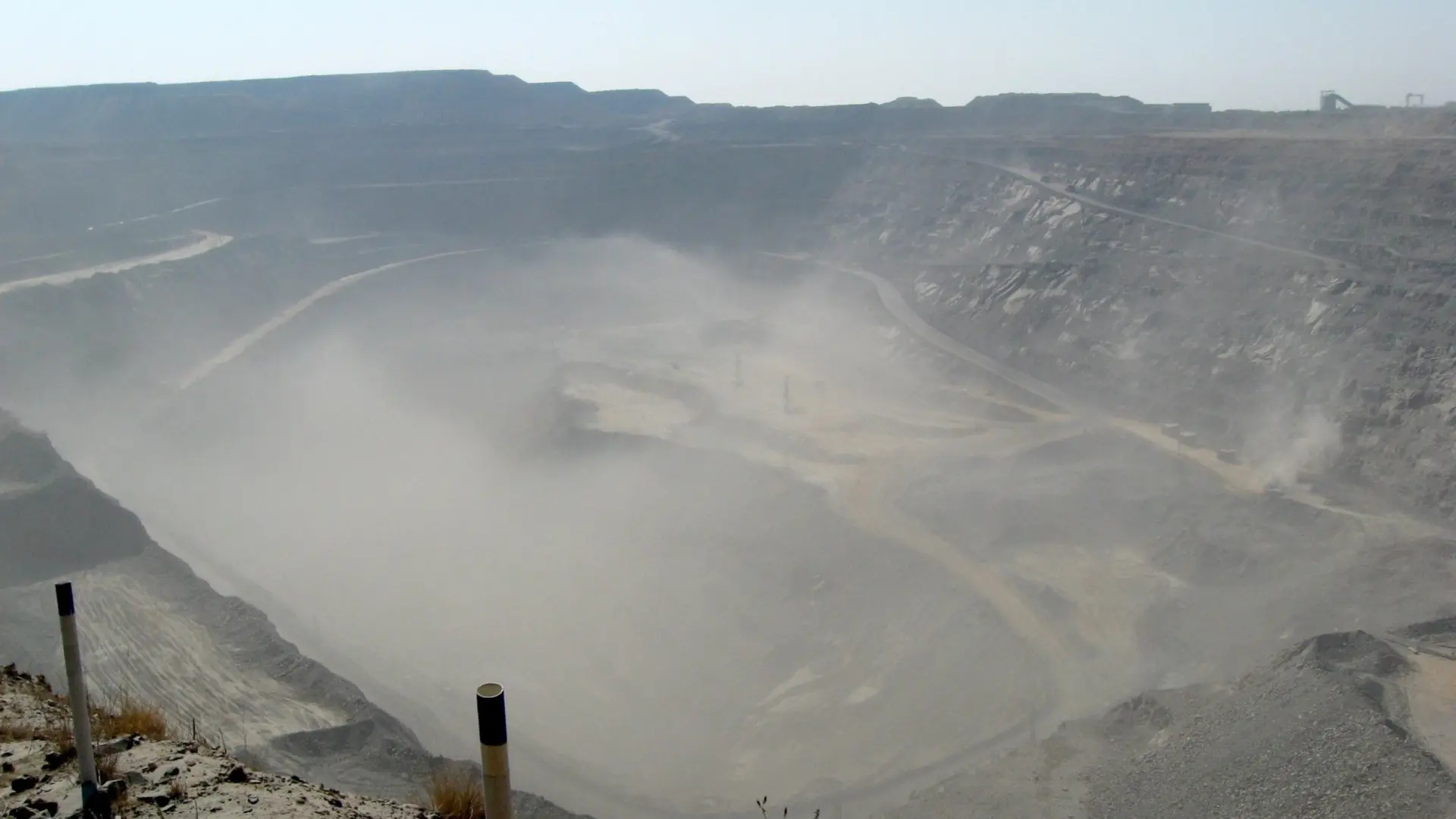
Botswana built a nation on diamonds. It is now watching the commodity that financed its schools, hospitals and sovereign wealth fund be replicated in a laboratory for a fraction of the cost. The disruption says less about technology than about who was always permitted to capture value from the ground beneath African feet.
The price decline
Lab-grown diamonds are chemically identical to mined diamonds. The difference is provenance and production cost. A one-carat lab-grown stone that retailed for approximately three thousand dollars in 2020 was selling for under five hundred dollars by 2024, according to Edahn Golan Diamond Research.
The price fall has not been uniform in its impact. The effect varies across market segments, including large stones, coloured diamonds and branded jewellery. The disruption is most severe in the middle market, where the bulk of African diamond revenue was generated. That commercial-quality, one-to-three carat segment underwrites Botswana’s Debswana partnership with De Beers and Angola’s Catoca mine economics.
Botswana’s GDP is approximately one-third diamond dependent, according to the World Bank.
The country’s development model, often cited as sub-Saharan Africa’s most successful resource conversion into public goods, was premised on a mined diamond maintaining its premium over other forms of carbon crystallisation. That premium was always partly artificial, sustained by De Beers’ long campaign to associate diamond purchase with romantic permanence and to restrict supply sufficiently to maintain price floors. The lab-grown revolution has not defeated that campaign at the luxury end. It has disaggregated the market, pulling the mass segment away from the controlled scarcity logic that underwrote Botswana’s revenues.
The lab-grown diamond disruption reveals a structural truth about Africa’s position in global commodity value chains. African nations supplied raw material but captured little of the branding, distribution and retail layers where value was actually created and captured.
Africa’s place in the chain
The structural problem is not the technology. It is the position Africa occupies in the value chain. Botswana supplies rough diamonds to De Beers’ sorting and valuation operations, primarily in Gaborone following the 2011 sales agreement between De Beers and the Botswana government, under which De Beers moved its rough-diamond sorting and sales operations from London to Gaborone. That was a genuine sovereignty gain. A resource-rich country was capturing the early-stage sorting and trading function rather than shipping raw stones directly to Antwerp or London. But the cutting and polishing operations remain concentrated in India. The luxury retail operations remain in New York, Geneva and Tokyo. The brand equity (the accumulated cultural association of diamonds with marriage, status and permanence) was built and is owned by European and American luxury houses. African producers have captured less of the branding and retail business than of mining and sorting.
Lab-grown diamonds expose that exclusion by removing the natural scarcity argument without removing the value chain architecture. If a diamond’s value came primarily from its rarity, then synthetic production destroys the value proposition. But if a diamond’s value comes from its cultural association, its retail experience and the brand equity of the jewellery house selling it, then lab-grown disruption primarily destroys the value captured by the mine. The mine is in Africa. The brand is not. The disruption consequently falls heaviest where value was thinnest to begin with.
How producers are responding
Angola has moved to distinguish its diamonds by origin, building on the Kimberley Process (the international scheme against conflict diamonds) and betting that a segment of the market will pay a premium for provably natural stones with documented African origin. This is a defensible strategy, but it is a niche strategy. It concedes the mass market and bets on premium differentiation. That is precisely the bet that requires African countries to own their own branding and distribution infrastructure, which they currently do not.
Zimbabwe, Sierra Leone and the DRC, whose artisanal diamond sectors feed into less formalised value chains, face a different version of the same problem. Small-scale miners selling rough stones through informal brokers have no leverage against synthetic price competition and no government infrastructure to help them move up the value chain. The fall in mid-market prices cascades downward, reducing the prices paid to artisanal miners who were already operating at the margins of economic viability.
De Beers’ own trajectory tells the same story from the other side. The company that spent decades defending natural scarcity launched, then retreated from, its own lab-grown jewellery line. Its parent Anglo American has moved to divest the diamond business entirely. That is a quiet verdict from the value chain’s owner on where the mined stone’s future margin lies.
What the lab-grown disruption ultimately exposes is the cost of a development model premised on raw material supply without value chain integration. Botswana’s success was real. The country converted resource revenues into infrastructure and human development at a pace most resource-rich African nations did not. But its success was also bounded, structured around a commodity position that could be disrupted technologically without any compensating claim on the cultural, retail or branding infrastructure that generates durable value. The mine hollowing is happening now. The question it forces is whether Africa’s next resource generation (the continent’s critical minerals, its rare earths, its lithium, its cobalt) will be governed by the same extractive architecture, or whether the countries holding those assets will insist, from the start, on sitting inside the value chain rather than beneath it.



