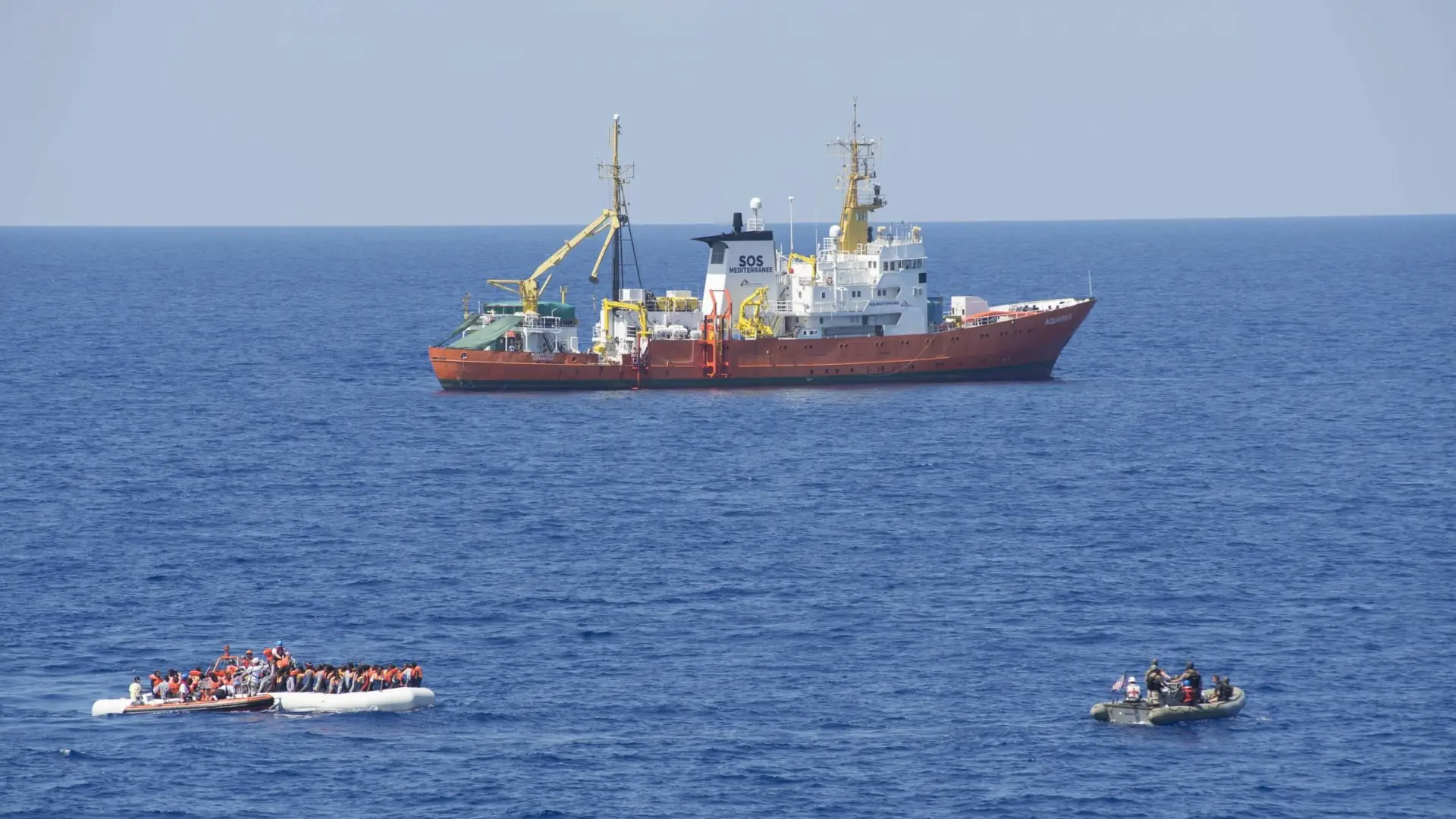
European governments do not want to be where people arrive. So the European Union has spent the better part of a decade building a system to ensure they stop somewhere else, preferably somewhere that can be financially compensated for stopping them, and politically insulated from the human rights scrutiny that European courts would apply if the stopping happened on European soil. The result is a network of bilateral arrangements, financial transfers and capacity-building agreements that has effectively transformed a belt of North African and sub-Saharan states into Europe’s enforcement frontier. African governments negotiated these arrangements under unequal conditions, while affected people often had little voice.
The architecture became visible with particular clarity in 2023, when the European Union concluded a memorandum of understanding with Tunisia that included a planned additional €105 million for migration cooperation in 2023. The deal positioned Tunisia as a migration containment partner, responsible for intercepting people attempting to cross the Mediterranean, holding them and preventing their onward movement. Reporting by international human rights organisations recorded the consequences: mass expulsions into the desert, documented violence at the hands of Tunisian security forces, and migrants from sub-Saharan Africa subjected to racialised treatment that their governments had no diplomatic framework to contest.
Migration externalisation is not a policy. It is an export. Europe exports the legal, moral and physical cost of its migration politics to states that have less power to refuse the arrangement and less institutional protection for the people caught inside it.
How enforcement is outsourced
EU support for Libyan interception and return operations raises questions about responsibility for abuses documented in Libya. Legal accountability depends on control, jurisdiction and the actions of particular states; it does not simply end at Europe’s territorial waters. In Hirsi Jamaa v. Italy, the European Court of Human Rights found violations arising from interceptions and returns conducted outside Italian territory.
The externalisation model has expanded southward through a series of arrangements with Niger, Senegal, Morocco, Mauritania and the East Africa corridor through Ethiopia and Djibouti. Each arrangement is presented in the language of partnership, capacity-building, development finance and legal migration pathways. Each also contains an enforcement component, which this analysis argues is the European priority. The development finance is real but conditional. The legal migration pathways are real but narrow. The enforcement infrastructure is real and comprehensive. Countries that cooperate receive the development transfers. Countries that do not cooperate risk losing diplomatic goodwill they need for other purposes.
Sovereignty and responsibility
What this system does to African states is not only a human rights question, though the human rights dimension is severe. It is a sovereignty question. African governments that accept the enforcement mandate are agreeing to deploy their security infrastructure against their own populations and those of neighbouring states on behalf of European political preferences rather than African development interests. The people being intercepted, detained and returned are Africans (Senegalese, Ghanaians, Guineans, Malians, Nigerians) whose movement within and across their own continent is being criminalised by bilateral agreements that their governments signed amid differing political and economic pressures.
The continental alternative
The AU’s 2018 protocol on free movement of persons, still incomplete and still unratified by many member states, represents the continental alternative. If Africa’s own mobility architecture were operational at scale, the framing of African movement as primarily a European border management problem would become structurally untenable. A continental free movement framework that creates legal channels for the mobility Africa’s labour markets and demographic transition actually require is incompatible with the externalisation model. Building it would require African governments to prioritise their citizens’ mobility rights over the diplomatic benefits of EU partnership arrangements, a trade-off most have not yet been willing to make.
The enforcement frontier is not an African failure. It is a European export that Africa has accepted because the terms of refusal are too costly and the continental alternative is not yet built. The cost of that acceptance is paid by the people caught between them, in Tunisian detention centres, on Libyan boats, in Nigerien desert transit routes, in the gap between a person’s right to move and the political architecture that has decided they should not. That gap is not a migration problem. It is a power problem, and it will be resolved only when Africa has built the continental mobility infrastructure and the diplomatic leverage to set its own terms.



