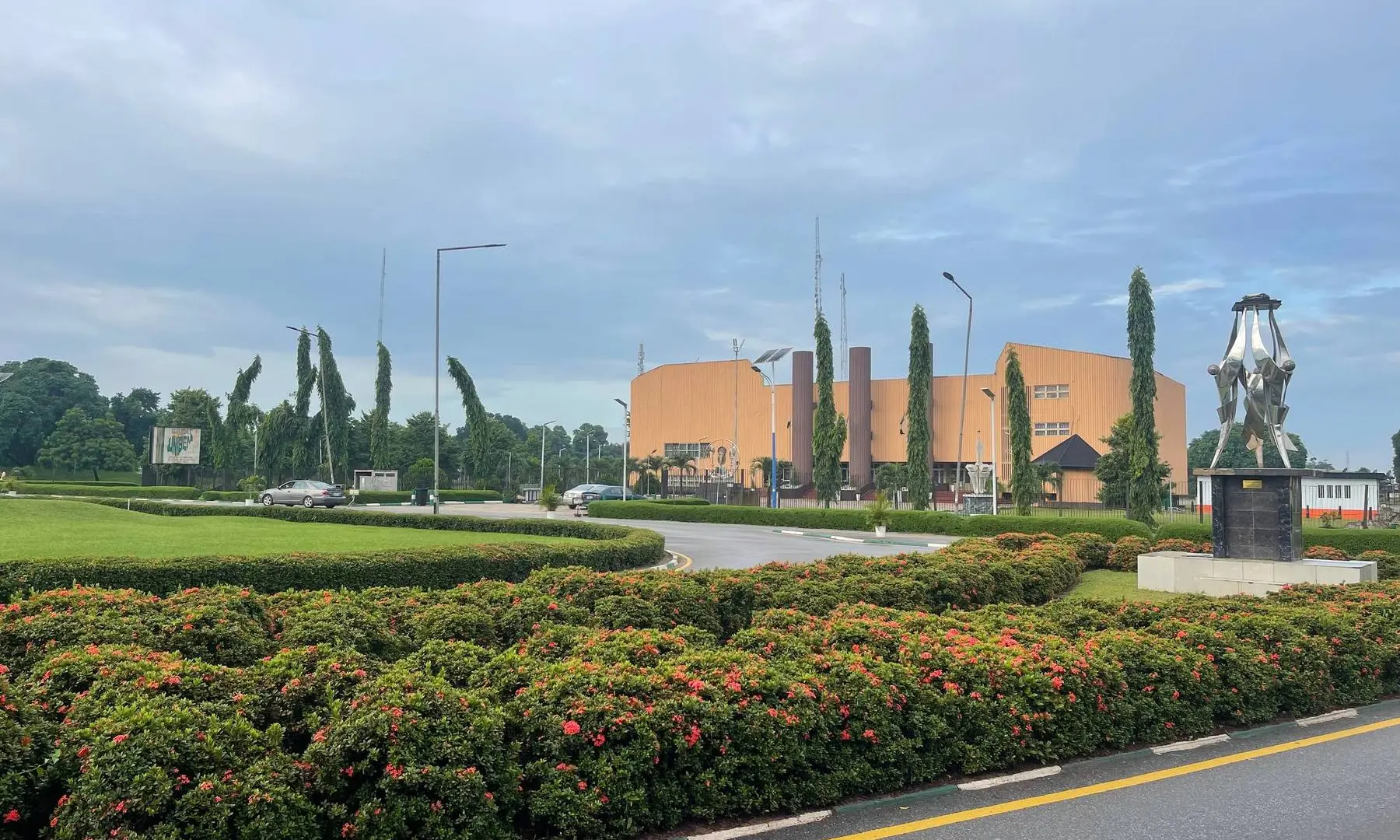
Grace Alele-Williams made academic history more than once. In 1963 she became the first Nigerian woman to earn a doctorate. She went on to become Nigeria’s first female professor of mathematics education and, in 1985, the first woman to lead a Nigerian university.
She treated those firsts as a means and not as the goal. As a teacher, a curriculum reformer and a vice-chancellor she worked to widen women’s access to education, and she argued that Nigeria would have something to celebrate only when women in senior posts were too many to be counted as firsts.
From Warri to Chicago
Alele-Williams was born in Warri, in today’s Delta State, on 16 December 1932. She attended the Government School in Warri and Queen’s College, Lagos, before taking a degree in mathematics at University College, Ibadan (now the University of Ibadan). After graduating in 1954, she taught mathematics at Queen’s School, Ede, in present-day Osun State, until 1957.
The post did not satisfy her. According to an account quoted in the biography kept by the University of St Andrews, she obtained financial help from Nigeria’s Head of Service to study at the University of Vermont, intending to become a secondary school teacher, and took a master’s degree in education there in 1959. The same account records that she found rural Vermont cold and met forms of segregation there. The launch of Sputnik had by then turned American attention to mathematics and to education, and she was able to choose between Chicago, Columbia and Harvard for her doctoral work.
She chose the University of Chicago, which awarded her a PhD in mathematics education in March 1963. Her dissertation, “Dynamics of Education in the Birth of a New Nation: Case Study of Nigeria”, took her own country as its subject. No Nigerian woman had been awarded a doctorate in any field before her.
Changing how mathematics was taught
Her years in the United States drew her to mathematics education, and she brought that interest home. She returned to the University of Ibadan as a postdoctoral research fellow from 1963 to 1965. She also joined the African Mathematics Programme, based in Newton, Massachusetts, and led by the MIT mathematician Ted Martin, and took part in its workshops in African cities from 1963 to 1975. The programme, she wrote in 1976, brought African, American and British educators together, and its writing workshops produced the Entebbe Modern Mathematics Series of school texts.
At the University of Lagos she was appointed Lecturer I in 1965, Senior Lecturer in 1968 and Associate Professor of Mathematics in 1974, and she later became Professor of Mathematics Education. For a decade, until 1985, she directed the university’s Institute of Education. There she introduced non-degree certificate courses that allowed older women working as primary school teachers to gain qualifications. She published Modern Mathematics Handbook for Teachers in 1974, and papers on the Entebbe project in the International Review of Education in 1971 and on the modern mathematics curriculum in The Arithmetic Teacher in 1976.
Her work reached beyond the university. She chaired the curriculum review committee of the former Bendel State from 1973 to 1979, and the Lagos State Curriculum Review Committee and the Lagos State Examinations Board from 1979 to 1985. A profile published in the Notices of the American Mathematical Society in March 2022 records that she was a consultant to UNESCO and to its educational planning institute, and that she was Vice-President of the World Organization for Early Childhood Education and later president of its Nigerian branch. She served on the African Mathematical Union Commission on Women in Mathematics in Africa and as regional vice-president for Africa of the Third World Organization for Women in Science. Africa 360° has examined the later record of school reform in West Africa, Nigeria included.
Vice-chancellor at Benin
In 1985 she was appointed Vice-Chancellor of the University of Benin, a post she held until 1991. In a 2004 interview, quoted in the St Andrews biography, she said her excitement at the news from Prof Jubril Aminu, then the minister of education, “had more to do with seeing it in terms of opening up the field for women than anything else”. She went on:
“I saw it as an opportunity to show that women too could rise up to the occasion. Also, I knew what the weight of the expectations of the women was. They were eager to see how things would go and I was not going to let them down. Mind you, those who appointed me felt I was qualified for it; so it was not just a case of wanting to satisfy the yearnings of the womenfolk. It wasn’t that simplistic.”
After Benin she served on the board of directors of Chevron-Texaco Nigeria and on the board of HIP, an asset management company in Lagos. On 11 November 1994 she gave the Distinguished Annual Lecture at the National Institute for Policy and Strategic Studies, Kuru.
She was made an Officer of the Order of the Niger (OON) in 1987 and was elected a Fellow of the Mathematical Association of Nigeria and of the Nigerian Academy of Education. On 28 February 2014 she received Nigeria’s Centenary Award. On 25 November 2017 the University of Benin awarded her an honorary doctorate, 26 years after she left the vice-chancellorship, and the University of Ibadan gave her an honorary degree on 17 November 2018.
Firsts were not the goal
Alele-Williams never hid her particular interest in women’s education, or her concern for the access of female African students to science and technology. She was also wary of the applause her own career drew. In a talk on gender dignity at Lagos State University in March 2004, as Agnes Scott College’s biography of her records, she said: “As long as we are celebrating a woman vice chancellor because she is the first or a woman chief judge because she is the first, then we have not arrived. We look forward to the time when we will have many women in such positions and we will be celebrating so many of them.”
That test applies well beyond one university. Africa 360° has profiled Ellen Johnson Sirleaf, Africa’s first female president, and has examined women in leadership in Africa and the unequal schooling that still holds girls back.
Alele-Williams was a scholar and an administrator who broke barriers and then worked to bring other women through them. She is a worthy name on this roll of achievers, and she meets its yardstick of excellence, hard work, perseverance and dedication.
She was married to the late Babatunde Williams, a political scientist, whom she wed in December 1963. They had five children.



