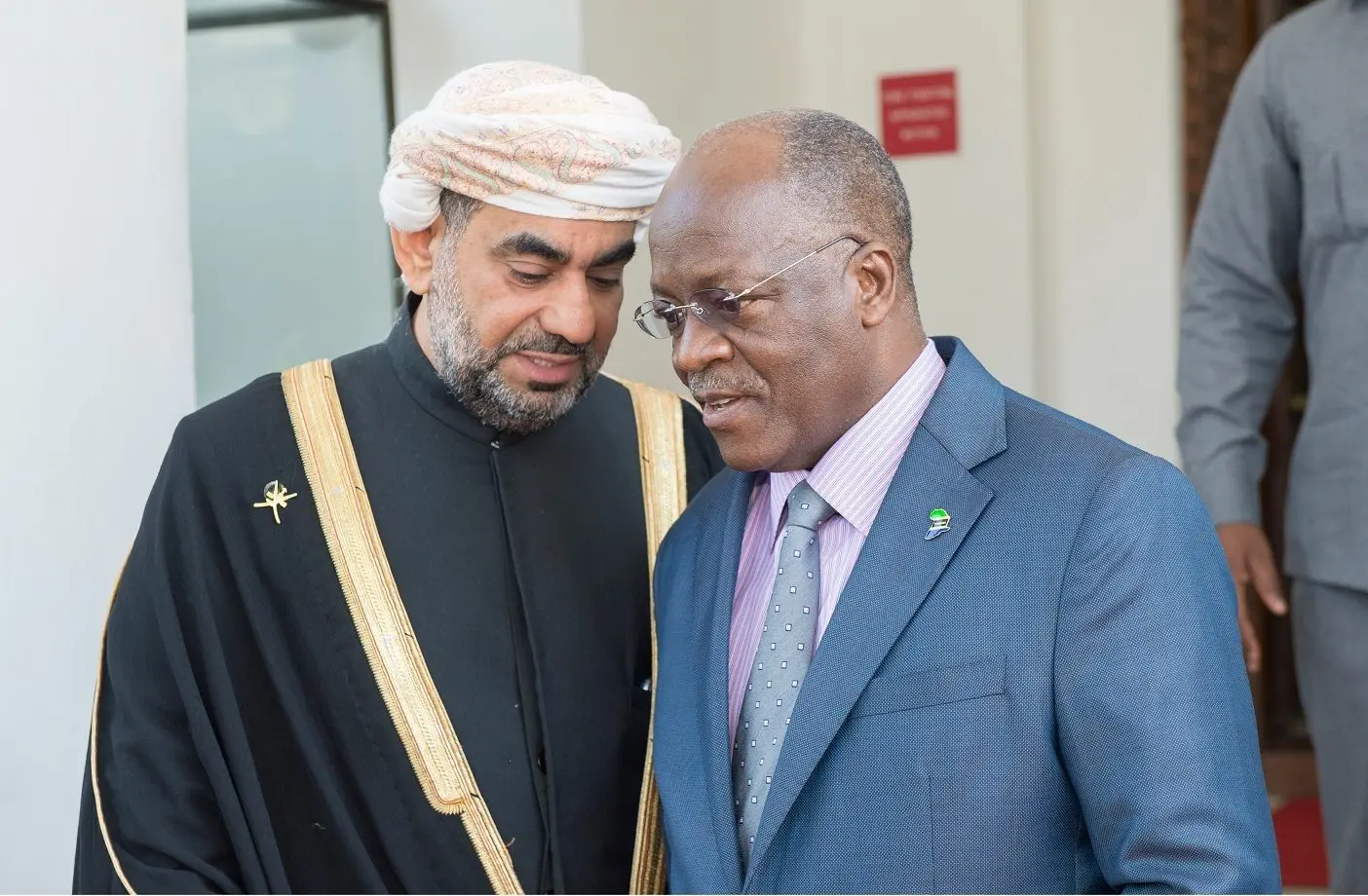
On 9 September 2018 President John Magufuli of Tanzania told a rally in Meatu, in Simiyu Region, that people who use family planning are lazy, The Citizen, a Tanzanian daily, reported. Ten days later his health ministry suspended family planning advertisements on radio and television.
This is an opinion piece, and my opinion is that he was wrong. His case rested on three claims: that parents who limit their families are avoiding work, that free schooling had removed the cost of children, and that Tanzania risked the shrinking workforce he said he had seen in Europe. None of the three fitted the country he governed in 2018, where the latest national survey showed women having more than five children on average, the most recent official study counted 74 per cent of children as poor and about 3 per cent of the population was 65 or older. A government earns the standing to ask for more births by providing for the children already born.
What Magufuli said in Meatu
The wording here is The Citizen’s, published in English on 10 September 2018. The paper reported that Magufuli said those going for family planning were lazy, afraid they would not be able to feed their children and unwilling to work hard to feed a large family. It quoted him directly on what followed:
You people of Meatu keep livestock. You are good farmers. You can then feed your children. Why would you opt for birth control? These are my views, but I do not see any need for birth control in Tanzania.
The Citizen quoted him as adding: “I have travelled to Europe and elsewhere and I have seen the side effects of birth control. In some countries they are now struggling with declining population growth. They have no labour force.” The position was not new. In 2016, soon after free public primary and secondary schooling began, the paper recorded him saying: “Women can now throw away their contraceptives. Education is now free.”
The Citizen saw no indication at the time that his view would change national policy, and Al Jazeera reported that the Speaker of Parliament, Job Ndugai, called the remarks advice. Then, on 19 September 2018, the health ministry banned all family planning advertisements on radio and television until further notice, according to Amnesty International. Ahmad Makuwani, the ministry’s director of reproductive and child health, told CNN that the adverts were being reviewed because some were outdated, and denied that the president had ordered the suspension. I read the sequence differently. Within ten days a personal opinion had begun to behave like policy.
How rights groups responded
Judy Gitau, regional coordinator for Africa at the charity Equality Now, had predicted as much. On 11 September 2018 she told the Guardian:
It’s a statement by a sitting head of state at a time when Tanzania takes every statement that he issues to be law. From past experiences whenever the president issues a statement on a given issue, in practice it becomes policy, and so we can expect ramifications.
She added: “We will end up with women having unplanned children, huge families and unable to sustain their lives.”
After the adverts were pulled, Seif Magango, Amnesty International’s deputy director for East Africa, the Horn and the Great Lakes, said in a statement dated 21 September 2018:
There’s no doubt that sexual and reproductive rights are coming under increasing attack in Tanzania. The government’s deplorable decision to pull these family planning ads comes less than two weeks after the President made derogatory remarks about Tanzanians wishing to exercise their fundamental right to make decisions about their bodies.
A refusal I met in Niger State
Magufuli’s distrust of family planning was not his alone. In November 2016 I volunteered on a family planning awareness programme in two rural communities, Gyigyi and Sharuwadna, in Nigeria’s Niger State. It was part of the Rural Contraceptives Access Campaign led by Adebisi Adenipekun, which Women Deliver describes as his World Contraception Day Ambassadors Project. The wife of the state governor came to speak to the women about child spacing.
After the public talks, and after we had gathered data on the women’s reproductive health, we began to hand out contraceptives. The villagers refused them unanimously. They would have nothing to do with us or our ‘cursed gifts’. I believe Magufuli would have given those women a standing ovation.
As I understand it, one strand of traditional belief holds that childbearing involves the ancestors and other deities. It is not for the parent to decide when to have children, or how many. The child comes from the spirit world when it chooses, and birth control cuts the communication between the dead, the living and the unborn. That belief is contested between generations, and governments sit in the middle of the contest. Magufuli, as head of government, took the side of the old order. Nigeria has its own version of the argument, which Africa 360° has covered in a piece on the country’s population crisis.
This essay does not try to settle the moral and religious debate over birth control. The argument it can test, and the one opponents of birth control find hardest to win, is about population and national development.
Where the argument failed
The charge of laziness fails first. People do not plan their families to avoid work. They do it because the demands on a family have risen. Food is the least of them, after education, housing, health, employment and security. Children do not remain children. In the past, a boy of 15 could have had his own farm, built a small hut and married. That was no longer the reality in 2018, and it is where Magufuli’s argument went wrong. The young people who leave for Europe across the desert and the sea were fed as children too. Being fed did not give them a living.
Free schooling does not rescue the case. It removed one cost and said nothing about the work that follows school. The National Bureau of Statistics projected unemployment on the Tanzanian mainland at 9.7 per cent in 2018, down from 10.3 per cent in 2014. The country had about 57 million people in 2018 on World Bank figures, and United Nations estimates put births that year at more than 2.1 million. Every one of those cohorts would need classrooms first and jobs afterwards.
By one MP’s account, the state’s own rules assumed family planning. Africanews reported on 10 September 2018 that Cecil Mwambe, a member of parliament, said the national health insurance scheme could cover a maximum of four children from one family, a limit he attributed to the government’s acceptance of the need for family planning.
Tanzania was not ageing
The fear of a shrinking workforce had the least support of the three. The 2015–16 Tanzania Demographic and Health Survey found that women had 5.2 children on average and that 32 per cent of married women used a modern method of family planning. It put maternal deaths at 556 for every 100,000 live births. World Bank data show that in 2018 about 44 per cent of Tanzanians were under 15 and about 3 per cent were 65 or older.
A country with that age structure was decades away from the European problem Magufuli described. Its difficulty was the opposite one.
The children already born
Three out of every four children in Tanzania experienced poverty, according to a report by the National Bureau of Statistics and UNICEF launched on 11 August 2016 and based on a 2012–13 survey. It counted 74 per cent of children as poor on a measure that includes nutrition, health, education, water and housing, and 29 per cent as poor by income alone. Africa 360° has set out elsewhere why poverty cannot be understood through income alone.
So my answer is a qualified yes. Magufuli was wrong. It is qualified because I am not against his stance entirely, and I am not sure that I am making a case for family planning and birth control. Whether families are planned or not, reproduction will go on. What is fundamental is that caring for those who are alive matters more than making room for the unborn.
The president would have made far more sense saying Tanzania needed more children if all Tanzanians had lived above the poverty line, their education could compete globally, the country were heavily industrialised, unemployment were below 5 per cent and urban life were within reach of more people than rural life. Governments earn the right to argue against birth control only once they have made life comfortable for the people they already have. Until Tanzania’s had done so, what Magufuli called laziness was a decision better left to parents.



