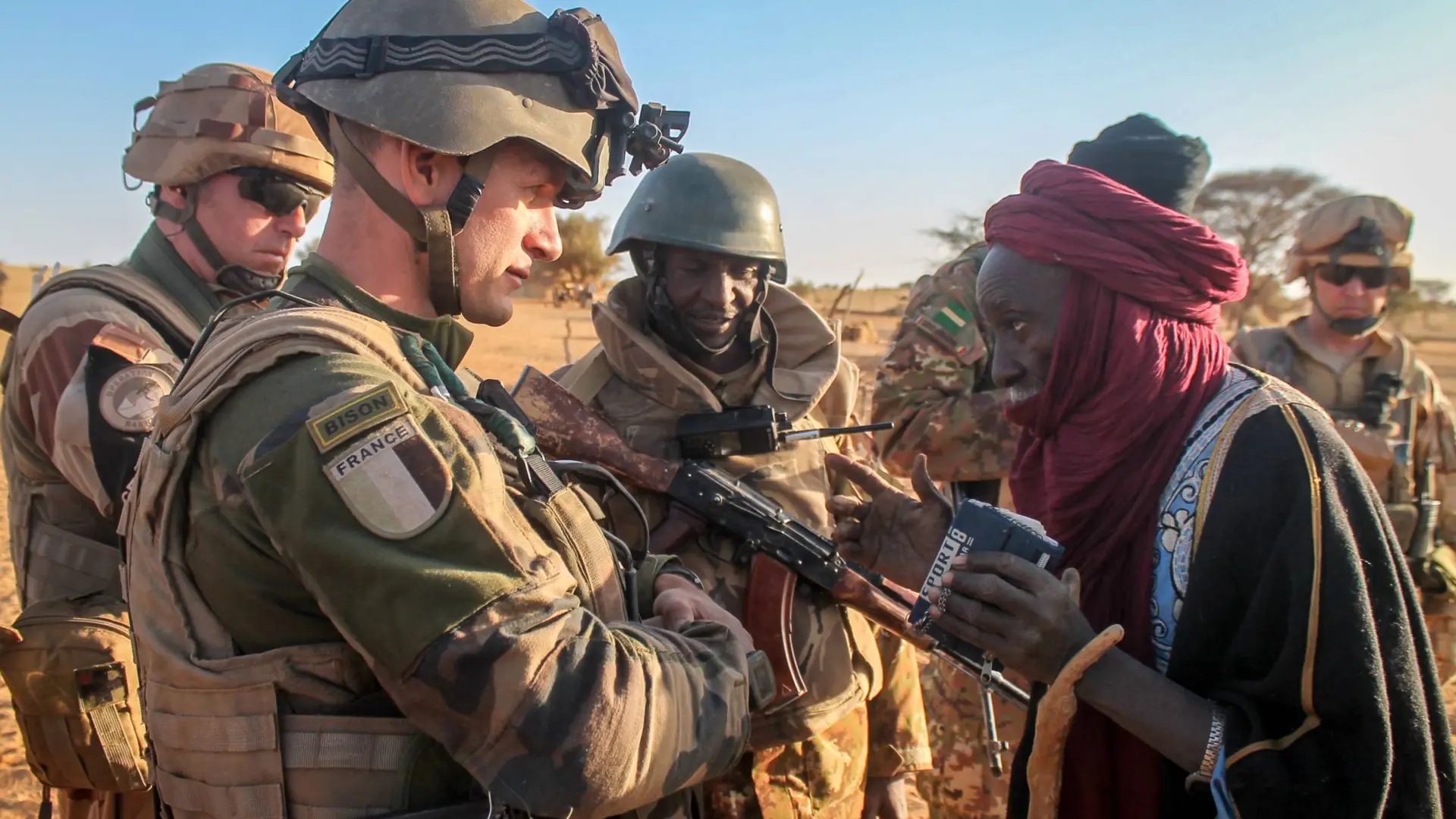
What looks like a withdrawal from the Sahel is, in practice, a redistribution of influence away from visible military dominance and towards quieter, more embedded forms of power. Across Mali, Burkina Faso and Niger, the collapse of long-standing arrangements has forced Paris into strategic humility. Whether that humility becomes strategic recalibration, or merely a temporary retrenchment before reassertion, is the question that will define France’s position in Africa for the next decade.
Why France was expelled
The expulsions followed successive breakdowns in relations with Sahel governments. France’s military footprint in the Sahel (Operation Serval from 2013, Operation Barkhane from 2014) always rested on a political logic that the populations it was nominally protecting did not fully share. The security it provided was real in narrow terms. French forces repeatedly degraded jihadist operational capacity. But the political arrangement around that security included support for governments seen by their own citizens as corrupt, dependent and insufficiently sovereign. That made the French presence itself a variable in the instability it was trying to suppress. The coups in Mali (2020, 2021), Burkina Faso (2022) and Niger (2023) were not simply Russian-engineered events, though Russian strategic communication amplified them. They expressed a genuine popular frustration with an arrangement that had lasted decades without producing security, prosperity or dignity at the level that mattered: the village, the town, ordinary life.
France read this as an information war it was losing. The correct read was an interests war it had been losing for much longer. The anti-French sentiment in the Sahel did not need Russian amplification to exist. It needed only the conditions of six decades of Françafrique: the currency arrangements, the elite networks, the resource concession structures, the intelligence relationships with presidential palaces. Russia and China did not create the grievance. They arrived when it was already fully formed and offered an alternative patronage without the accumulated resentment attached to the French one.
France is not losing Africa. It is losing a particular form of Africa, the one calibrated to French interests under the architecture of post-colonial accommodation. That architecture has broken down. What replaces it is not yet clear.
Macron’s Africa policy since 2017 has been a study in the gap between rhetoric and reality. His speech at the University of Ouagadougou in 2017 promised to abandon paternalism, treat Africa as a partner and end the old ways. It was eloquent and well received. The structural relationships it promised to reform were largely intact when the coups came. The two CFA franc monetary unions retain a fixed euro peg backed by French convertibility guarantees. They have different reserve arrangements. A reform announced in 2019 ended the West African central bank’s obligation to centralise reserves at the French Treasury; the Central African arrangement must be assessed separately.
The Eco currency project, intended to replace the CFA in the ECOWAS zone, remains stalled. The symbolism changed. The architecture did not.
From military presence to other partnerships
France is now attempting a shift from presence to influence. It is moving from the visible apparatus of bases, troops and ambassadors to a more diffuse network of cultural, educational, economic and intelligence relationships. The French language system (the Instituts Français, the Alliance Française network, the francophone university relationships) is being reinvested as a soft power platform. French development finance through the Agence Française de Développement (AFD) has been repackaged with stronger equity investment dimensions. French corporations in energy, telecommunications, logistics and banking remain deeply embedded across francophone Africa, whichever flag flies over the presidential palace.
This pivot is real and should not be dismissed. But it operates against a changed backdrop. The African states France is trying to keep relationships with are themselves changing. Their civil societies are more assertive, their publics more informed, their elites more diversified in their international networks. A Senegalese government that feels Chinese investment pressure from one side and Gulf sovereign wealth interest from another is in a structurally different negotiating position from its 1990s predecessor. The quiet influence France is pivoting towards requires interlocutors who find French partnership genuinely useful, not interlocutors who accept it because the alternatives are limited. The alternatives are no longer limited.
The Russia and China variables are real but often analytically overstated in Western commentary. Wagner Group, now operating under Russian state structures following Prigozhin’s death, has established a security presence in Mali and Burkina Faso. The enthusiasm for Russian partnership in some Sahelian capitals is partly genuine anti-French sentiment, partly elite calculation and partly a gamble on Russian staying power. Whether Russian partners can deliver the security they promise remains unproven. China’s infrastructure investment is more disciplined, more commercially structured and less politically theatrical. It is a more durable competitor to French economic presence than Russian security arrangements are.
The space France vacated
For Africa, the significance of France’s recalibration lies less in what Paris does next and more in what the vacated space makes possible. The Sahel coups, whatever their democratic deficits, have shown that the post-colonial architecture of external patronage is not immovable. It can be refused. It can be renegotiated. The countries that expelled French forces are paying a real security price for that refusal, and their civilian populations are paying it most heavily. The principle that African states can set terms for external presence rather than accept them will, however, outlast the current military-led governments.
If France’s quiet power shift is to produce a relationship with Africa worthy of the word partnership, it requires something not yet offered. That means a genuine acknowledgement of the structural character of Françafrique, and a redesign of the economic and monetary arrangements that sustained it. Without that, the quieter French presence will simply be the louder French presence with better public relations. Africa, which has grown considerably better at reading the difference, will notice.



