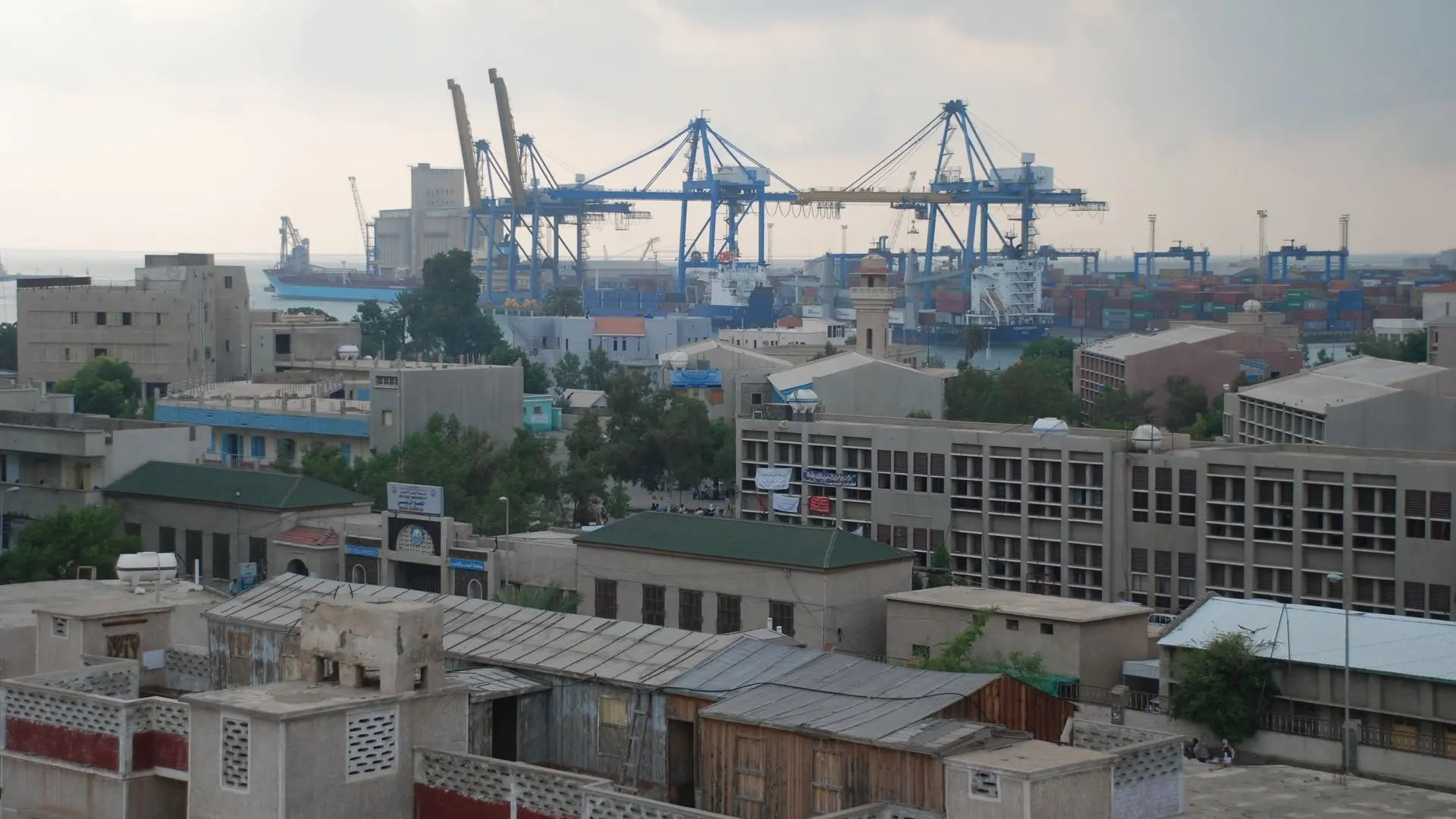
Red Sea geopolitics now runs through two African territories, Somaliland and Sudan, where military bases, port concessions and diplomatic recognition are being bargained over by external powers and African governments alike. The Red Sea is a major maritime trade corridor linking the Indian Ocean to the Mediterranean, guarded at its southern entrance by the Bab el-Mandeb Strait. Between 2023 and 2025 both shores became active theatres of great-power competition, proxy conflict and sovereignty dispute, over a passage the world economy relies on.
Somaliland and the Ethiopia memorandum
Somaliland declared independence from Somalia in 1991 and has maintained de facto statehood for more than thirty years, with its own currency, military, elections and government. At the time of writing it has no seat in any international organisation and no recognition from any UN member state. On 1 January 2024 in Addis Ababa, Ethiopian Prime Minister Abiy Ahmed and Somaliland’s then president, Muse Bihi Abdi, signed a memorandum of understanding on Ethiopian sea access. Its full text was never published. According to statements from Somaliland’s presidency and Ethiopia’s national security adviser Redwan Hussein, and to analysis by the International Institute for Strategic Studies, the non-binding memorandum envisaged a 50-year lease of 19 to 20 kilometres of Gulf of Aden coastline for an Ethiopian naval base and commercial port. In exchange, Ethiopia would move towards recognising Somaliland, which would receive a stake in Ethiopian Airlines or Ethio Telecom.
The memorandum set off a regional crisis. On 6 January 2024 Somalia’s federal parliament passed a law, signed at once by President Hassan Sheikh Mohamud, declaring it null and void. Egypt, which has its own dispute with Ethiopia over the Grand Ethiopian Renaissance Dam, moved closer to Somalia. Presidents Abdel Fattah El-Sisi and Mohamud signed a military cooperation protocol in Cairo on 14 August 2024, and Egyptian weapons shipments reached Mogadishu from late August, a shift examined in our analysis of Egypt’s Somalia ties. The UAE, whose DP World has operated Berbera port under a 30-year concession signed with Somaliland on 5 September 2016, has stakes on several sides of the dispute.
Turkish mediation eased the crisis. In the Ankara Declaration of 11 December 2024, Mohamud and Abiy reaffirmed Somalia’s sovereignty and territorial integrity and agreed to negotiate commercial arrangements giving Ethiopia reliable sea access under Somali sovereignty. Mohamud visited Addis Ababa in January 2025 to restore full ties. The Turkish foreign ministry reported that Ethiopian and Somali delegations held a first round of technical talks in Ankara on 18 February 2025, with a second round due in March. Ethiopia’s objective is unchanged. It has moved the search for a coastline from Hargeisa to the negotiating table with Mogadishu.
The Somaliland question is no longer an unrecognised-state curiosity. It is a Red Sea access problem, and when major powers need access to strategic maritime corridors, the diplomatic vocabulary that has protected the African Union’s borders-at-independence doctrine for sixty years begins to bend.
Sudan’s coast and Russia’s basing interest
Sudan’s Red Sea coast, from Port Sudan northward, is one of the most contested stretches of African coastline. Russia’s interest dates from the final years of the Bashir government. Omar al-Bashir raised the idea of a Russian Red Sea base with Vladimir Putin in Sochi in November 2017 and was overthrown in April 2019. Russia published a draft agreement in November 2020 and in December 2020 signed a 25-year deal with Sudan’s military-led transitional authorities for a naval logistics centre at Port Sudan, capped at 300 personnel and four vessels and subject to ratification by a legislature. No legislature has ratified it. Sudan’s transitional parliament was dissolved after the October 2021 coup, and the agreement has not been implemented. On 12 February 2025 in Moscow, Sudan’s foreign minister Ali Youssef said no obstacles remained to finalising it, as the BBC reported.
The war between the Sudanese Armed Forces and the Rapid Support Forces that began on 15 April 2023 moved the centre of Sudanese government to the coast. General Abdel Fattah al-Burhan and the Transitional Sovereignty Council relocated ministries, diplomatic missions and administrative functions to Port Sudan in mid-2023, making it the de facto wartime capital. That gives the army’s leadership something to offer external partners. Saudi Arabia, the UAE and Egypt all have interests in the outcome of the war, and those interests include the question of who ends up controlling the coast.
Shipping attacks raised the stakes
Houthi attacks on commercial shipping began in November 2023, with the seizure of the car carrier Galaxy Leader on 19 November, and major container lines suspended Red Sea transits in mid-December 2023. According to UNCTAD’s Review of Maritime Transport 2024 and IMF PortWatch data, daily transits through the Suez Canal fell from about 65 to 75 vessels before the crisis to about 30 to 35 in 2024, while cargo tonnage fell by about 70 per cent and arrivals around the Cape of Good Hope rose by 89 per cent.
The campaign showed that a non-state actor with state support could challenge the commercial viability of a major trade corridor. It changed the calculations of every power with interests in the region. Access to Red Sea basing, for naval presence, logistics and escorting commercial traffic, became an active security problem rather than a long-term positioning exercise.
Borders at independence against access
Each presence on this coast serves the power that operates it. Ethiopia’s memorandum served its search for sea access. Russia’s basing interest in Sudan serves Russian power projection. The UAE’s port investments serve Emirati commercial and strategic positioning. China’s support base in Djibouti, opened on 1 August 2017 as the People’s Liberation Army’s first overseas military base, serves Chinese strategy in the Indian Ocean. The United States’ AFRICOM installations in the region serve American counterterrorism and strategic competition objectives. Host governments pursue their own security and commercial objectives through these arrangements. What is largely absent is an African strategic framework that treats the continent’s most commercially valuable coastline as an African asset to be governed on African terms.
Somaliland’s recognition question exposes the limits of the African Union’s border doctrine in a world where strategic geography has again become a primary driver of great-power interest. The uti possidetis principle, under which states keep the borders inherited from colonial rule, has protected African states from the kind of fragmentation that would make them individually more vulnerable. It has also frozen political arrangements that do not reflect current realities of identity, governance and economic organisation. Somaliland has developed separate governing institutions and held competitive elections. Its population has repeatedly expressed a preference for statehood: in a constitutional referendum on 31 May 2001, 97.1 per cent of about 1.18 million voters endorsed a constitution affirming Somaliland’s independence, according to its referendum commission. Most states withhold recognition not because of the quality of its governance but because of the precedent recognition would set for other secessionist claims, a precedent African governments with their own territorial vulnerabilities are unwilling to create.
Red Sea competition will continue to develop in ways that African institutions are not yet equipped to govern. The bases, ports and recognition deals are being negotiated bilaterally, by external powers and by individual African governments pursuing their own interests. African sovereignty over this coastline requires institutions that can set terms for external military presence, negotiate port access on continental rather than bilateral terms, and treat the Somaliland question as an African political problem rather than a global precedent problem. Until those institutions exist, each deal will be struck on the terms of whoever needs access most.



