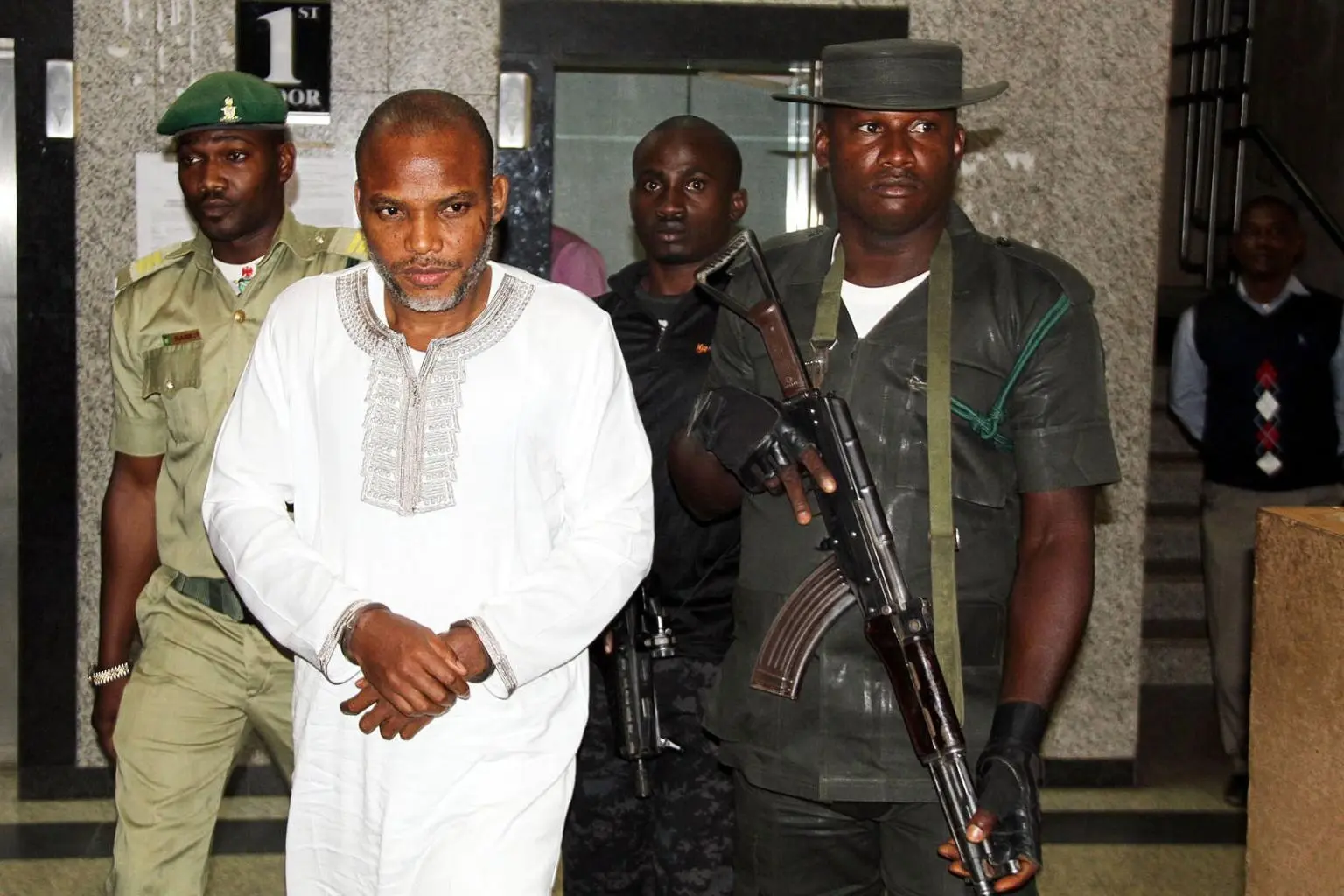
The demand for Biafra is less about secession than about what Nigeria has failed to become. Nearly 59 years after Colonel Chukwuemeka Odumegwu Ojukwu declared the Republic of Biafra in May 1967, the movement draws on grievances over federal neglect in the South-East, and the state’s handling of Nnamdi Kanu has deepened its appeal.
Yet the project carries a question that secessionist slogans cannot settle. Who belongs to the proposed state, and whose consent would give it legitimacy?
A declaration without full consent
The 1967 declaration was not rebellion for rebellion’s sake. It was, in Ojukwu’s own framing, a survival response, born from failed protection, systemic pogroms and the betrayal of Eastern lives in post-independence Nigeria. Yet the Biafran project carried a fundamental flaw. It assumed a singular identity.
Colonial rule had drawn Nigeria’s boundaries around hundreds of distinct ethnic groups. The Eastern Region, which became Biafra, was not homogeneous. Alongside the dominant Igbo lived the Ijaw, Efik, Ibibio and Ogoni. Biafra was declared by geography, but not always by consent. For some minority groups, the idea of Biafra felt less like liberation and more like annexation.
The wounds that outlived the war
After the conflict, Igbo citizens returned to other southern states only to find their lands seized and their properties confiscated. The post-war dispossession generated stereotypes that still circulate in marketplaces and political corridors, unfair generalisations forged in war and never fully dismantled.
Kanu and renewed separatism
Nnamdi Kanu founded the Indigenous People of Biafra (IPOB) in 2012 and, through broadcasts and a devoted online following, revived the cause of secession. In October 2015 the Nigerian state detained him on treason charges. The move backfired. His arrest deepened IPOB’s radicalisation, and some young people in the South-East, facing unemployment and disillusioned, began to see Biafra not as history but as the future.
The Biafran question has never truly been about secession. It has always been about what Nigeria refuses to become. The persistent demand for Biafra is, at its core, an indictment of a federal structure that has repeatedly mistaken geographic unity for political legitimacy. Nigeria’s unity has always been an incomplete, contested negotiation, underwritten by oil revenues that have narrowed, not widened, the covenant between state and citizen. What the Biafran movement exposes, again and again, is the vacuum at the centre. This is a federal government that collects but does not construct, that governs by attrition rather than agreement.
The economic geography deepens the grievance. The South-East has produced one of Nigeria’s most commercially successful populations: the trader networks of Onitsha and Aba, the apprenticeship system, and a diaspora whose remittances built towns the federation never reached. Yet people in the region point out that it has no functioning deep seaport despite its commercial weight, and that its goods travel through Lagos at a cost levied by distance and neglect. A people who feel they finance a federation that will not build in their homeland do not need an ideology to feel estranged. Biafra’s persistence is, in this reading, less a nostalgia than an audit, and every year the audit goes unanswered it acquires new subscribers.
The fault lines ahead
Kanu’s case has long ceased to be merely a legal proceeding. His conviction on terrorism charges and life sentence on 20 November 2025 only deepened its symbolism. A conviction may silence a man; it will not silence the movement.
The longer Abuja responds to identity claims with detention orders and proscription lists, the more it validates the very argument it seeks to silence. Suppressing a question is not the same as answering it. And in Nigeria’s political architecture, unanswered questions do not disappear. They radicalise. Nigeria’s response needs to address representation and consent alongside public order.



