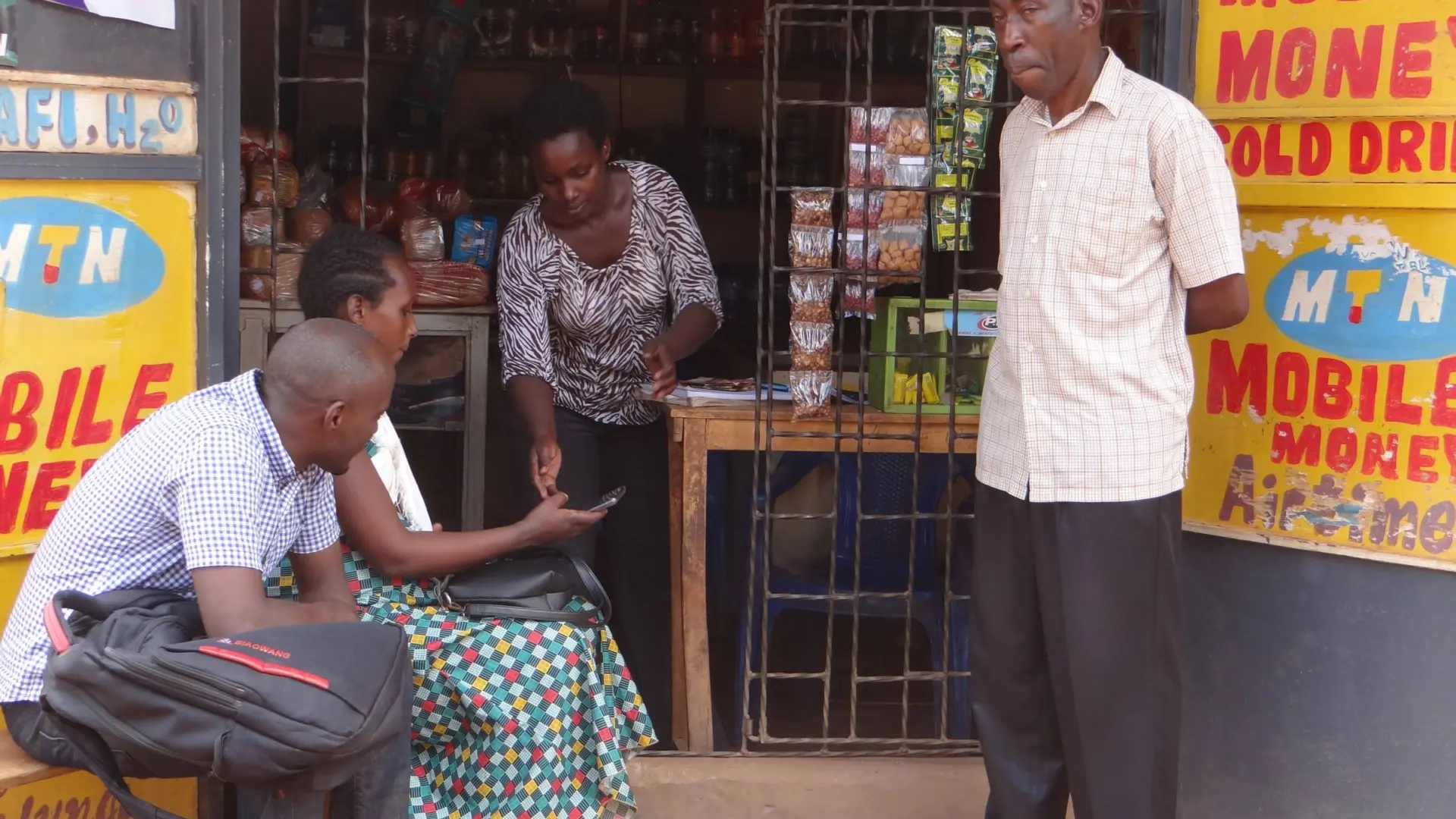
Chatbots, automated lending platforms, app-based insurance and USSD banking have expanded access to financial services, but human agents remain part of the system. They manage cash, help customers use digital services and provide local knowledge that platforms depend on.
Africa’s agency banking ecosystem grew from a specific structural condition: a population distributed across geographies that formal banking infrastructure had neither the incentive nor the capital to reach. M-Pesa’s launch in Kenya in 2007 demonstrated that mobile money could deliver basic financial services at scale without branches. What it also demonstrated, quietly, was that the agent network sitting behind the digital interface was not a transitional necessity to be removed once penetration increased. It was load-bearing infrastructure. The agent was the bank for the customer who distrusted the app, the interpreter between formal financial logic and community financial behaviour, and the liquidity manager who made the float system function at the last mile.
That role has not diminished as digital banking has scaled. It has evolved. Across Nigeria, Ghana, Kenya, Tanzania, and increasingly across francophone West Africa, the agency model has migrated from simple cash-in, cash-out operations into a broader range of financial and non-financial intermediation. Agents now register customers for mobile money, process remittance receipts, collect insurance premiums, disburse micro-loans, and increasingly serve as data collection points for fintech platforms that need real-world verification that digital processes alone cannot provide. The network has become more complex precisely because digital infrastructure has deepened the range of services requiring human facilitation at the point of delivery.
The economics of reach
The economic logic is straightforward. Formal financial institutions (banks, insurance companies, microfinance institutions) bear a cost-to-serve problem in low-income and rural markets. The transaction sizes are small, the geography is wide, and the regulatory compliance overhead is fixed regardless of revenue. Agency models distribute that cost by commissioning independent operators who bear their own overheads (the mobile handset, the data, the float, the physical premises) and earn per transaction. For the institution, the marginal cost of extending reach drops substantially. For the agent, the model provides income that in many African contexts represents a primary or significant supplementary livelihood.
Why agents remain useful
The tension between automation and agency is real but frequently misdiagnosed. Digital platforms do displace certain agent functions, particularly high-volume, low-complexity transactions that customers are comfortable executing without human assistance. The growth of self-service mobile banking across Africa’s urban middle class is genuine. But three forces consistently sustain the agent model against this pressure.
First, trust calibration. In markets where formal financial systems have a history of instability (bank runs, currency devaluations, pension fund failures), customers frequently prefer human-mediated transactions for anything beyond small-value cash management. The agent can provide a familiar point of contact, although formal complaint channels and provider accountability remain necessary. When something goes wrong with a digital transaction, knowing where to go matters as much as the technology working correctly.
Second, connectivity limitations. Africa’s digital infrastructure remains uneven despite significant investment. Rural network coverage, device affordability, and digital literacy gaps continue to produce a population that requires human mediation to access digital financial services. This is not a permanent condition, but the pace of improvement varies by market. Any platform strategy that assumes full digital self-service as its near-term operating model will systematically underserve the markets it claims to target.
Third, agents can help platforms gather and verify customer information where formal credit histories are limited. That creates responsibilities for consent, data quality and privacy. Owning a local agent network does not by itself establish national control over the data it collects.
What the hybrid model means
The implications for Africa’s technology economy are significant. The dominant narrative of African fintech positions the continent as a leapfrog opportunity, a market that skips legacy infrastructure and arrives directly at mobile-first digital services. That narrative is partially accurate and substantially incomplete. Africa is not leapfrogging the human infrastructure layer. It is embedding it into the digital architecture, building hybrid models that deploy the efficiency of mobile platforms against the reach and trust of human networks. This is not a transitional compromise. It is a structural design adapted to the specific conditions of African markets, and it may ultimately prove more resilient than purely digital models that lack the last-mile accountability the agent provides.
The risk is that as these networks become valuable, they become targets for consolidation by international platforms with the capital to acquire them but not necessarily the understanding to preserve what makes them work. Africa’s agency ecosystem is not just a distribution channel. It is a community institution. The governance frameworks that determine who owns the networks, who captures the data, and who the agent ultimately answers to will determine whether this infrastructure serves Africa’s financial sovereignty or becomes another extraction point in the global digital economy. That question is live now, and the answers being given in boardrooms in Lagos, Nairobi, and increasingly in London and Singapore will shape Africa’s financial architecture for the next generation.



