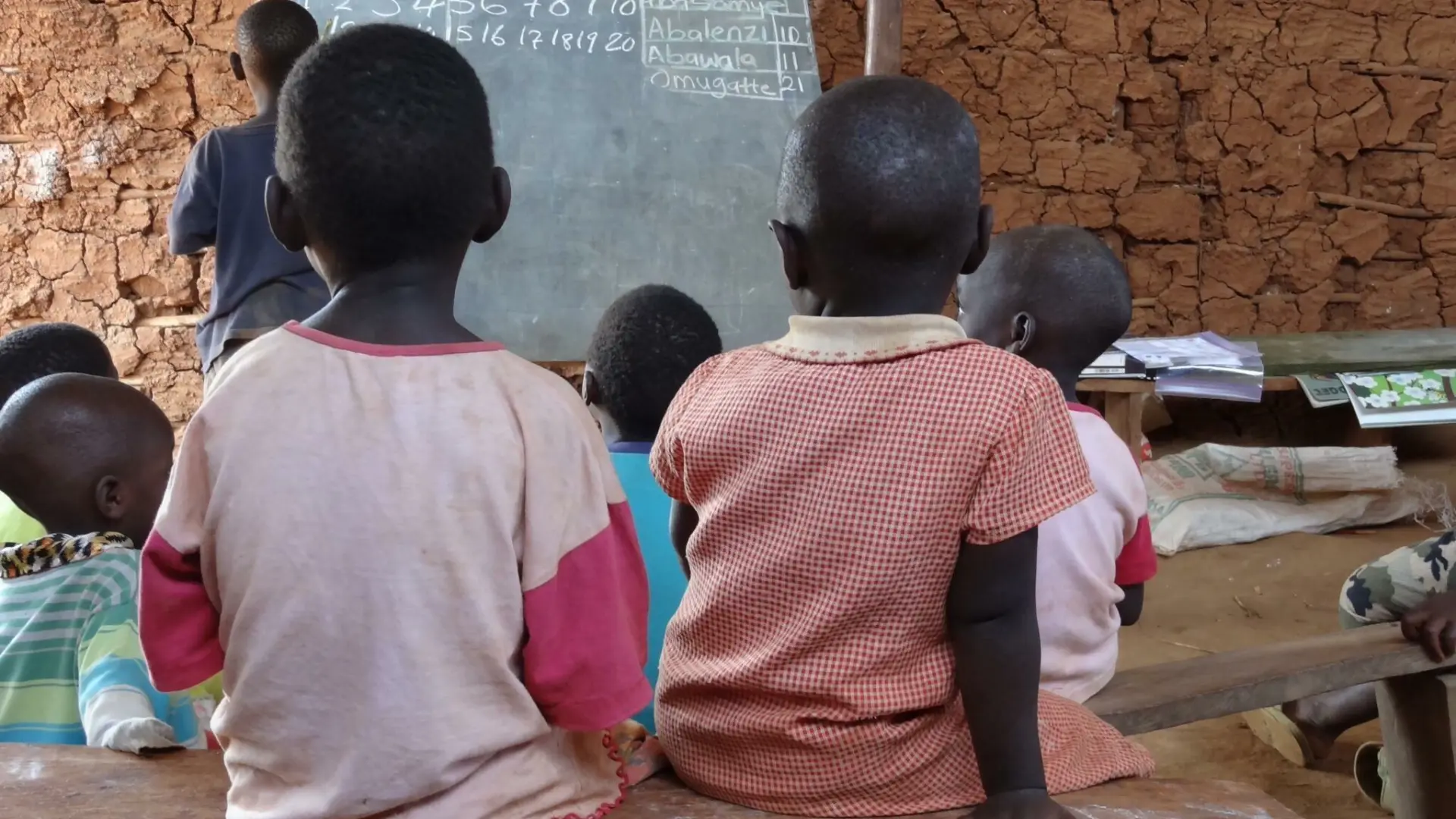
East African governments have put millions more children into classrooms. Most children in the region now enrol in school, yet large numbers of them leave without being able to read a simple story or do basic sums. Poverty, a shortage of good teachers and the neglect of remote regions mean the gap between enrolment and learning is widest for the children who are already worst off.
The impact of poverty on education remains one of the biggest challenges in East Africa. It is compounded by deep structural problems, above all a shortage of jobs for school and university graduates.
A growing market for schooling
The East African Community presents education as a fast-growing service sector, with openings for private investors in facilities and training at every level, from primary and secondary schools to polytechnics, universities and vocational colleges. Most EAC Partner States have adopted universal education policies. As a result, private universities matter more than ever, because the public system alone cannot absorb the large numbers of pupils now leaving primary and secondary school.
Kenya
The Uwezo assessment of 2009 painted a sobering picture of Kenyan schooling. Literacy was lower in public schools than in private ones. Most children could solve real-world “ethno-mathematics” problems, but fewer could solve the same problems set out in an abstract, pencil-and-paper form. Some 5% of children were not enrolled in school, and the problem was far worse in some regions.
About half of children were enrolled in pre-school. Many were older than they should have been for their class, including 40% of children in class 2 and 60% in class 7.
Performance was especially weak in North Eastern Province and in the arid districts of Rift Valley and Eastern Provinces, where many older children, girls above all, were out of school.
Many families paid for extra tuition, much of it drilling for exams. Schools struggled to plan their budgets because government funds arrived at unpredictable times.
Children whose mothers were educated, particularly beyond primary school, had much higher rates of literacy and numeracy. About 15% of pupils were absent on any given day, and far more in some districts. The shortage of teachers was severe, put at 4 teachers per school.
Enrolled but not learning
Kenya is not alone. Uwezo, an initiative working to improve literacy and numeracy among children aged six to 16 in Kenya, Tanzania and Uganda, has collected data since 2009. Its results show high enrolment combined with low learning. Large numbers of children are in school, but few have mastered the basics, and the shortfall is not explained by older children sitting in the first grade. Fewer than half of children aged 9–11 in the three countries can pass basic literacy and numeracy tests set at the Standard 2 level.
The picture has not improved since. The World Bank estimated in June 2022 that 89% of 10-year-olds in sub-Saharan Africa could not read and understand a simple text.
Governments and donors have responded by calling for deep reform. In 2015, for example, the UK’s Department for International Development committed £21 million to research to “build an understanding of education systems and how they can be transformed to accelerate learning”, as the economist Sam Jones noted in The Conversation. The department has since been merged into the Foreign, Commonwealth and Development Office, on 2 September 2020.
Rwanda
Rwanda made state schooling free and compulsory, first for six years of primary and three years of lower secondary education, and from 2012 for 12 years of basic education. Families pay no school fees for the mandatory years.
Teaching quality has lagged behind access. According to a World Bank country report of 2010, only 10% of the teachers surveyed had upgraded their qualifications for teaching. Most secondary school teachers who were studying further were working towards qualifications outside teaching. The incentive to train further as a teacher is weak, because other jobs pay better. Poor teaching standards and a lack of facilities and resources make schooling unattractive.
Eritrea and the Comoros
Beyond the EAC itself, the same strains appear across the wider region. In Eritrea, education is officially compulsory between the ages of 7 and 13. The government’s stated aims are to teach basic education in each of the country’s mother tongues and to equip a society to be self-reliant in a modern economy. The country’s school infrastructure has been described as inadequate for either goal.
In the Comoros, practically every child spends two or three years at Quranic school, starting at around the age of five, learning the rudiments of Islam and some classical Arabic. Rural children who attend sometimes leave home and work the teacher’s land in return.
Primary education in the Comoros is compulsory until the age of 14, but the government does not enforce attendance. Facilities, equipment, qualified teachers and textbooks are all in short supply. In the mid-2000s, US Department of Labor findings reported that boys were often given preference and that teachers’ salaries were often so far in arrears that many refused to work. Boys and girls now attend public primary schools in equal numbers, but, according to the department’s 2024 findings, fewer girls complete primary education.
For years the islands had no university, and anyone wanting higher education had to study abroad. A “brain drain” followed, because few graduates were willing to return: by 2000, about 21% of skilled Comorans had emigrated. The University of the Comoros, established in 2003, now offers higher education at home.
Averages hide the worst-off
Learning quality has to improve across the board. But moving from headline figures to policy is never simple, and national averages can mislead. What matters is how outcomes are spread.
School systems are not uniform. A government school in the remote, arid north of Kenya faces problems quite unlike those of a school in Westlands, an upmarket suburb of Nairobi. The gap in learning between the best and worst districts in each country is enormous, and the shortage of trained, motivated teachers seen in the Kenyan and Rwandan evidence compounds it.
That means tackling failing schools, and even failing regions, by studying what works rather than lamenting low national averages. Giving more attention to the most disadvantaged children, in the arid and semi-arid areas where the data show learning is weakest, may also be the right thing to do.
The overriding problem for education in East Africa is financial and economic. Many of these countries do not yet earn enough to build a complete school system. The shortage of good teachers makes things worse and, in turn, leaves the region short of skilled labour. Policymakers have a huge task ahead in building an education system that works.
Since this article was first published, the East African Community has grown from six members to eight, admitting the Democratic Republic of the Congo in 2022 and Somalia on 4 March 2024.



