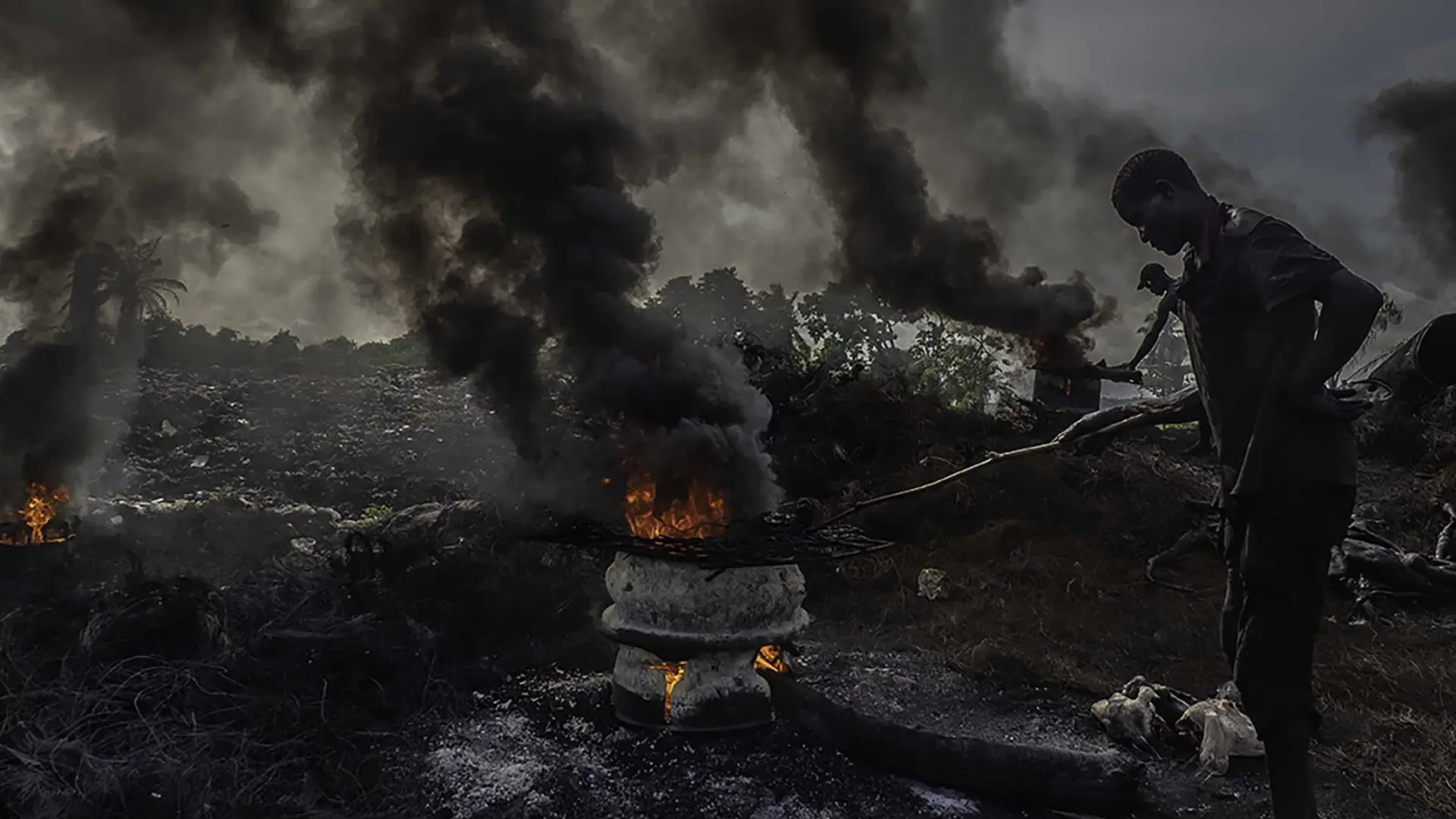
Dirty air now kills more Africans than unsafe water, malnutrition or poor sanitation. A 2016 study for the OECD put the toll at about 712,000 premature deaths a year on the continent. Yet in most African countries nobody is even measuring the air people breathe, and Nigeria, which carries the continent’s heaviest toll, has the most urgent need to act.
Breathing dirty air harms the heart, the lungs and the brain. According to the Health Effects Institute’s State of Global Air 2025, air pollution was linked to 7.9 million deaths worldwide in 2023, about one in eight of all deaths, including one in four deaths from heart disease and more than one in four from dementia. Many developed countries have passed laws and adopted policies to clean up their air. Many developing countries have yet to follow, and they face very high levels of pollution from a mix of human and natural sources.
A problem hidden in plain sight
The scale of the problem is hard to measure, because many African countries have no air quality monitoring on the ground. Almost nothing is known about the pollutants coming out of many African cities, or about their effect on weather systems, crops and public health. Research is already showing, however, a direct link between air pollution and infant deaths.
Air pollution is any chemical or particle in the atmosphere that changes its natural make-up enough to threaten health or the environment. Volcanic eruptions, wildfires and wind-blown dust are not rare in Africa, but most of the pollution comes from human activity.
Its causes are in plain sight. Car exhaust, wood burning, the burning of rubbish, kerosene stoves, petrochemical plants and heavy reliance on diesel and petrol generators all foul the air.
Of the many pollutants, particulate matter is the one many experts consider most harmful to human health. The term covers tiny particles suspended in the air, including dust and black carbon from the burning of fossil fuels and biomass.
Children pay first
Infants are among the most exposed. A Stanford University study published in Nature in 2018 found that particulate pollution in sub-Saharan Africa led to about 400,000 otherwise preventable infant deaths in 2015, across the 30 countries it studied. In the same region that year, about 500,000 children under five died of pneumonia. Air pollution is a major driver of that disease. According to the World Health Organization, it causes more than half of the acute lower respiratory infections in children under five in low- and middle-income countries. For children who survive past five, WHO warns, polluted air can impair brain development, trigger asthma and childhood cancers, and raise the risk of cardiovascular disease later in life.
The harm starts before birth. Evidence links air pollution to problems in pregnancy, including preterm birth. A 2017 study estimated that fine particulate matter was associated with 2.7 million preterm births in 2010 across 183 countries, with West sub-Saharan Africa among the regions worst affected.
According to a recent report by WHO, every child under five in WHO’s African and Eastern Mediterranean regions is breathing air with levels of fine particulate matter (PM2.5) above the WHO air quality guidelines. The death rate attributed to pollution among children under five in Africa’s low- and middle-income countries is 184.1 per 100,000, against just 0.3 in high-income countries in the Americas and Europe.
The Stanford team argued that if African countries could cut particulate exposure to the levels of wealthy countries, the gains for infant health could exceed those of nearly every health intervention now in use, including vaccination and food and water supplements.
Some countries begin to act
A few governments have started to respond. In Uganda, where cars belching black exhaust are a common sight, the cabinet approved a draft law to ban imports of vehicles more than eight years old, aimed at the used Japanese cars seen as a major source of urban pollution. Uganda went on to impose an outright ban on importing its oldest used vehicles in 2018, on top of an environmental levy on older cars.
Nigeria, the worst affected
Air pollution in Nigeria remains dangerously high. In 2015 the World Bank’s Little Green Data Book reported that 94% of Nigerians were exposed to air pollution above WHO guidelines, against an average of 72% across sub-Saharan Africa. The bank’s revised data now put the share at 100% for both Nigeria and the region as of 2017.
Nigeria’s death rate is among the worst anywhere. WHO estimates put its age-standardised death rate from household and outdoor air pollution in 2016 at 307.4 for every 100,000 people, second only to Sierra Leone.
The toll has kept rising. HEI’s 2019 country factsheet counted 114,100 air pollution deaths in Nigeria in 2017, 64,200 of them from household air pollution, making it the country’s fourth leading risk factor for death. By 2023, according to State of Global Air 2025, Nigeria recorded more than 200,000 deaths from air pollution, a toll matched only by Bangladesh and Pakistan and exceeded only by India and China.
In Lagos, a city whose population is put at anywhere from 17 to 21 million, smog has become part of daily life. Residents breathe the fumes of industrial plants, heavy traffic and the generators that power much of the city.
Onitsha, a city little known outside Nigeria, was ranked the world’s most polluted city for coarse particulate matter (PM10) in WHO’s 2016 urban air quality database. Its annual mean concentration of 594 micrograms per cubic metre was nearly 30 times the WHO guideline of the time. WHO tightened almost all its air quality guidelines in September 2021, so the gap is wider still.
The main sources of air pollution in Nigeria are vehicle exhaust, smoke from the open burning of rubbish, road dust, industry, and soot from inefficient cooking stoves burning solid fuels.
Nigeria cannot afford to keep treating dirty air as a fact of life. Without urgent action on air pollution, it will never come close to achieving sustainable development.



