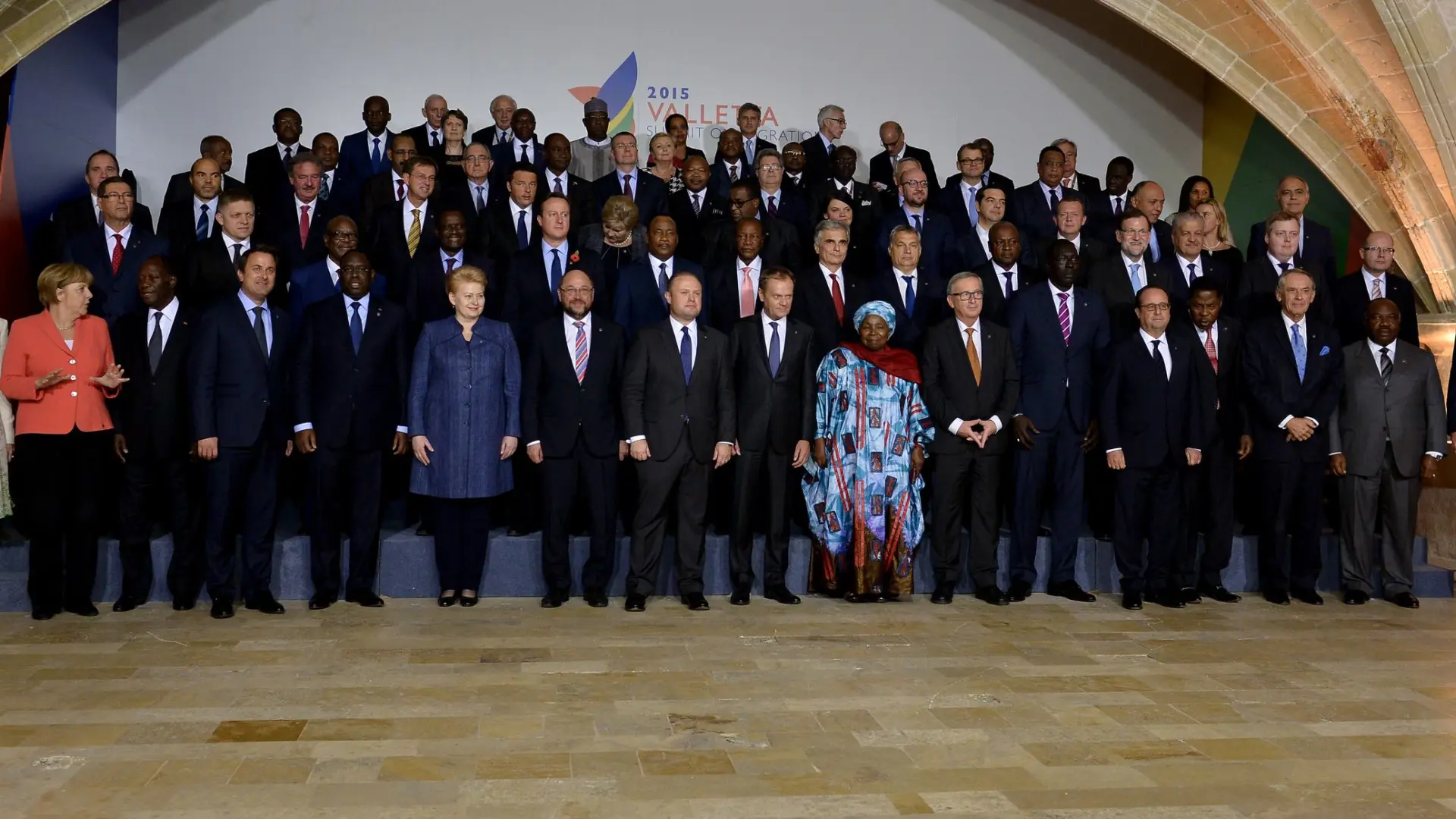
Young Africans leave mainly because their economies offer them nothing, not because of war. This opinion piece argues that African leaders should take up Angela Merkel’s call for European investment, and use Chinese infrastructure money on their own terms, to build industries that keep the young at home.
“For many years we have been very focused on Asia. I think that in future we should turn our sights more on Africa. It is of great interest to Europeans that African states have good economic prospects.” So said Merkel, the German chancellor, at an investment forum in Berlin on 30 October 2018, according to AFP reports carried by The Financial Express and the Jamaica Observer.
Governance and the young
The Mo Ibrahim Foundation released a damning report last week. Its 2018 Ibrahim Index of African Governance found that governance on the continent is lagging behind the needs and expectations of a population 60% of which is under 25. In the author’s view, governments have failed that booming youth population, and the failure helps drive the high rate of irregular migration.
The pressure on leaders to change is rising, and it comes not just from opposition politicians but from voters. Zimbabwe’s Emmerson Mnangagwa has defeated Nelson Chamisa at the polls, but reviving the economy is proving the harder task. South Africa’s Cyril Ramaphosa is battling to secure his place in next year’s election, as is Nigeria’s Muhammadu Buhari.
Migration to Europe
We cannot say exactly how many young Africans have died seeking greener pastures abroad since 2010. Many of those who reached the doors of EU countries and the United States came because the countries they left offered them no jobs, healthcare or housing.
Africans were not the only ones climbing European fences, but there have been large numbers of them. EU countries, Norway and Switzerland received nearly 970,000 first-time asylum applications from sub-Saharan Africans between 2010 and 2017, and most years saw the inflow rise, according to a Pew Research Center analysis of Eurostat data. Asylum is only one route, so the real number of arrivals is larger.
This has created a new polarity in European politics, as leaders shuffle between conscience and responsibility. The thought of human beings adrift at sea is a burden, yet letting them in means bigger budgets for governments. What one thinks of migrants is now a major factor in European elections and policy.
In the EU, many leaders follow the path of Viktor Orbán (the Hungarian prime minister), Horst Seehofer (the German interior minister) and Matteo Salvini (the Italian interior minister), who oppose opening borders to irregular migrants whatever the situation. Merkel took the opposite stance, welcomed migrants, and has paid a political price for it.
African leaders would do well to listen to her now. She has the better idea for handling migration from Africa, because she is ready to help tackle its main cause at the root.
The root cause of migration
It is deceptive to think that wars and crises are the biggest push factors in irregular migration. Sub-Saharan countries in crisis such as South Sudan, the Central African Republic, the Democratic Republic of Congo, Cameroon and Mali may look on the surface like the leading sources of migrants. But Nigeria, Kenya and Ghana, which are more peaceful, have contributed more.
According to the same Pew analysis, more than half (51%) of sub-Saharan African migrants living in the United States in 2017 were born in just four countries, Nigeria, Ethiopia, Ghana and Kenya. The economic flatness or volatility of African countries remains the biggest push factor behind young people leaving in their numbers.
The onus is now on African leaders to combine the funds they get abroad with the Merkelian idea, and make at least a ten-year plan for zero irregular migration. Merkel preaches industrialisation, while China preaches infrastructure. Both forms of foreign assistance must be harnessed at home, on Africans’ own terms.
The key is getting the population busy. Governments have to build a robust education system to give the young skills, create industries to employ graduates, and set economic policies that let enterprise flourish. That will boost the economies, and infrastructure will follow.
Loans, aid and corruption
Instead, governments look for loans here and there, which they then spend years servicing. Chinese financiers committed 153 billion dollars to African public sector borrowers between 2000 and 2019, according to researchers at Johns Hopkins, and loans and aid from the US predate it. In 2007, at the second Africa–EU Summit, in Lisbon, the two continents signed a joint strategy backed by European development money. Africa has also generated its own money, which, added to these foreign loans and aid, should have gone far in industrialising its countries.
But corruption swallows chunks of what they get. In 2013, Global Financial Integrity and the African Development Bank estimated that 1.22 to 1.35 trillion dollars had flowed out of Africa illicitly between 1980 and 2009, through corruption, tax evasion, crime and trade mispricing. Governments speak often of fighting corruption, but the systems that breed it, and the running costs of government, are still not seriously dealt with.
Apart from countries like Mauritius, Rwanda, Botswana, more recently Ethiopia, and a promising though confusing Tanzania, many others can best be described as struggling.
The time for serious governance is now. Agenda 2063 may end up more a document than a workable programme, because governments show little commitment to bringing it to life, and five years have already slipped through their fingers.
Jobs before airports
Chinese lenders finance airports and other infrastructure across Africa, often built by Chinese firms. In the author’s view, such deals cannot on their own fix the unemployment that drives young people abroad.
This is where Merkel’s call for European companies to come into Africa makes sense. It is now up to African leaders to identify the sectors where their economies will thrive most and open them to foreign investment. They have to set targets for how many unemployed people to absorb each year, in relation to the current labour force. That will give a clear picture of where they are headed over ten years.
Chinese-built infrastructure is good, but investment that opens up industries is better. Putting infrastructure before industrialisation is putting the cart before the horse, because industrialisation brings infrastructure with it. Angola and Nigeria export crude oil but do not refine all the petrol (PMS) they need, and every barrel refined abroad is jobs lost at home.
African leaders must harness the opportunities around them. Africa no longer needs leaders who only want to share wealth. It needs leaders who can create and manage the wealth of their nations.



